Table of Contents
The United States is witnessing a revolutionary transformation in farming, with vertical farming being one of the most encouraging but debatable food production innovations. Even though the US vertical farming market hit $2.11 billion in 2024 and is expected to explode to $28.50 billion by 2034 [1], the new method of farming has also attracted investors, policymakers, and consumers. But beneath the shine of green city agriculture promises lies an interconnected web of pros and cons that must be analyzed critically.
Vertical farming is an innovative move from conventional horizontal farming towards a platform where the produce is cultivated in vertically aligned layers in controlled indoor settings. The innovation tackles the biggest problem for American agriculture: 80% of the global population will reside in cities by 2050 [2], subjecting food systems to immense pressure to produce more, with fewer acres, gallons, and environmental stress.
Understanding Vertical Farming
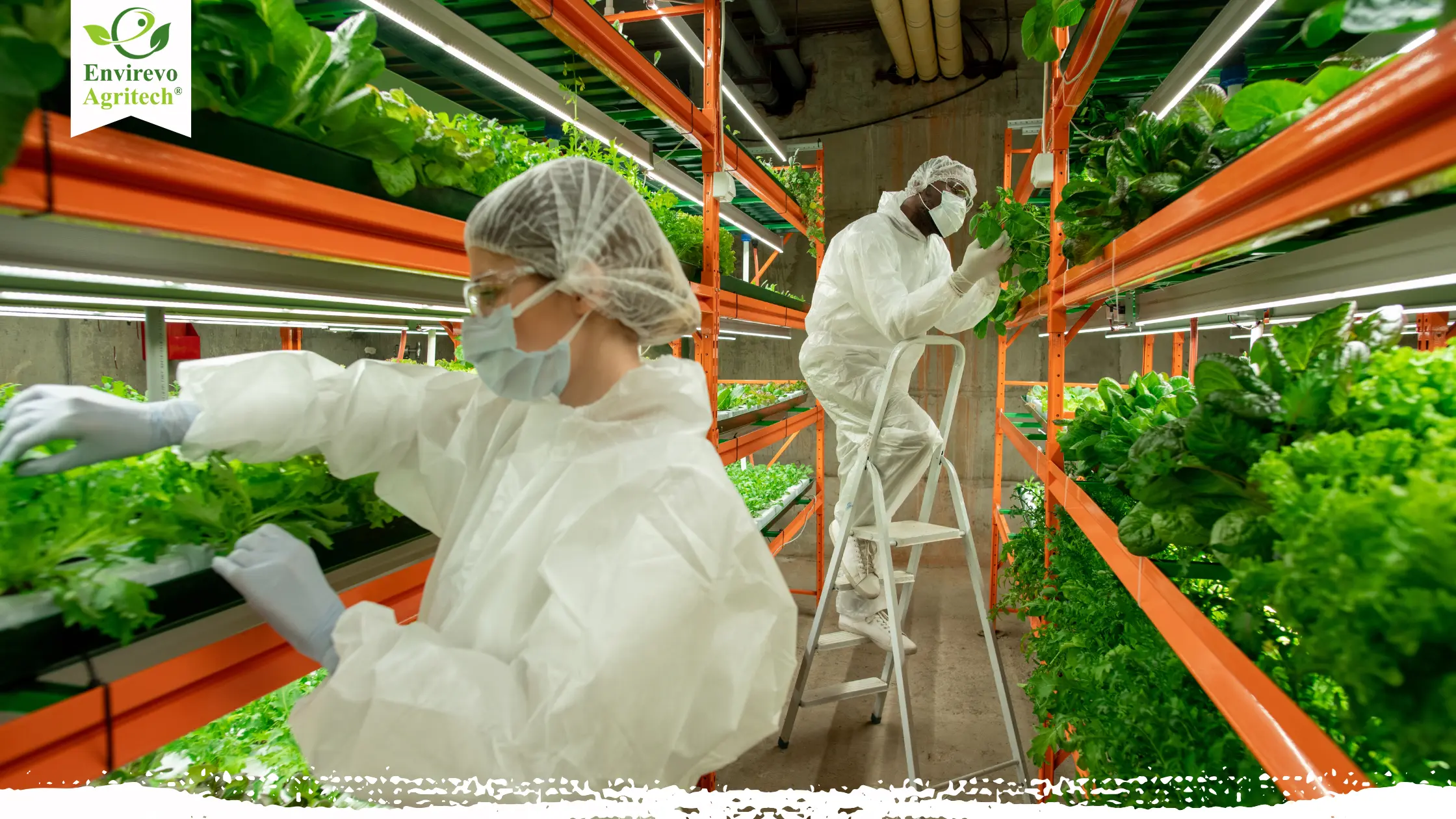
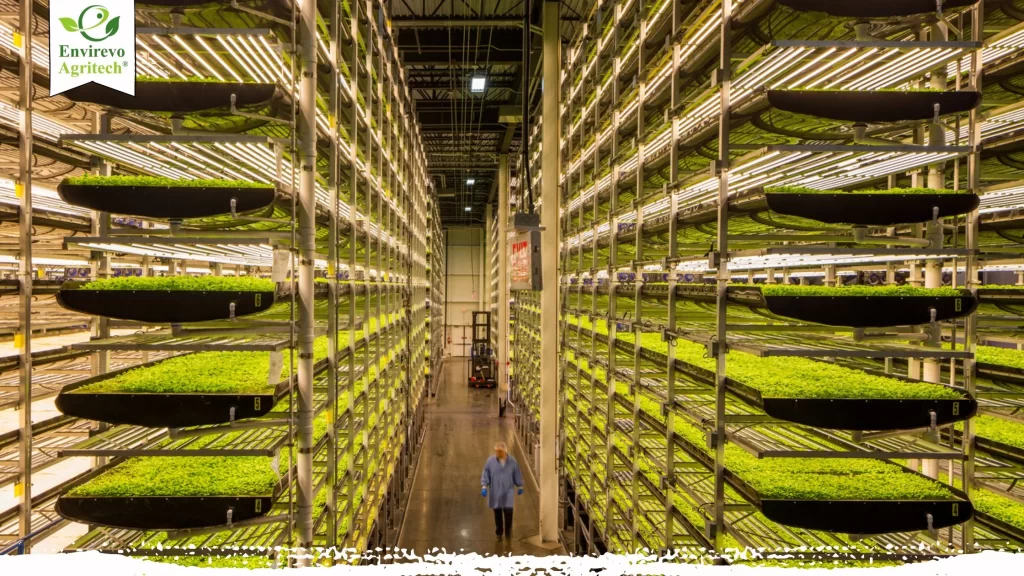
Vertical farming is simply controlled environment agriculture (CEA) pushed to its extreme, where plants are grown in vertically stacked layers in soilless growing methods like hydroponics, aeroponics, or aquaponics. In contrast to conventional greenhouses that use natural light, these buildings are completely dependent on artificial LED light systems, air conditioning, and mechanized systems of nutrient delivery in order to produce ideal growing conditions.
US vertical farm development has proceeded at breakneck speed, and hydroponics holds 65% of the market share of US vertical farms. This is because the technology is mature and has already demonstrated its capability in controlled environments. Geographic concentration of operations strongly favors the Northeast and West Coast states, where top-of-the-line consumer markets offset high real estate costs and high environmental awareness.
Vertical farming in the US: Pros
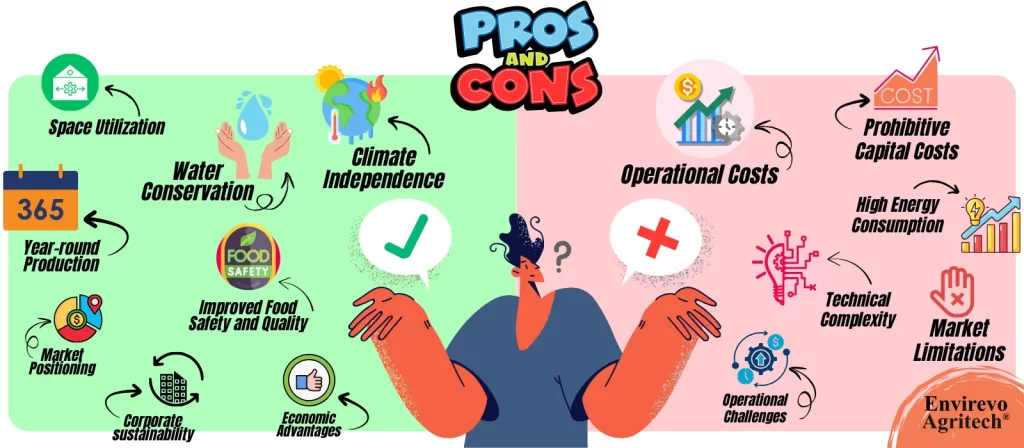
1. Space Utilization
Its most distinctive strength is its unparalleled ability to conserve space. The yield per square foot of today’s vertical farms is 10-20 times greater than in conventional farming, and some are as high as 240 times [3] when considering crop cycles throughout the year. Such efficiency costs an urban area such as that dearly, where land pricesare up to $1 million an acre.
2. Water Conservation
Water conservation is the strongest environmental advantage of vertical farming. Vertical farms utilize closed-loop hydroponics that consume 70-95% less water than traditional farming. Traditional farming draws 72% of global water withdrawals, and agriculture is the biggest user of freshwater resources. In arid states such as California, whose agricultural viability would be jeopardized by water scarcity, vertical farms represent a resilient option that might sustain food output while significantly decreasing water stress on native ecosystems.
3. Climate Independence
Vertical farming is entirely unaffected by weather patterns, something that becomes very valuable as climate change makes the severity of extreme weather events in the United States even more severe. Controlled conditions prevent disasters from occurring with droughts, flooding, hailstorms, and temperature swings that cost American farmers billions of dollars in lost crops each year.
4. Year-round Production
The technology provides year-round production irrespective of outside conditions, effectively providing multiple growing seasons within a calendar year. LED lighting systems are able to support 24-hour production cycles when it is cost-effective, and tight environment control can speed up plant growth by providing the best temperature, humidity, CO2, and spectrum of light. High-end LED systems can now be programmed to a specific wavelength that boosts vitamin C content in leafy greens by as much as 30% compared with farm-produced produce.
5. Improved Food Safety and Quality
The enclosed space of vertical farms makes chemical pesticides, herbicides, and fungicides unnecessary, which are traditionally applied in agriculture. This pesticide-free condition helps alleviate increasing consumer worries regarding chemical residues in food, as well as minimizes the environmental footprint of agricultural runoff that pollutes water bodies and kills harmless insects.
6. Economic Advantages
US consumers firmly suggest they would pay a premium for locally grown, chemical-free fresh produce and fruits, especially in high-income urban marketplaces. Vertical farms have proved able to capture upscale market niches, with some operations commanding price premiums of 50-100% above conventional products.
7. Market Positioning
Their proximity to the cities’ consumption hubs results in considerable saving on transport and logistics expenses. Unlike the conventional crop that takes 1,500 miles from the farm to the plate, vertical farms can be established near cities with minimal transport expenditure and requirement for big cold chain facilities. Proximity minimizes waste since crops arrive at stores with additional shelf life remaining.
8. Corporate sustainability
Corporate sustainability requirements are compelling B2B companies for locally grown, sustainable produce. Large retailers such as Whole Foods, Walmart, and Amazon Fresh have entered into contracts with vertical farming companies to address corporate sustainability requirements and customer demand for local supply. Such arrangements bring stable revenue streams that serve to mitigate the astronomical operating cost of vertical farming.
Vertical farming in the US: Cons
1. Prohibitive Capital Costs
The financial side of vertical farming is the biggest hurdle. Setup costs are as low as $10,000 for small demonstration units but as much as tens of millions when scaled up for commercial use. These start-up requirements are much greater than in traditional farming, where land purchase and initial equipment are the primary costs.
2. Operational Costs
Operating costs are also part of the problem, with power accounting for as much as 67% of all operating costs. LED lighting alone supplies two-thirds of all electricity costs, with energy consumption ranging from 4-7 kWh per kilogram of lettuce harvested. With average US electricity prices ranging from $0.10-0.15 per kWh, electricity can run as much as $0.40-1.05 per kilogram of produce alone.
Labor costs are another major cost factor, accounting for as much as 60% of the cost in non-automated facilities. Automation slashes such costs by 25-50%, but comes with a multimillion-dollar investment in robotic hardware. Even automated vertical farms need highly skilled technicians to maintain intricate hydroponic systems, climate control, and sets of LED lighting.
3. High Energy Consumption
A thorough lifecycle analysis found that 40% of vertical farming’s climate footprint comes from electricity usage. Photosynthesis has essential limits to the energy efficiency of things. Plants can only turn some 2% of electrical power in LED lighting into chemical energy, so the process is inherently inefficient. For wheat crops, for example, only 0.6% of electricity gets consumed as edible calories, and it comes into perspective how their massive energy needs for producing calorie-rich food in vertical systems are met.
4. Technical Complexity
Vertical farming demands technical know-how in a variety of areas such as plant biology, engineering, automation, and data analysis. There is not enough trained manpower with experience in controlled environment agriculture, leading to recruitment and labor cost problems. Universities and technical institutions are yet to evolve specialized courses for vertical farming operations.
5. Operational Challenges
The reliability of the system generates ongoing operational problems. Power loss will ruin entire crops within a matter of hours, so backup power systems are necessary but costly. Loss of climate control can be disastrous since crops grown in controlled environments are not as robust as field-plant crops. Maintaining and replacing equipment is also costly, as LED lighting, pumps, sensors, and control systems all need to be serviced regularly and eventually replaced.
6. Market Limitations
The crop limitations in vertical farming largely limit its market reach. The technology has its best fit with leaf vegetables, herbs, and microgreens, which combined only account for a small percentage of total agricultural output. Crop staples such as wheat, rice, and corn cannot economically be grown in vertical systems due to their height for growing, long growth periods, and low prices in the market, making it impossible.
Future Outlook: Technology, Markets, and Sustainability
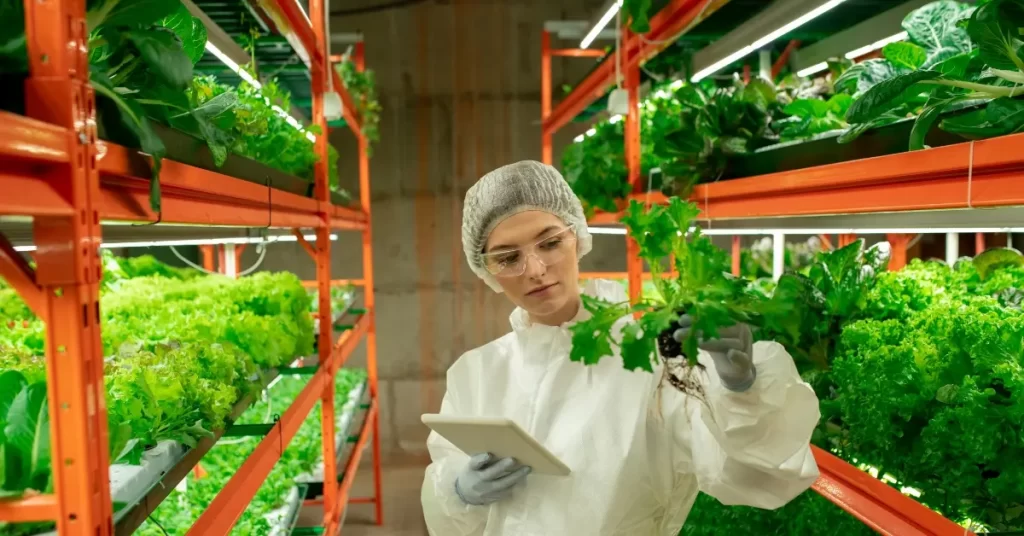
LED technology is also advancing rapidly, with 5-10% annual improvement. Future LED systems will be programmable to wavelengths that will maximize growth rates as well as nutritional quality, so that vertical farms can market on the basis of more health advantages than freshness and local origins. Machine learning and artificial intelligence are transforming farm management. Advanced AI technology can optimize lighting schedules, nutrient supply, and environmental conditions in real-time with the potential to boost yields by 20-30% and cut energy use. Predictive analytics can predict issues before they strike the crops, saving losses and boosting efficiency.
Automation technology is making a transition from basic mechanization to clever robot systems. New-generation robots are capable of executing sophisticated operations such as selective picking, plant disease diagnostics, and precision trimming. Such systems may entail huge capital outlays, but they are certain to generate significant savings in terms of labor expenditure while enhancing product quality and consistency.
Consumer acceptance increases with increased awareness. Young consumers, better-informed customers, are more inclined to pay a premium for sustainable, locally grown food. The demographic change, in combination with increasing environmental consciousness, creates increasing market opportunities for vertical farm operations.
Making the Decision to Pursue Vertical Farming
Successful vertical farming businesses require extensive market analysis and sound financial projections. The high-profile collapses in the sector eminently demonstrate that technology alone will not suffice; sustainable business models must balance high-end market positioning with cost-driven operations. Location is still central to success. High-cost traditional crop region production, being close to premium consumers, and minimal energy input holds the greatest promise for profitability. Urban locational proximity to high-income consumers warrants premium land costs through premium prices and lower distribution costs.
Recalling the advantages and disadvantages of vertical farming while taking a decision is very significant. If you’re thinking about vertical farming, it’s important to understand the main pros and cons of the venture that apply to your specific needs. The idea of vertical farming can be a great way to produce food all year round, but it’s important to keep in mind that setting up a vertical farm can be quite expensive, and the returns can be unpredictable. Vertical farms are unique equipment and use a lot of electricity, so you must utilize them productively. Consider these aspects while determining whether vertical farming is for you.
The future for vertical farming is not in displacing traditional agriculture but in filling specific niches where its benefits outweigh its costs: urban agriculture, high-margin market niches, emergency food security, and crops that demand pesticide-free production. Success will rely on realistic expectations, shrewd market positioning, and continuous technological innovation to lower energy consumption and lower operating costs.
For the American consumer, vertical farming has concrete advantages regarding food safety, freshness, and environmental responsibility that may be worth a premium price under some conditions. As solar and wind energies become more cost-competitive and automation keeps labor expenses down, the economic potential of vertical farming will become even more solid. It was never possible for commodity crops, but vertical farming has found its place as a valuable element in America’s rich and varied food system. Success lies in being aware of both its phenomenal virtues and inherent weaknesses, and continuing to innovate on the principles of increased efficiency and sustainability.
Frequently Asked Questions
Why is vertical farming good for the future?
Vertical farming is good for the future because it enables year-round, climate-independent crop production using minimal land and up to 95% less water, addressing urban food security and resource constraints.
How does vertical farming help the economy?
It boosts the economy by creating high-tech agricultural jobs, reducing supply-chain costs through local production, and attracting investment in agri-tech innovation.
Has vertical farming been successful?
It has seen mixed success: some leafy-green operations profit in premium urban markets, but high-profile bankruptcies highlight uneven outcomes.
Why is vertical farming not profitable?
High energy and capital expenses—LED lighting, climate control, and real estate—often outweigh revenue, making many operations unprofitable without scale or premium pricing.
What problem does vertical farming solve?
Vertical farming solves limited arable land, water scarcity, and weather-related crop failures by producing fresh, pesticide-free produce in controlled indoor environments.
What is the biggest downfall of vertical farming?
The biggest downfall is its high operational energy consumption, which drives up costs and can negate environmental benefits if powered by non-renewable electricity.
Is Vertical Farming Better Than Traditional Farming?
Vertical farming outperforms traditional farming in space and water efficiency, year-round reliability, and food safety, but traditional farming remains more cost-effective for staple crops and large-scale production.
Can vertical farms help with food security in the United States?
Vertical farming enhances urban food security by providing local, year-round production independent of weather and seasonal variations. While vertical farms cannot replace conventional agriculture for calories, they excel at producing fresh, nutritious greens in urban food deserts. The technology proved resilient during COVID-19 disruptions when traditional supply chains faced challenges.