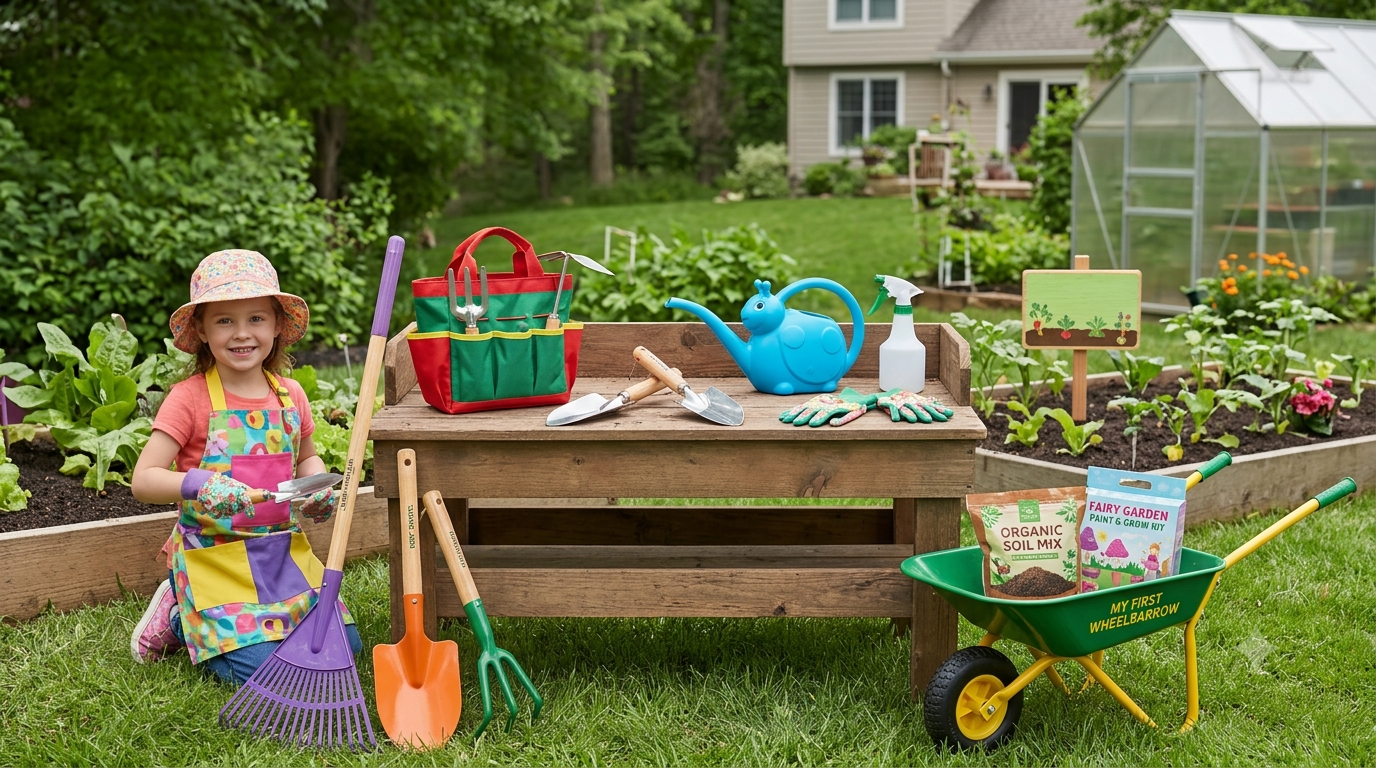
Imagine handing a child their own tiny watering can, showing them how to plant their first seed, and watching their excitement as a green shoot finally appears. Gardening offers children a wonderful way to explore nature, learn responsibility, and enjoy meaningful time outdoors. With the right equipment, even the smallest backyard, balcony, or sunny windowsill can become an exciting place to grow something new. Whether your child is planting their first flower, helping with a vegetable patch, or experimenting with an indoor herb garden, here are 10 practical gardening tools worth considering.
Table of Contents
Top 10 Gardening Tools for Kids
1. Kids’ Gardening Wheelbarrow
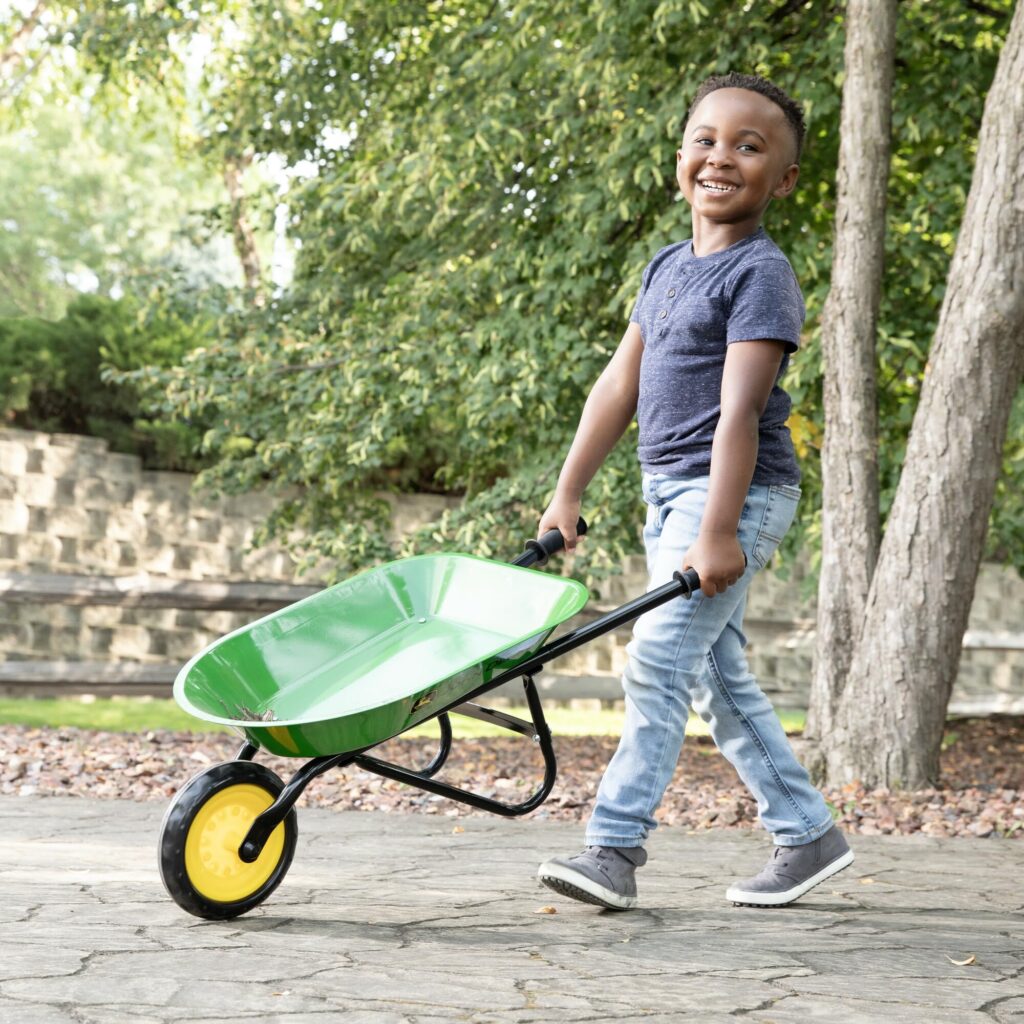
A child-sized wheelbarrow is an excellent choice for children who enjoy being involved in outdoor chores. It gives them a sense of independence while making simple gardening jobs feel like an adventure. Unlike a full-size adult wheelbarrow, a children’s version should be lightweight, easy to steer, and comfortable to push. Look for a manageable tray capacity, stable wheels, a sturdy frame, and handles that your child can grip without stretching.
What to look for:
- A lightweight design that remains manageable when loaded.
- Stable wheels that roll easily over grass and compact soil.
- Comfortable handles suited to the child’s height.
- Rounded edges and durable construction.
- A tray large enough for small gardening jobs without encouraging excessive loads.
2. Child-Sized Watering Can:
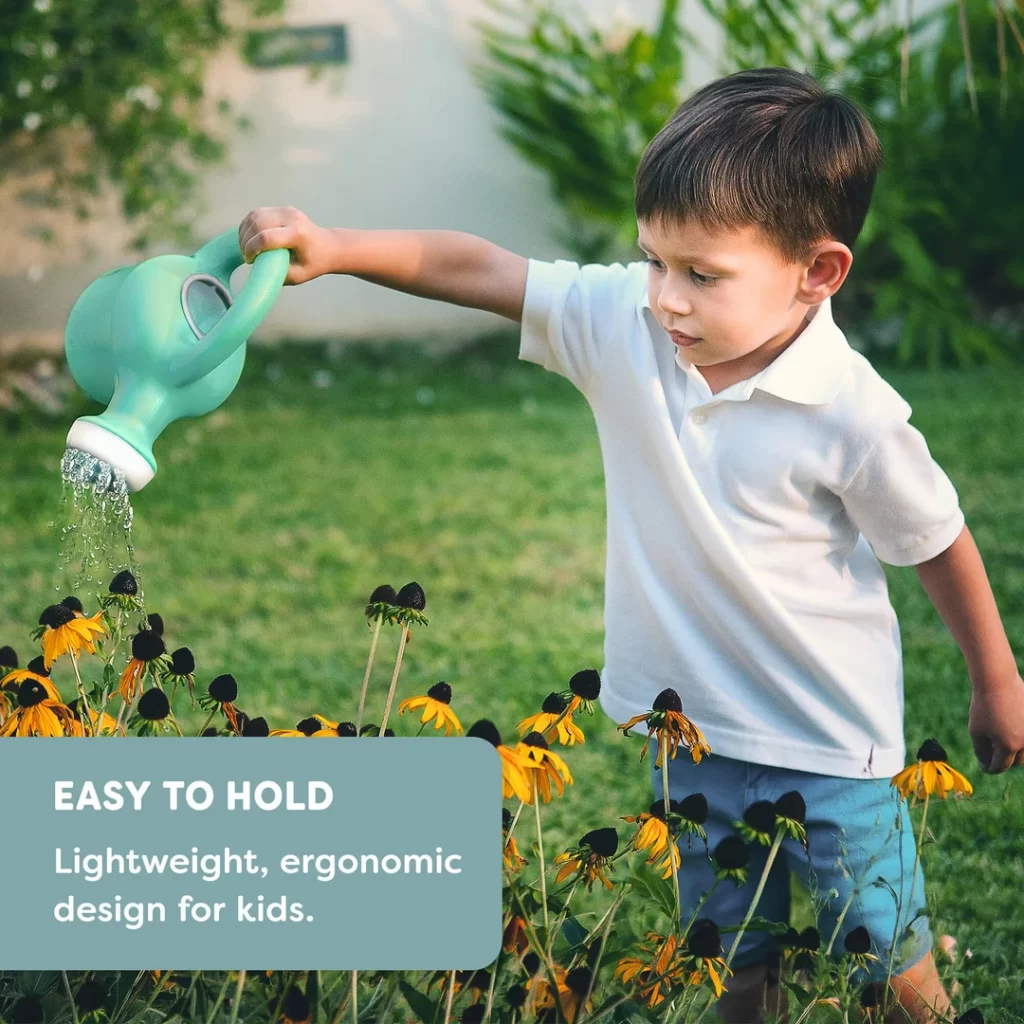
A watering can is one of the simplest and most useful gardening tools for kids. Children can use it to participate in daily plant care from an early age, provided the size and weight suit their abilities. The most important consideration is capacity. A large watering can may seem appealing because it reduces refill trips, but it can become difficult to lift once full. A small container that a child can control comfortably is generally more practical.
Choose a model with a secure handle, a balanced shape, and a spout that allows water to flow gently. A removable sprinkler head, sometimes called a rose, can help distribute water over seedlings without washing away loose soil.
What to look for:
- A small capacity suitable for the child’s strength.
- Easy-grip handles and a balanced design.
- A gentle flow for seedlings and delicate plants.
- Lightweight, durable, easy-to-clean materials.
- A shape that is easy to fill and empty.
3. Gardening Boots for Kids:
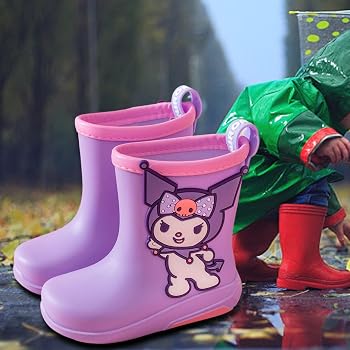
Gardening often involves damp grass, muddy paths, spilled potting mix, and unexpected puddles. A good pair of children’s gardening boots helps make these activities more comfortable and keeps ordinary shoes from becoming permanently covered in soil. When choosing boots, prioritize fit and traction over appearance. Boots that are too large can slip around the foot, while tight footwear can cause discomfort during longer garden sessions.
Waterproof rubber or similar materials are useful for wet conditions. However, some boots can become warm during hot weather, so breathable alternatives or ordinary closed-toe shoes may be more appropriate for dry garden work.
What to look for:
- A comfortable fit that allows natural movement.
- Grippy soles for damp ground.
- Materials that are easy to rinse and clean.
- A design children can put on and remove with minimal assistance.
- Enough flexibility to walk comfortably.
4. Kids’ Potting Table:
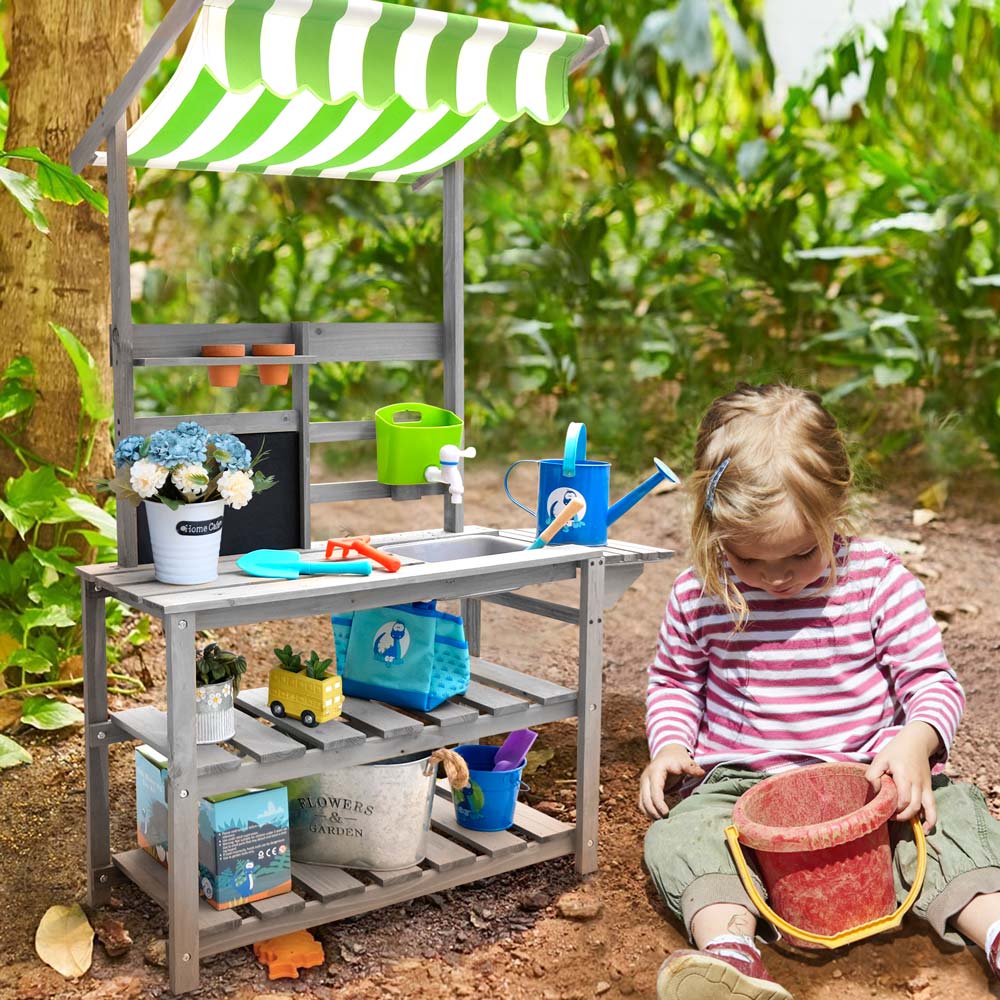
A potting table gives children a dedicated place to grow plants, prepare containers, and organize their gardening supplies. It can be particularly valuable for families who want to encourage gardening without allowing soil, pots, and tools to spread throughout the patio or yard. Unlike a conventional adult potting bench, a child-friendly table should have a suitable working height. Children should be able to reach the surface comfortably without standing on stools or leaning awkwardly.
A simple table can be enough for planting seeds and filling small pots. More elaborate models may include shelves, hooks, trays, or storage compartments for tools and labels.
What to look for:
- A stable frame that will not wobble easily.
- A working height appropriate for the child.
- Smooth surfaces and rounded edges.
- Easy-clean materials.
- Storage for lightweight tools, containers, and seed packets.
5. Gardening Gloves for Kids:
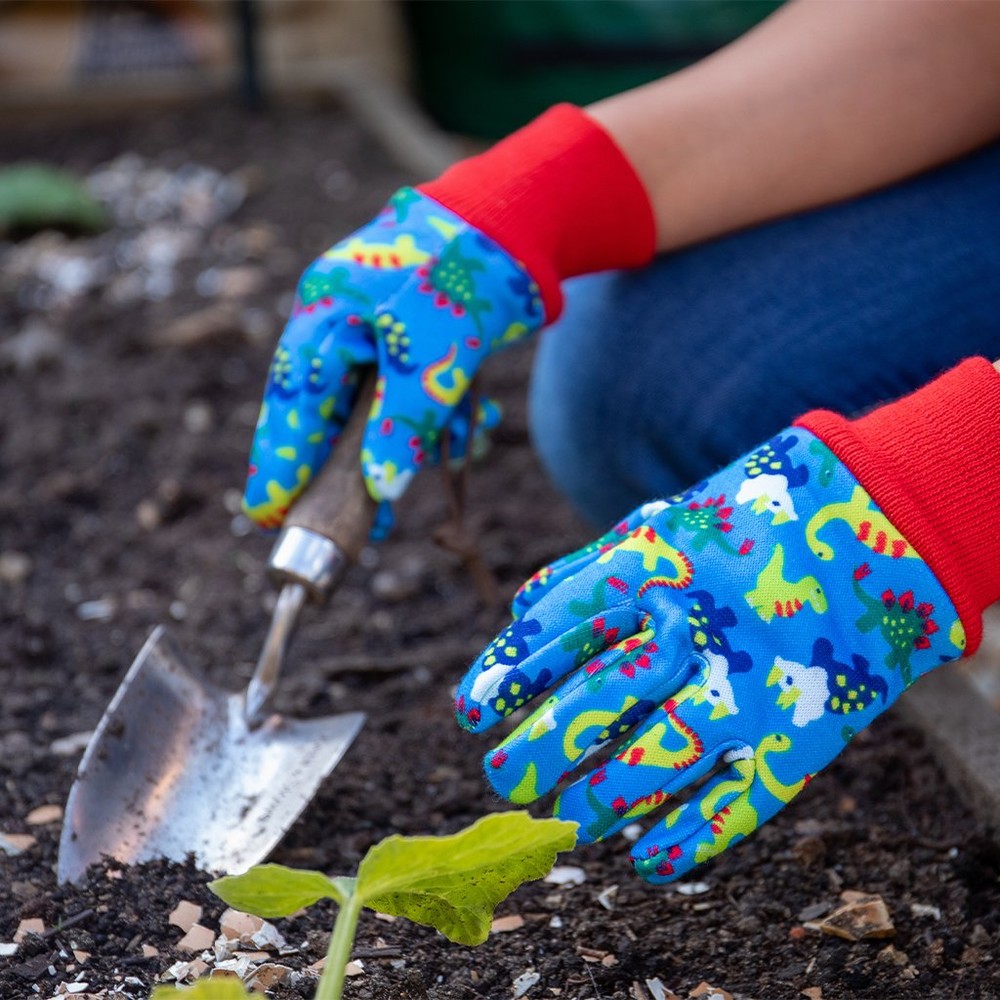
Children like getting involved in planting, weeding, and collecting leaves, but these tasks can leave hands muddy and expose them to minor scrapes or irritating plant material. Properly fitted gardening gloves offer an extra layer of protection while making outdoor work more comfortable.
Fit matters more than colorful designs. Gloves that are too large can slip off or interfere with gripping tools, while gloves that are too tight may restrict finger movement. Lightweight fabric gloves are suitable for many gentle gardening activities. Flexible synthetic materials can provide better grip, and water-resistant designs may be useful for damp tasks. No ordinary gardening glove should be considered complete protection against sharp thorns, punctures, or hazardous substances.
What to look for:
- A close but comfortable fit.
- Flexible fingers that allow tools to be held securely.
- Durable stitching and easy-to-clean materials.
- Suitable coverage around the wrists.
- Materials appropriate for the task and weather.
6. Kids’ Gardening Tool Set:
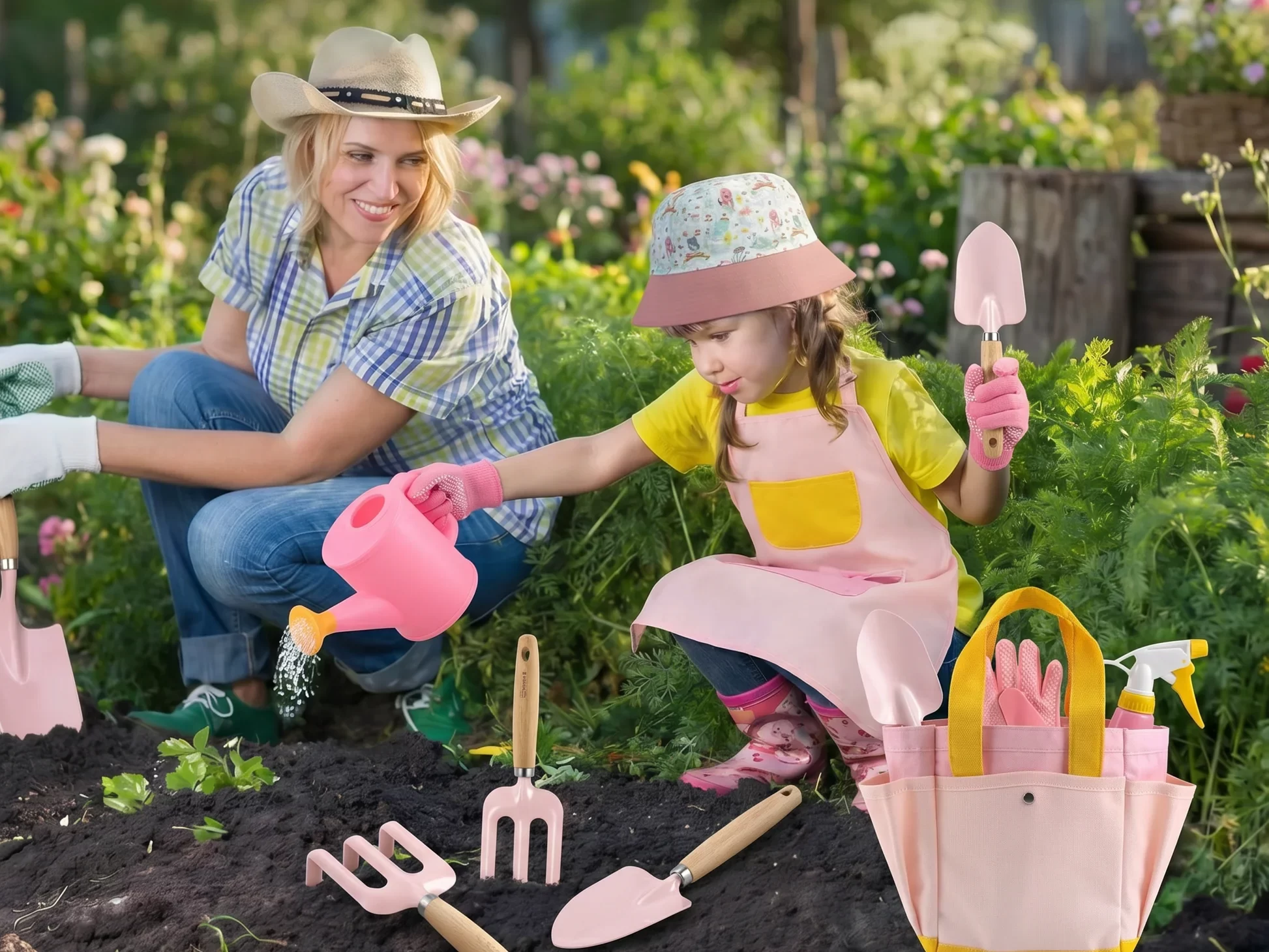
A basic gardening tool set can be a sensible starting point for children who want equipment of their own. Rather than borrowing oversized tools, they can learn to handle smaller tools that are better suited to their hands and gardening tasks. A useful set may include a hand trowel, small rake, hand fork, and child-sized shovel. Some sets also include a watering can, gloves, plant labels, or a carrying bag.
However, the number of accessories is less important than their quality. Very flimsy tools may bend or break quickly, leaving children frustrated and potentially creating sharp edges. KidsGardening recommends choosing durable, well-made tools that are properly sized for children rather than selecting poorly constructed toy-like alternatives.
What to look for:
- Tools that are appropriately sized for the child’s abilities.
- Comfortable handles and secure connections.
- Durable construction for the intended type of gardening.
- Smooth or suitably finished edges.
- A storage bag or container that keeps everything organized.
7. Kids’ Hand Trowel and Rake:
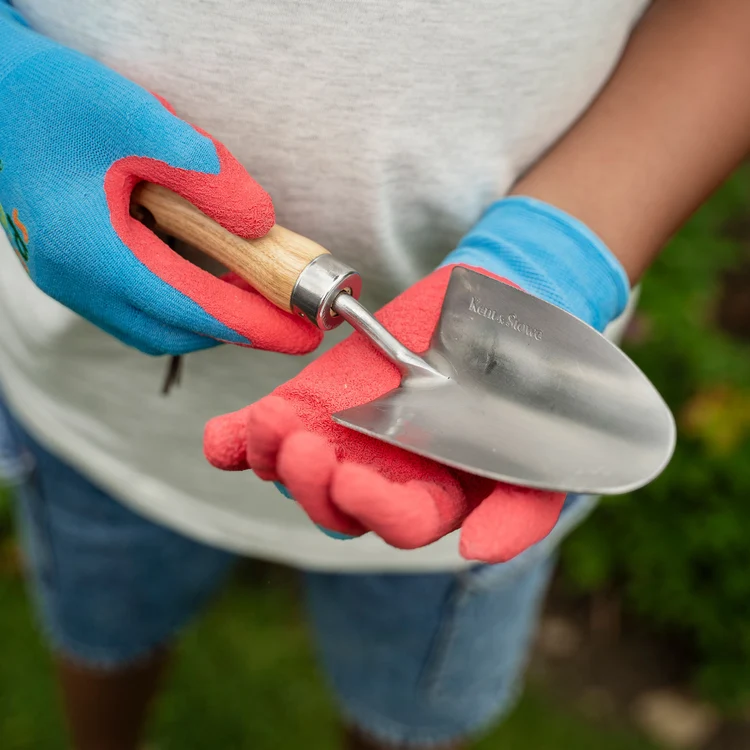
Hand tools are essential for smaller gardening tasks, especially when children are working with containers, flower beds, or raised planters. A hand trowel helps move growing medium, make planting holes, and cover seeds with soil. A small rake can level loose soil, gather light debris, or prepare a container before planting. A hand fork or cultivator can help loosen compacted potting mix under supervision. Choose tools that are easy to grip and control. Some metal tools are durable but have sharper edges or points, so examine the construction carefully and match the design to the child’s age, abilities, and the task.
What to look for:
- A handle that fits comfortably in small hands.
- A manageable overall length and weight.
- A secure connection between handle and working end.
- Suitable materials and a finish appropriate for the intended task.
- No loose components, cracks, or dangerous burrs.
8. Kids’ Plant Kit:
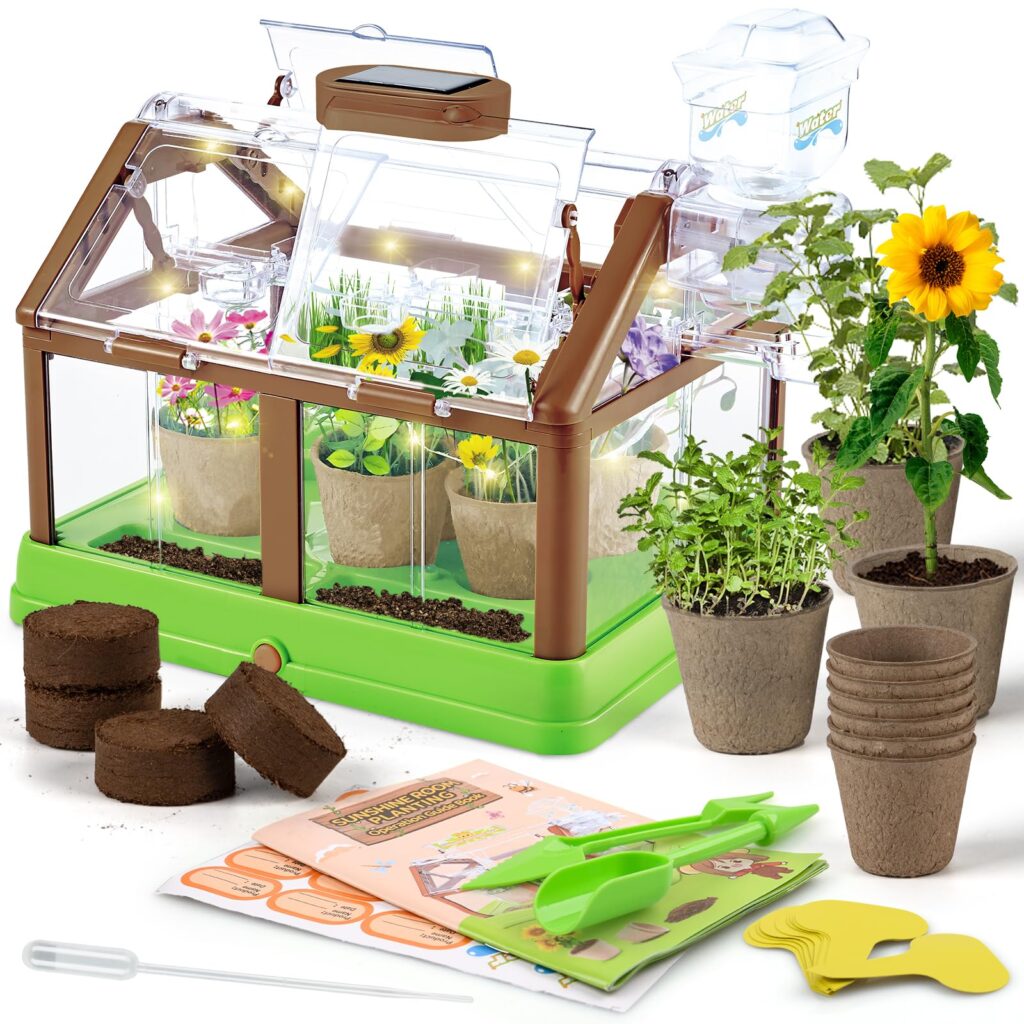
A plant kit is a great option for introducing children to growing plants, particularly when outdoor space is limited. It can combine gardening equipment and supplies with a simple project that children can follow from planting to early growth. Depending on the product, a plant kit may contain seeds, small pots, a growing medium, plant labels, illustrated instructions, or a compact planter. Some kits focus on herbs, while others encourage children to grow flowers, vegetables, or indoor plants.
Google Trends reported an all-time high for the US search term “plant kit” in its 2026 gardening report. This is a promising trend signal, although it does not prove that any individual children’s plant kit is a bestseller.
What to look for:
- Clear, age-appropriate planting instructions.
- Seeds suitable for the available light and climate.
- Containers with adequate drainage.
- A suitable growing medium and manageable watering requirements.
- Realistic expectations about germination and growth.
- Clear safety information about seeds and included materials.
9. Kids’ Garden Bucket and Harvest Basket:
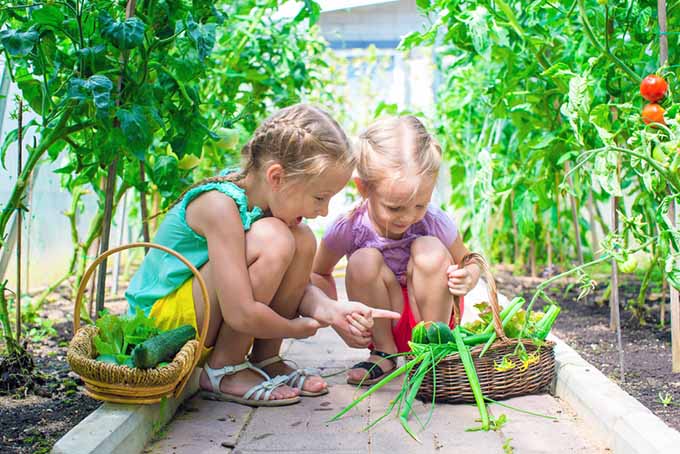
Not every useful gardening tool needs a complicated design. A simple bucket or harvest basket helps children collect fallen leaves, carry small pots, gather garden debris, or bring freshly harvested produce indoors.
These items also make it easier to give children small responsibilities without asking them to handle heavier equipment. For example, a child could collect fallen leaves from a designated area or carry a handful of harvested cherry tomatoes to the kitchen with an adult’s help.
What to look for:
- A lightweight structure.
- Comfortable, securely attached handles.
- A capacity that encourages manageable loads.
- Easy-to-clean surfaces.
- A stable base that is less likely to tip over.
10. Kids’ Garden Kneeler or Kneeling Pad:
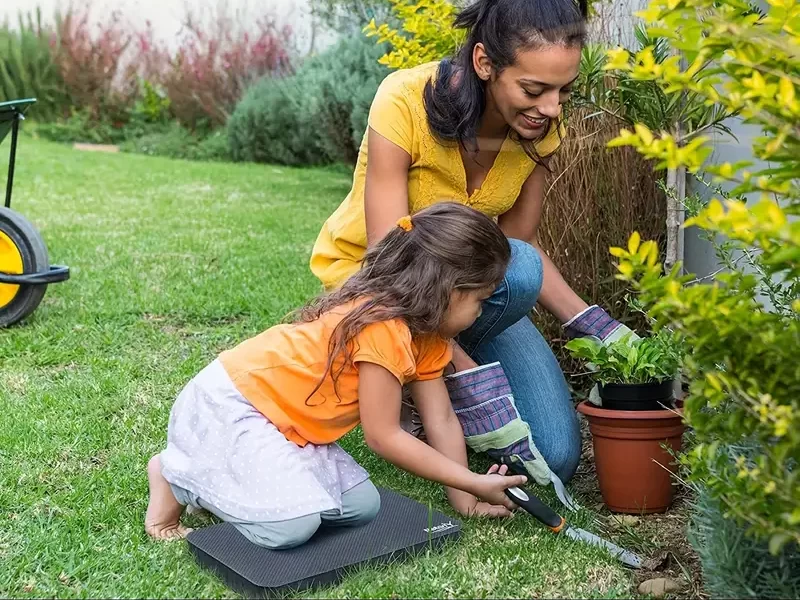
Planting and weeding often require children to spend time close to the ground. A padded kneeling surface helps make these tasks more comfortable, particularly on firm soil, gravel-free paths, or hard patio surfaces. A basic foam kneeling pad is lightweight and easy to move around the garden. A foldable kneeler with handles may offer extra cushioning and assistance when getting up, although its stability and design should be checked carefully before use.
What to look for:
- Comfortable padding.
- A water-resistant, easy-to-clean surface.
- A size that accommodates the child comfortably.
- A nonslip base suited to the surface.
- A stable design without exposed sharp edges or pinch points.
The best gardening tools for kids are not necessarily the most expensive or the most colorful. They are the tools that fit comfortably in little hands, suit the child’s abilities, and make gardening enjoyable and manageable. Start with a few essentials, such as a small watering can and hand trowel, then consider useful additions like gloves, a wheelbarrow, or a plant kit as your child discovers new interests. A compact garden can be just as rewarding as a large backyard when children have the opportunity to plant, observe, and care for living things.
Most importantly, let children participate at their own pace. Give them room to experiment, ask questions, and learn from small mistakes. With appropriate supervision and the right gardening tools, even a single pot of herbs can become the beginning of a lifelong appreciation for plants and the natural world.