Table of Contents
At first glance, caterpillars look harmless — soft, fuzzy, and even adorable. Many of us grew up watching them inch across leaves, unaware that some of them hide a dangerous secret. While most caterpillars are completely safe to handle, a few species have evolved toxic defenses that can cause intense pain, allergic reactions, and in rare cases, serious medical emergencies. These are the poisonous caterpillars, nature’s quiet reminder that beauty can be deceptive.
Across different parts of the world — from the forests of South America to the backyards of North America and the Mediterranean — poisonous caterpillars can be found lurking on trees, shrubs, and garden plants. They don’t bite or chase, but a simple brush against their venomous hairs or spines is enough to trigger reactions ranging from burning skin to systemic symptoms like nausea, headache, or difficulty breathing.
In this article, we’ll explore 10 of the most poisonous caterpillars known to science — where they live, how they look, what makes them dangerous, and why you should admire them from a safe distance.
10 Poisonous Caterpillars That Can Seriously Hurt You
1. Lonomia obliqua (Giant Silkworm Moth Caterpillar)
Region: South America (primarily Brazil, Argentina, Paraguay, and Uruguay)
Scientific Name: Lonomia obliqua
Also Known As: The “Assassin Caterpillar”
This caterpillar tops nearly every list of poisonous caterpillars and for good reason. Lonomia obliqua is considered the most venomous caterpillar in the world, responsible for several human deaths in South America.

Covered in rows of green and brown spines, this insect blends perfectly with tree bark, making it easy to touch by accident. The spines contain toxins that affect blood clotting. A simple brush against one can lead to severe bleeding disorders, internal hemorrhage, and kidney failure. The venom contains anticoagulant proteins that prevent blood from clotting, similar to snake venom. Because of its deadly potential, researchers developed an antidote — Lonomia antivenom, the only known caterpillar antivenom in the world.
Despite its danger, it’s a fascinating species that shows how complex insect defense systems can be.
2. Lonomia achelous
Region: Northern South America (especially Venezuela and Colombia)
Scientific Name: Lonomia achelous
Also Known As: Achelous Moth Caterpillar
Closely related to Lonomia obliqua, this species is just as deadly. The Lonomia achelous caterpillar also produces a toxin that disrupts the body’s ability to coagulate blood.
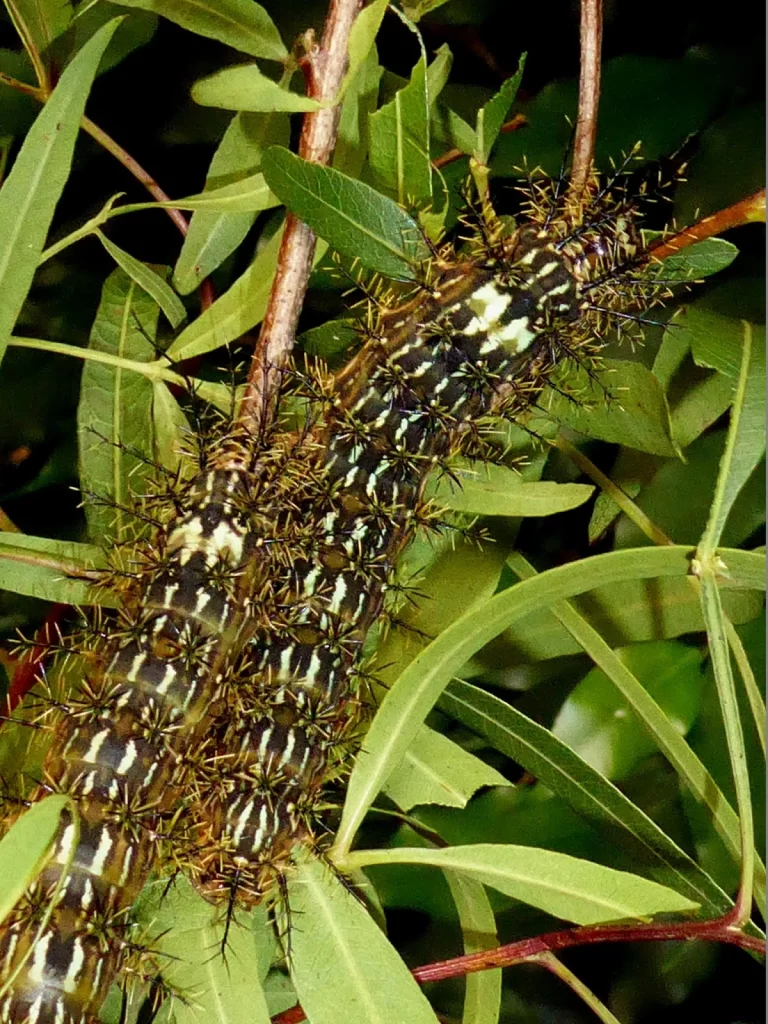
Encounters with this species have been recorded in rural areas, where people brush against tree trunks or pick up leaves with hidden larvae. Victims often develop painful swelling, bleeding under the skin, and even brain hemorrhages in severe cases.
The caterpillar’s muted brownish-green color helps it camouflage perfectly among the foliage, increasing the risk of accidental contact.
Together, Lonomia obliqua and Lonomia achelous are considered the two deadliest caterpillar species in the world. small but capable of causing catastrophic effects in humans.
3. Megalopyge opercularis (Puss Caterpillar)
Region: Southern United States, Mexico, Central America
Scientific Name: Megalopyge opercularis
Also Known As: Southern Flannel Moth Caterpillar, Asp Caterpillar
Don’t let its name or fluffy appearance fool you — this tiny creature can deliver one of the most painful stings in North America.
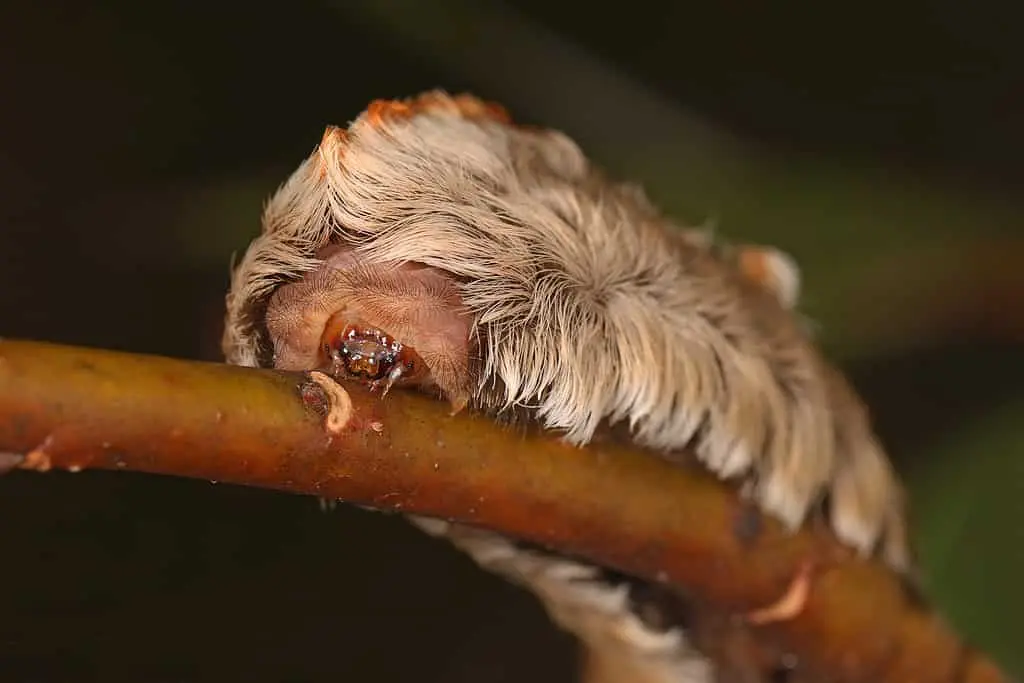
The puss caterpillar looks like a miniature wig of soft fur, often creamy white, gray, or golden brown. Beneath this furry disguise lie venomous spines capable of delivering excruciating pain. Victims describe the sting as worse than that of a wasp or hornet, often radiating to the bones and lasting several hours.
In addition to pain, the reaction can cause redness, swelling, nausea, and even chest pain. Because they often rest on oak and elm trees, gardeners, hikers, and children are the most at risk.
Despite being one of the cutest caterpillars you’ll ever see, it’s a perfect example of how nature uses deception to protect its creations.
4. Acharia stimulea (Saddleback Caterpillar)
Region: Eastern and Southern United States
Scientific Name: Acharia stimulea
Also Known As: Saddleback Slug Caterpillar
The saddleback caterpillar is a small, colorful insect that’s instantly recognizable — a bright green body with a distinctive brown “saddle” marking and a white spot in the center. Its body is covered with spiny protrusions that deliver a potent venom when touched.
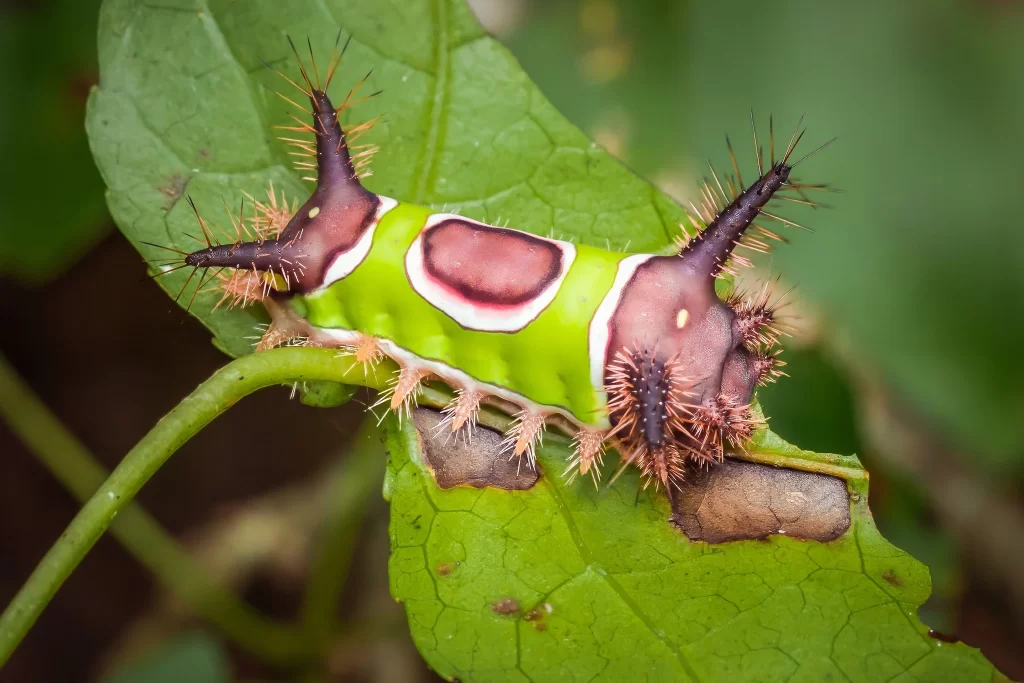
While it’s not usually life-threatening, the sting can cause immediate burning pain, swelling, nausea, and in some cases, more serious allergic reactions.
They commonly appear on ornamentals, fruit trees, and shrubs during late summer and fall. What makes them especially tricky is their small size and habit of hiding under leaves — you might touch one unknowingly while pruning or picking fruit.
Fun fact: The saddleback’s sting mechanism inspired studies on natural toxin delivery systems in insects.
5. Automeris io (Io Moth Caterpillar)
Region: North and Central America
Scientific Name: Automeris io
Also Known As: Io Moth Larva
Another stunner in the list of poisonous caterpillars, the Io Moth larva stands out with its striking lime-green body lined with red and white stripes and tufts of branching spines. Those spines contain venom that triggers an intense stinging sensation on contact.
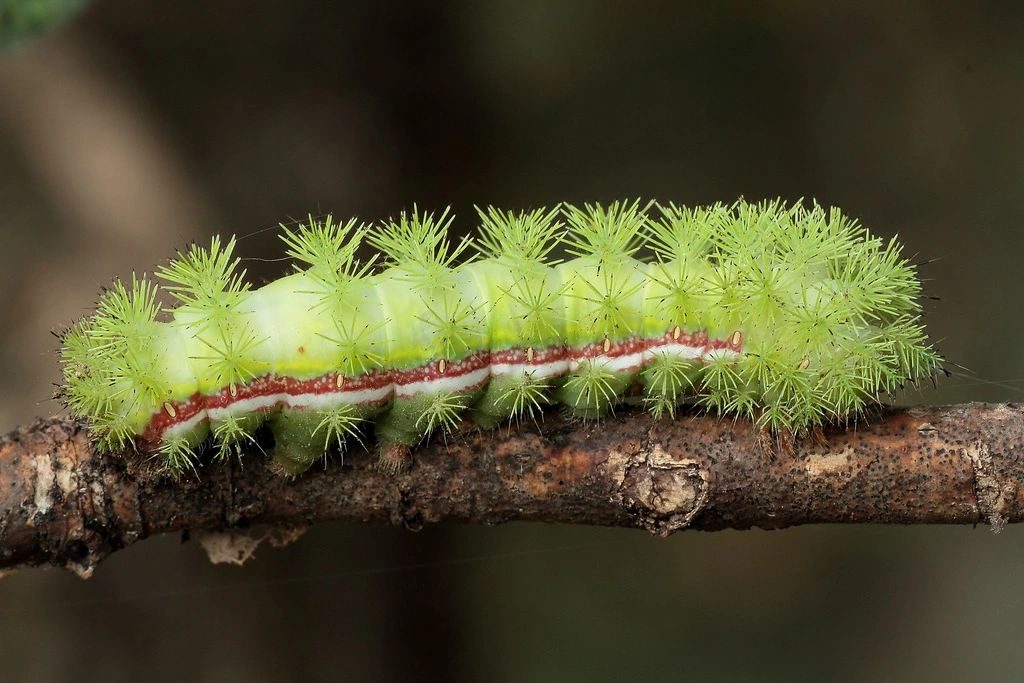
Reactions vary depending on sensitivity, but pain, itching, and rashes are common. In sensitive individuals, swelling and more severe allergic responses can occur.
While not deadly, its stings are painful enough to remember. Once matured, the Io moth transforms into a beautiful adult with bold eye-spots on its hindwings — one of the most dramatic transformations in North American moths.
6. Thaumetopoea pityocampa (Pine Processionary Caterpillar)
Region: Southern Europe, North Africa, Middle East
Scientific Name: Thaumetopoea pityocampa
Also Known As: Pine Processionary Moth Caterpillar
If you’ve ever walked through a pine forest in Europe and seen a trail of caterpillars marching head to tail, you’ve witnessed the pine processionary. During the warmer months, they descend from pine trees to pupate in the soil, often crossing walking paths or picnic areas.
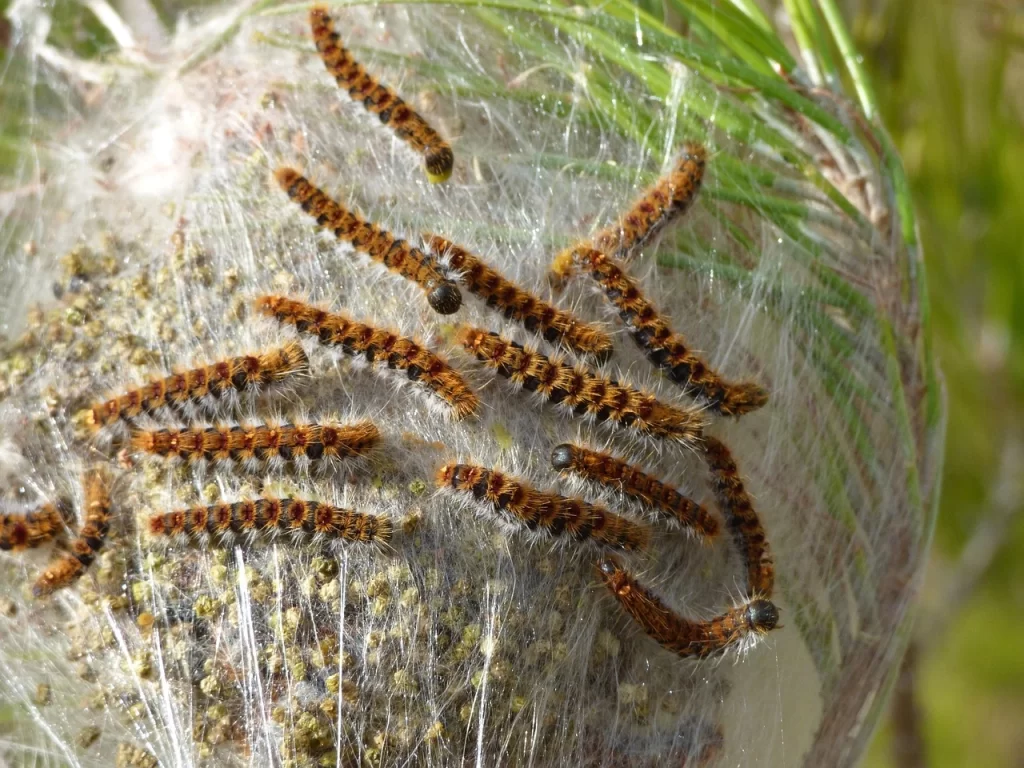
These fuzzy brown caterpillars travel in long lines, an iconic sight but also a dangerous one. Their hairs (called setae) contain toxins that cause severe irritation to skin and eyes. Inhaling them can lead to respiratory distress, and for pets, particularly dogs, contact can cause fatal reactions.
Governments in several European countries actively monitor and control their populations because of the health risks they pose to both humans and animals.
7. Ochrogaster lunifer (Bag-Shelter Moth Caterpillar)
Region: Australia
Scientific Name: Ochrogaster lunifer
Also Known As: Processionary Caterpillar, Bag Moth Caterpillar
In Australia, these poisonous caterpillars are notorious for forming dense silken nests on eucalypt trees. They also travel in “processions,” much like their European cousins, the pine processionaries.
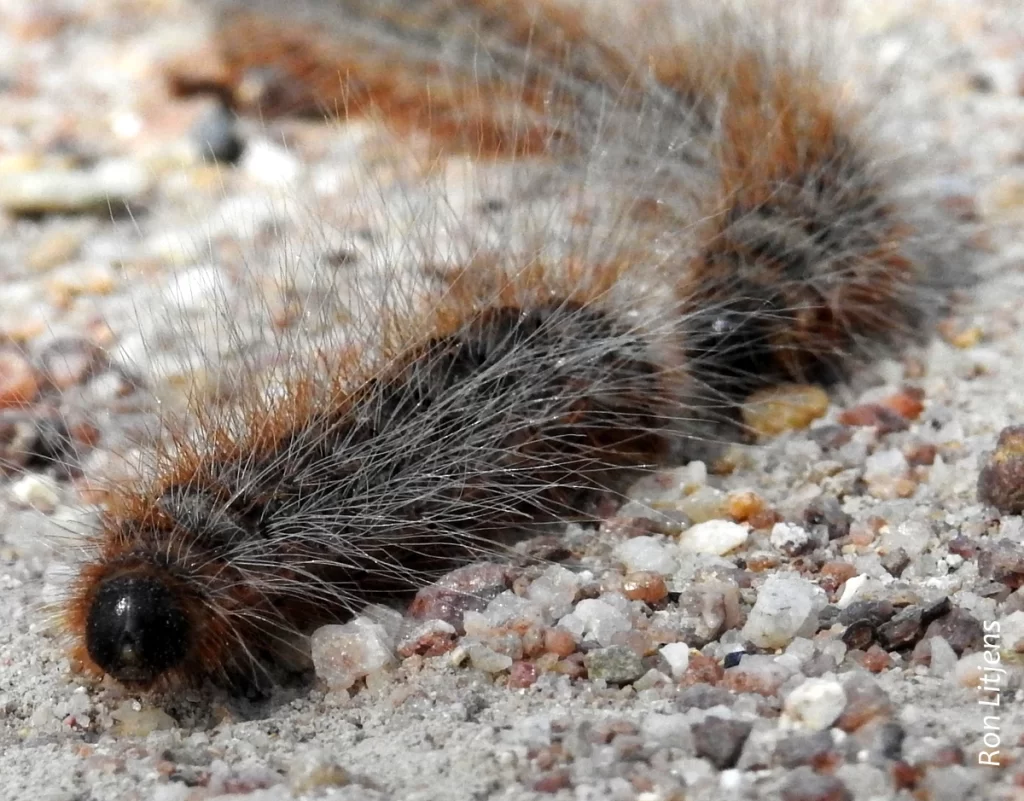
Their hairs are highly irritating, capable of causing intense itching, eye inflammation, and respiratory distress. Contact with contaminated clothing or even air currents carrying the hairs can provoke symptoms.
Farm workers, soldiers, and outdoor workers in Australia have reported outbreaks of “lepidopterism” — an allergic reaction caused by airborne caterpillar hairs.
Despite their hazards, they’re important in native ecosystems and serve as food for birds and parasitic wasps that help keep their numbers under control.
8. Orgyia leucostigma (White-Marked Tussock Moth Caterpillar)
Region: Eastern North America
Scientific Name: Orgyia leucostigma
Also Known As: Tussock Moth Caterpillar
This striking caterpillar is easy to identify — tufts of white hair, bright red head, and four distinctive white “toothbrush” bristles along its back. These caterpillars often appear in large numbers on deciduous trees like maples, birches, and oaks. Because of their appearance, children often mistake them for “cute” fuzzy worms an accident waiting to happen.
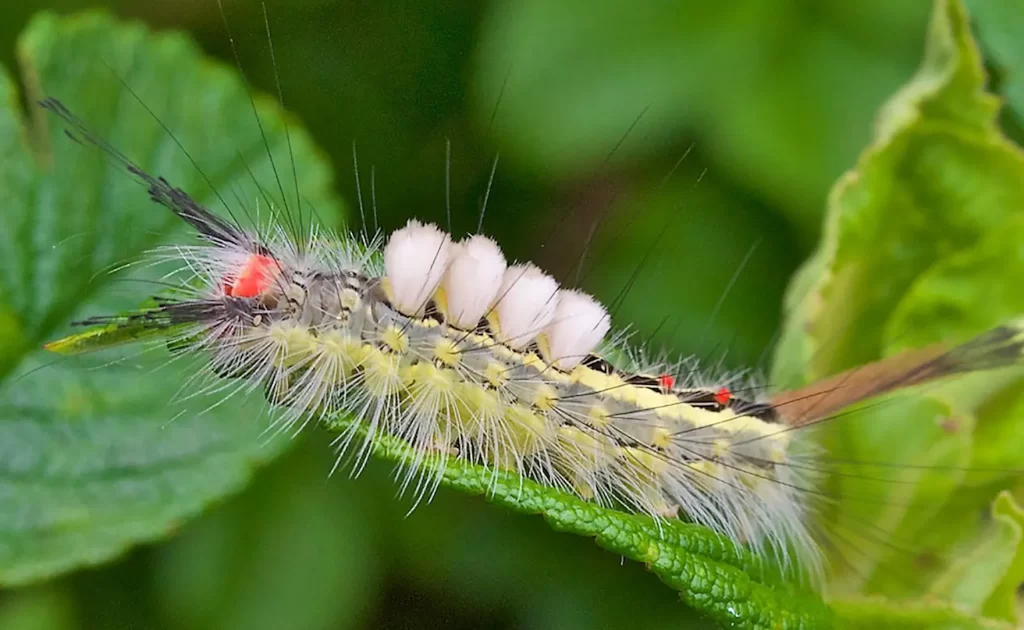
While not as dangerous as the Lonomia or Puss caterpillar, it can still cause painful rashes and irritation, especially in people with sensitive skin. The spines release histami
Although not life-threatening, the White-Marked Tussock Moth caterpillar is a good example of how mild forms of toxicity can still have ecological importance as a defence mechanism.
9. Phobetron pithecium (Hag Moth Caterpillar)
Region: Eastern United States and Canada
Scientific Name: Phobetron pithecium
Also Known As: Monkey Slug
This bizarre-looking caterpillar resembles a tiny brown octopus or tangled mass of legs. The resemblance helps it camouflage among dead leaves. But touch one, and you’ll immediately regret it.
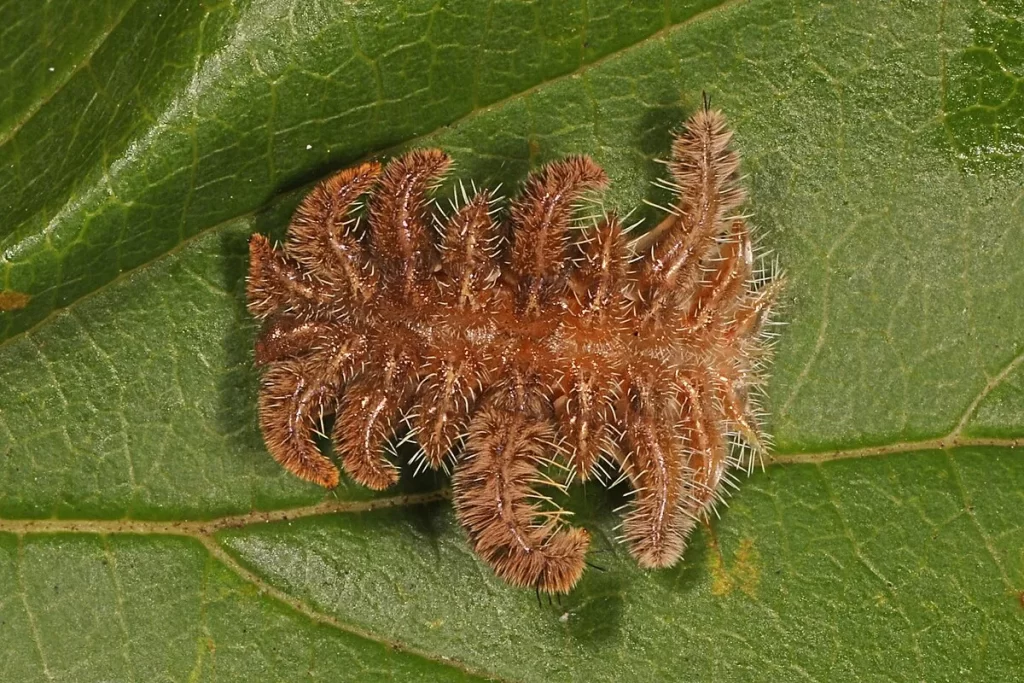
Its strange “arms” are actually lobes lined with venomous spines. Contact causes burning pain, redness, and swelling, sometimes followed by a lasting rash.
Interestingly, the Hag Moth caterpillar’s odd shape is not just for defense it also mimics dead plant material, confusing predators. Despite its small size, this is one of the most unique poisonous caterpillars in North America.
10. Lophocampa caryae (Hickory Tussock Moth Caterpillar)
Region: North America (especially Canada and the northeastern U.S.)
Scientific Name: Lophocampa caryae
Also Known As: Hickory Tussock Caterpillar
With its white fuzzy body and black tufts, this caterpillar looks almost angelic — but don’t be fooled. Its black bristles contain toxins that can irritate human skin, causing itching, redness, and inflammation.
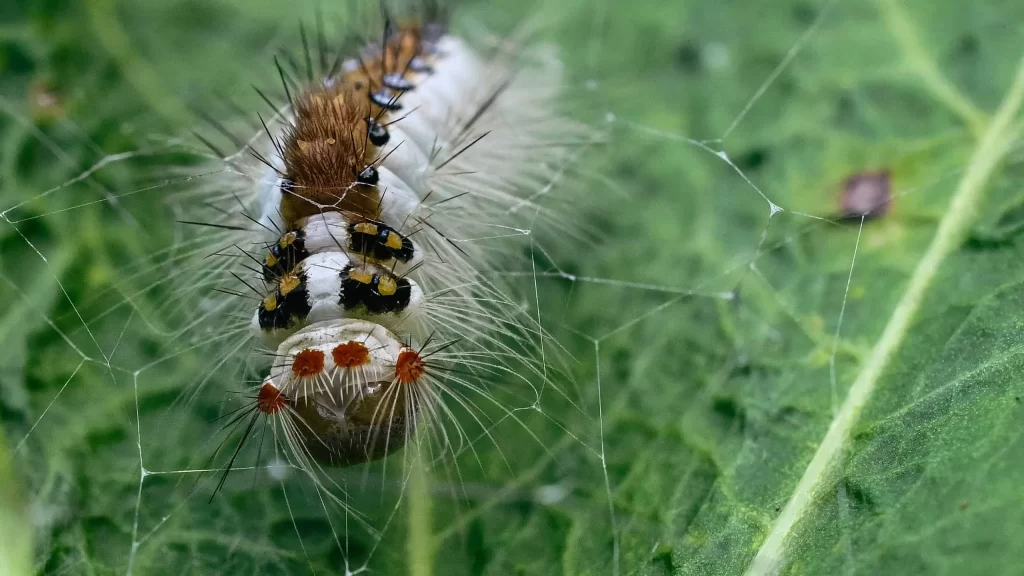
Unlike the deadlier species, the Hickory Tussock caterpillar’s sting isn’t life-threatening, but it can cause an unpleasant allergic reaction. In some individuals, the reaction escalates into welts or blistering.
These caterpillars feed on hickory, walnut, and pecan trees. They are more common during late summer and fall, when they become highly visible on tree trunks and garden plants. While their appearance might tempt you to take a closer look, keeping a safe distance is always the best choice.
Conclusion
Caterpillars are an essential part of ecosystems — they feed birds, pollinators, and even act as indicators of biodiversity. But as we’ve seen, some of them come with serious warnings attached. From the deadly Lonomia species in South America to the painful Puss caterpillar in the southern U.S., these creatures remind us that nature often hides its danger behind beauty.
Understanding these poisonous caterpillars helps you stay cautious while still appreciating their role in nature. The key isn’t fear it’s awareness. If you ever spot a fuzzy caterpillar that looks too vivid or unusual, the safest approach is to look, not touch. Take a photo, identify it later, and teach others to recognize the warning signs. Nature’s designs are intricate and often deceptive, and caterpillars are a perfect example of that. Their beauty draws us in — but their hidden defenses demand respect.