Table of Contents
In today’s rapidly evolving agricultural landscape, the demand for sustainable, eco-conscious food production methods is at an all-time high. As a result, both Organic Farming and Hydroponic Farming have emerged as popular alternatives to conventional practices. But with both promising “cleaner,” more efficient food, a common question arises: Are organic farming and hydroponic farming the same method?
Spoiler alert: No, they’re not. But the reasons why they differ might surprise you. In this comprehensive guide, we’ll explore the key principles, benefits, drawbacks, and sustainability implications of each method—helping you understand which one fits your values and growing goals best.
What Is Organic Farming?
Organic farming is a holistic agricultural system that focuses on maintaining the natural balance between soil, plants, animals, and humans. It emphasizes working with nature rather than trying to control it. At its core, organic farming avoids synthetic chemicals, GMOs (genetically modified organisms), artificial growth hormones, and pesticides.
Instead, organic growers rely on traditional techniques such as:
- Composting and organic manure for fertilization
- Crop rotation and cover cropping to maintain soil fertility
- Biological pest control using natural predators or microbial solutions
- Mulching and hand weeding to reduce weed growth
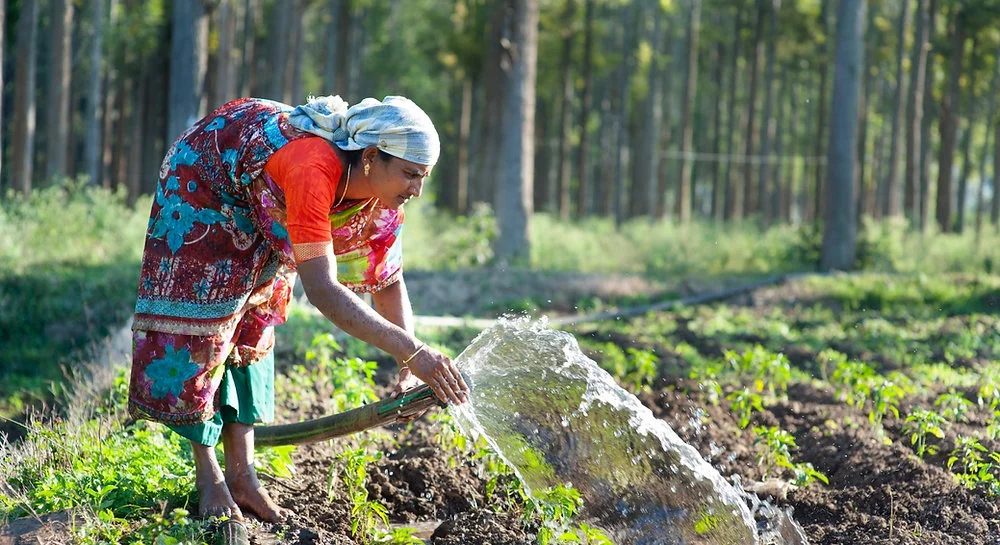
One of the defining features of organic farming is its strict certification requirements. In countries like the United States, the USDA (United States Department of Agriculture) outlines precise standards that farmers must meet to earn the certified organic label. These include maintaining soil health, protecting biodiversity, and ensuring animal welfare on organic farms.
Organic farming promotes long-term sustainability by enriching the soil, conserving water, and minimising pollution. It supports ecosystems, reduces chemical residues in food, and often produces crops that many believe have better flavor and nutritional profiles.
What Is Hydroponic Farming?
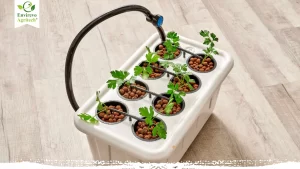
Hydroponic farming is a method of growing plants without soil. Instead, plants are cultivated in a controlled environment using nutrient-rich water solutions. Roots are either suspended directly in this solution or supported by inert media such as perlite, rockwool, coconut coir, or clay pellets.
Unlike traditional farming methods, hydroponics allows growers to precisely control the environment in which plants grow—this includes pH levels, nutrient concentration, light exposure, humidity, and temperature. This precision results in faster growth rates, higher yields, and the ability to farm in areas with poor or no arable soil.
There are several hydroponic systems, including:
- Nutrient Film Technique (NFT): A thin film of nutrient solution flows over the roots.
- Deep Water Culture (DWC): Roots are suspended in oxygenated nutrient-rich water.
- Drip Systems: Nutrients are delivered to each plant individually through a drip line.
- Ebb and Flow: Plants are periodically flooded with nutrients and then drained.
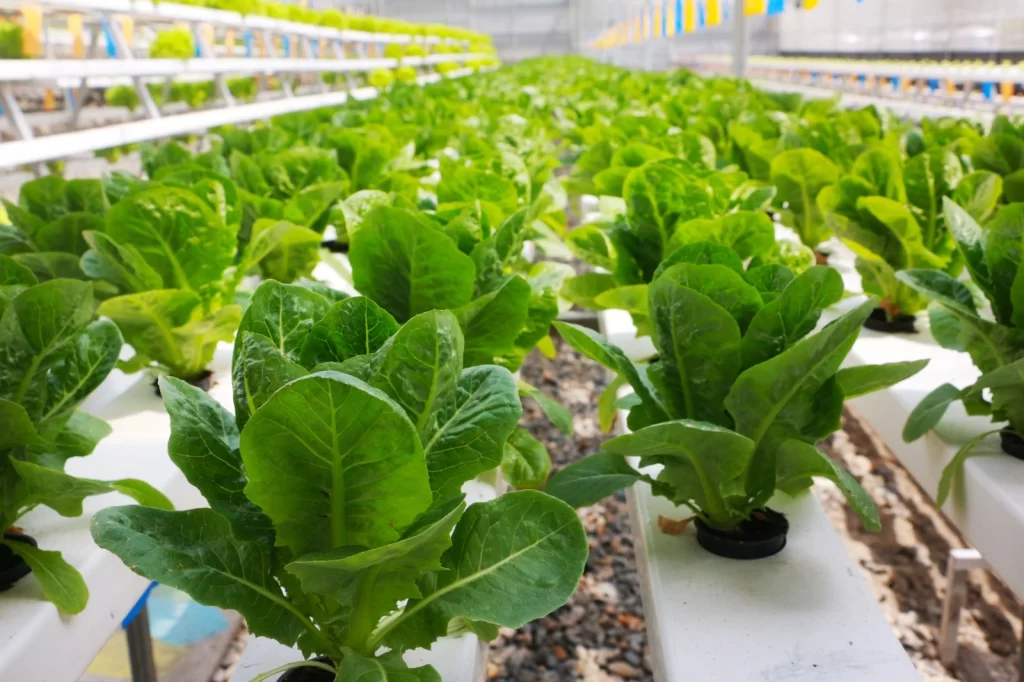
Because hydroponic systems are usually set up indoors or in greenhouses, they allow for year-round cultivation, minimal water waste, and protection from soil-borne pests and diseases. However, hydroponic farming often relies on manufactured nutrients and electricity to maintain systems, making its sustainability a matter of debate.
Key Differences Between Organic and Hydroponic Farming
At a glance, both organic and hydroponic farming aim to provide healthier, chemical-free food options. But their core philosophies, techniques, and resource use diverge significantly. Below is a comparison to help break down the contrast:
| Feature | Organic Farming | Hydroponic Farming |
| Growing Medium | Soil-based | Soilless (water or inert medium) |
| Nutrient Source | Natural compost, manure, organic fertilizers | Water-soluble, often synthetic nutrient solutions |
| Pest Control | Biological control, natural repellents | Physical control, IPM, biocontrol |
| Certification Standards | Strictly regulated (e.g., USDA Organic) | Varies; some systems may not qualify as organic |
| Water Use | Higher water usage in some systems | Highly efficient 80-90% less than soil; recirculates water |
| Space Requirements | Requires large tracts of land | Suitable for vertical farming and small spaces |
| Environmental Impact | Encourages biodiversity, supports ecosystems | Lower land use, but may use more energy |
While both farming methods may strive for sustainability and health-conscious outcomes, their approaches couldn’t be more different. Organic farming works in harmony with natural soil ecosystems, while hydroponic farming is about precision and control in a soil-free setting.
Can Hydroponic Farming Be Organic?
This is one of the most debated topics in modern agriculture: Can hydroponically grown food be considered organic?
According to the USDA, yes—it can be certified organic in the United States. As long as the hydroponic system adheres to organic standards such as using only approved substances, avoiding GMOs, and following strict documentation, certification is possible.
However, this decision has stirred controversy. Many traditional organic farmers argue that true organic farming is rooted in the soil, quite literally. They believe that organic certification should require natural soil management and regenerative practices, not just avoidance of synthetic chemicals.
In contrast, proponents of organic hydroponics argue that:
- The nutrient solutions can be derived from organic sources.
- Crops are grown without pesticides or herbicides.
- Water conservation is significantly better than in soil-based farming.
- Urban agriculture and vertical farms benefit from organic hydroponics.
In Europe, hydroponics is not allowed under organic labelling laws. The European Union mandates that organic crops must be grown in soil enriched with organic matter, excluding hydroponic and aquaponic systems from organic certification.
This discrepancy across regions highlights the ongoing tension between traditional and modern definitions of “organic.”
Pros and Cons of Organic Farming
Pros
- Environmentally Friendly: Organic farming promotes biodiversity, supports pollinators, and reduces soil erosion.
- Healthier Soil: Techniques like crop rotation and cover cropping build soil structure and fertility naturally.
- Reduced Chemical Exposure: Crops grown organically avoid synthetic pesticides, herbicides, and fertilisers.
- Sustainability: Encourages long-term ecological balance and minimises pollution of water bodies.
- Better for Livestock: In mixed farms, animals raised organically benefit from humane treatment and organic feed.

Cons
- Lower Yields: Organic methods often produce lower yields compared to conventional or hydroponic systems.
- Higher Labour Costs: Organic farming requires more manual work (weeding, pest control, composting).
- Pest Vulnerability: Without synthetic pesticides, crops may be more susceptible to pest outbreaks.
- Certification Challenges: Obtaining and maintaining organic certification is costly and time-consuming.
- Land-Intensive: Organic farming typically requires more land per unit of food produced.

Pros and Cons of Hydroponic Farming
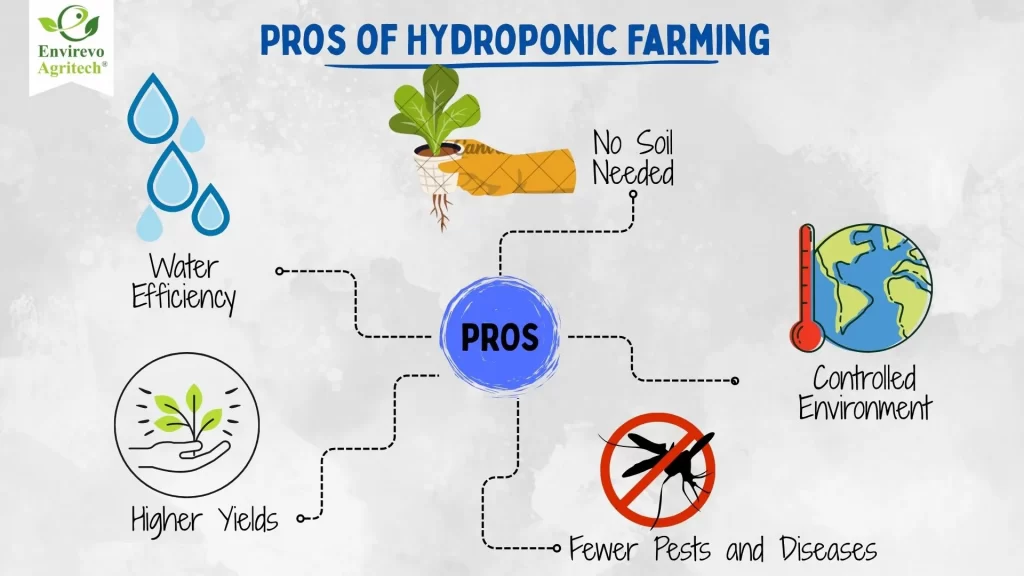
Pros
- Water Efficiency: Hydroponic systems use up to 90% less water than traditional farming, thanks to recirculation.
- Higher Yields: Plants grow faster and closer together, making efficient use of space.
- No Soil Needed: Can be set up anywhere—even in deserts, basements, or urban rooftops.
- Controlled Environment: Growers can fine-tune pH, nutrients, lighting, and climate, reducing crop failure.
Fewer Pests and Diseases: Controlled environments eliminate many soil-borne pests and pathogens.
Cons
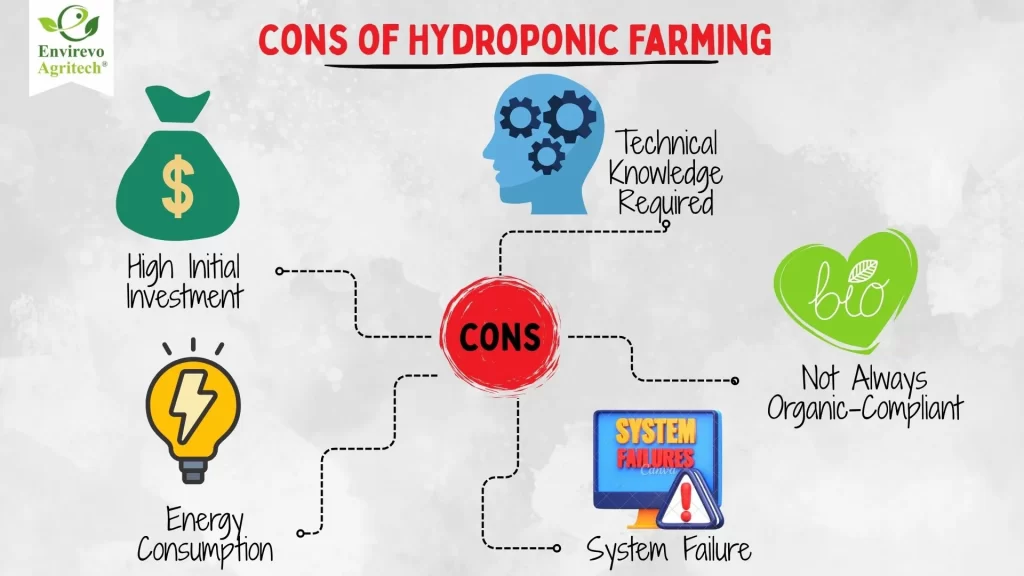
- High Initial Investment: Setting up a hydroponic system can be costly, especially for large-scale operations.
- Technical Knowledge Required: Successful hydroponic farming demands a good grasp of chemistry and system maintenance.
- Energy Consumption: Lighting, pumps, and climate control systems rely heavily on electricity.
- Not Always Organic-Compliant: Using synthetic nutrients can disqualify some hydroponic produce from organic certification.
- System Failures Are Risky: Power outages or equipment breakdowns can lead to rapid crop loss.
Which Farming Method Is More Sustainable?
The answer to this question depends on how you define sustainability. Organic farming shines when it comes to soil health, carbon sequestration, and biodiversity preservation. It supports a broader ecosystem, enriches the environment, and reduces harmful runoff into rivers and oceans.
On the other hand, hydroponic farming is incredibly water-efficient and space-saving. It uses 70-90% less water, produces food closer to consumption points (reducing transportation emissions), and allows year-round cultivation regardless of climate. However, the energy footprint of hydroponic systems—especially those relying on artificial lighting—can offset these gains unless powered by renewable energy.
In summary:
- Organic farming is more naturally aligned with ecological principles.
- Hydroponic farming excels in efficiency and adaptability, especially in urban or resource-scarce environments.
For truly sustainable agriculture, a hybrid approach—combining the resource efficiency of hydroponics with organic principles—may be the way forward.
Choosing the Right Method: Factors to Consider
Whether you’re a home gardener, a commercial grower, or an eco-conscious consumer, here are some questions to help you decide:
- Space: Do you have access to fertile land, or are you working in a small indoor space?
- Climate: Is your region suitable for year-round soil cultivation, or do extreme weather conditions limit productivity?
- Budget: Can you invest in hydroponic infrastructure, or would low-cost, organic methods suit you better?
- Expertise: Are you comfortable managing pH levels, electrical systems, and nutrient formulations?
- Values: Do you prioritise working with natural soil ecosystems or maximising efficiency through technology?
Ultimately, neither method is superior in every context. What matters is choosing a system that aligns with your values, environment, and long-term goals.
Conclusion
So, is organic farming the same as hydroponic farming? Not even close. While both strive for sustainability, reduced chemical use, and high-quality produce, their methodologies diverge sharply. Organic farming nurtures the soil and ecosystem in harmony with nature. Hydroponic farming, in contrast, removes soil from the equation entirely and leverages technology to optimize plant growth.
Each method has its strengths and limitations. Organic farming offers a time-tested, eco-friendly path rooted in tradition. Hydroponics presents a futuristic, resource-efficient solution for food production in a rapidly urbanising world. Instead of asking which is better, perhaps the more relevant question is: Which one is better for you?