Table of Contents
If you’ve ever found yourself standing in the produce aisle, staring at a pile of small reddish bulbs labelled shallots, wondering if they are just fancy onions, you’re not alone. Shallots are often confused with onions, and even some experienced cooks hesitate before deciding whether to treat them as interchangeable. They look like small onions, they taste somewhat like onions, and yet recipes that specifically call for shallots insist that they make a difference. So, what exactly are shallots, and are they truly onions in disguise?
In this article, we’ll take a deep dive into the world of shallots. We’ll explore what they are botanically, how they compare to onions, why chefs love them, how to use them properly in cooking, and what nutritional benefits they provide. By the end, you’ll not only know the answer to “Are shallots onions?” but also understand when and why to reach for them in your kitchen.
What Is a Shallot?
A shallot is a bulb vegetable that belongs to the allium family, the same botanical group that includes onions, garlic, leeks, scallions, and chives. This family is known for its strong flavours and aromatic compounds, which explain why these vegetables are so foundational in global cooking.
Unlike onions, which grow as single large bulbs, shallots grow in clusters. When you cut open a shallot bulb, you’ll find it is made up of multiple smaller cloves, much like garlic. Each clove is wrapped in a thin, papery skin that can range from rose pink to coppery brown, and the flesh inside is usually pale purple or white with delicate streaks.
Culinarily, shallots are prized for their flavour. They offer a refined balance between onion and garlic: milder than raw onion, less pungent than garlic, but with a sweetness and subtle sharpness that makes them incredibly versatile. This unique flavour profile is what has given shallots their reputation in fine cooking, particularly in French cuisine, where they are a cornerstone of sauces and vinaigrettes.
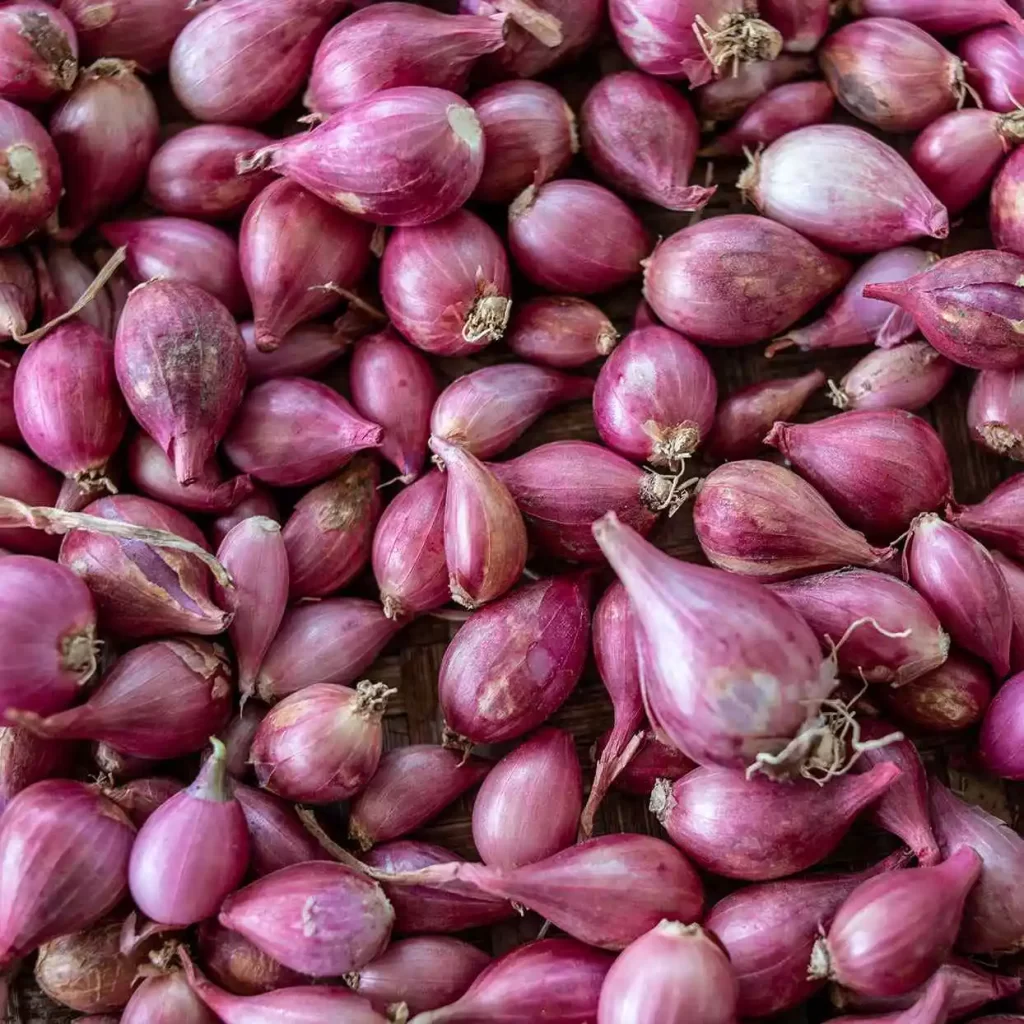
From a botanical perspective, shallots are not a completely separate species. Historically, they were classified as Allium ascalonicum, but genetic studies have since shown that they are a variety of the common onion (Allium cepa). This means that technically, yes, shallots are onions—but with very distinct characteristics that justify treating them as their own culinary ingredient.
Are Shallots Onions? – The Botanical and Culinary Answer
The short answer is both yes and no.
Botanically: Shallots are part of the onion species (Allium cepa). They are closely related to onions but develop differently, forming clusters of smaller bulbs instead of one large bulb. So from a scientific standpoint, they are onions.
Culinarily: Most chefs and home cooks would argue that shallots deserve their own category. In the kitchen, onions and shallots are not interchangeable in every recipe. Onions have a bold, pungent flavour that can dominate a dish, while shallots are delicate, nuanced, and more versatile in raw applications. Think of them as cousins: related, but with very different personalities.
This distinction is important for cooking. If a recipe specifically calls for shallots, substituting onions will not produce the same result. For example, a vinaigrette made with finely minced shallots has a gentle aromatic base, whereas using onions would overpower the dressing with sharpness. Similarly, sauces like béarnaise or beurre blanc rely on shallots precisely because they provide complexity without overwhelming the delicate balance of flavours.
So while shallots are technically onions, in practice, they should be treated as their own unique ingredient.
Shallots vs. Onions: Understanding the Differences
Appearance and Structure
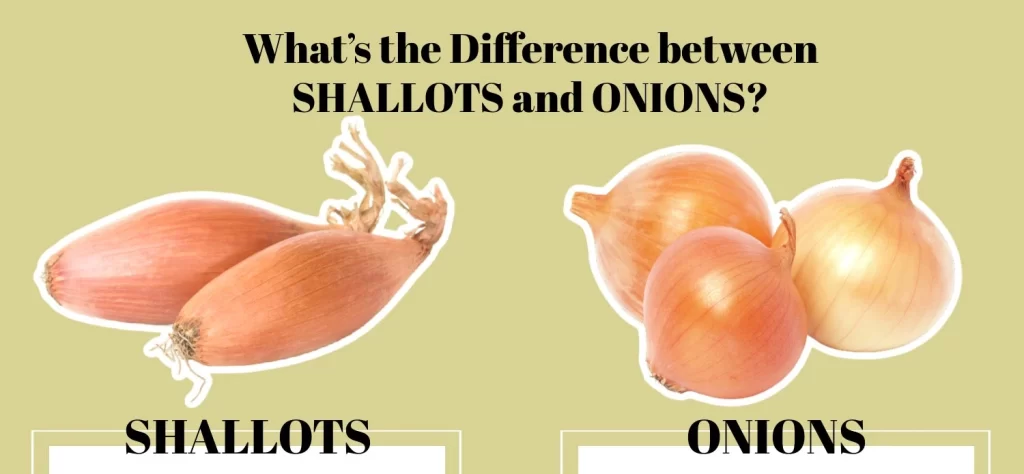
The most immediate difference between shallots and onions is how they grow and look. Onions form as single large bulbs, while shallots grow in small clusters, each bulb made up of several cloves. Onions typically have thicker skins, while shallots have thin, papery skins that peel away more easily.
The size of a shallot makes it more practical for recipes that call for a small amount of flavour. Instead of cutting into a large onion and storing the rest, you can use a single shallot clove and avoid waste. This makes shallots especially convenient in small-batch cooking.
Flavor Profile
Onions are known for their sharp, pungent bite when raw and their deep sweetness when caramelised. Shallots, on the other hand, are gentler. Raw shallots have a subtle sharpness, somewhat peppery but with a natural sweetness. Cooked shallots transform beautifully, developing a mild, almost buttery flavour that integrates seamlessly into sauces.
Another distinction is that shallots often carry a hint of garlic in their flavour profile. This is why many cooks describe them as a cross between onion and garlic, though they are not hybrids. That complexity is precisely why chefs reach for shallots in recipes that need layers of flavour without overwhelming the dish.
Culinary Uses
Onions are the backbone of countless recipes around the world, from soups and stews to stir-fries and curries. They provide a bold foundation and can carry heavy seasoning. Shallots, however, are often reserved for dishes where subtlety matters. They are perfect in vinaigrettes, salad dressings, delicate sauces, and quick sautés where you want flavour but not dominance.
For example:
- Shallots in French béarnaise sauce provide the mild aromatic foundation that balances tarragon and vinegar.
- Minced shallots in Asian pickles or fried shallots in Indonesian cuisine add texture and fragrance without sharpness.
- Thinly sliced raw shallots can elevate a salad or garnish with complexity that raw onion would overwhelm.
Varieties of Shallots
Not all shallots are the same, and recognising the varieties can deepen your appreciation for them.
- French Gray Shallot (Griselle): Considered the “true shallot” in French cooking, it has grayish skin and elongated bulbs. Its flavour is highly prized and more complex than common supermarket shallots.
- Jersey or Pink Shallot: These are rounder with rosy pink skin and are widely available in grocery stores. They are easy to grow and store well.
- Banana Shallot (Echalion): A larger, elongated variety that is easier to peel. Popular in the UK, it bridges the gap between onion and shallot.
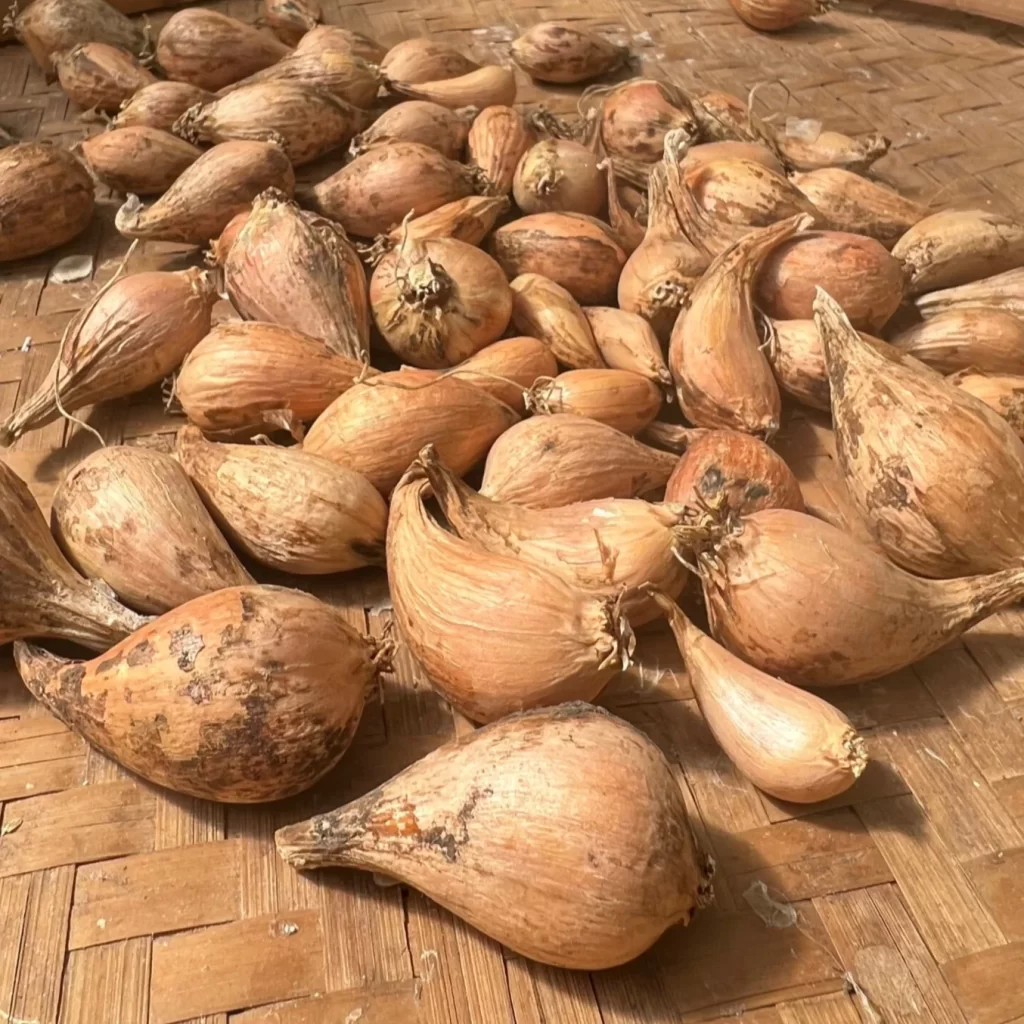
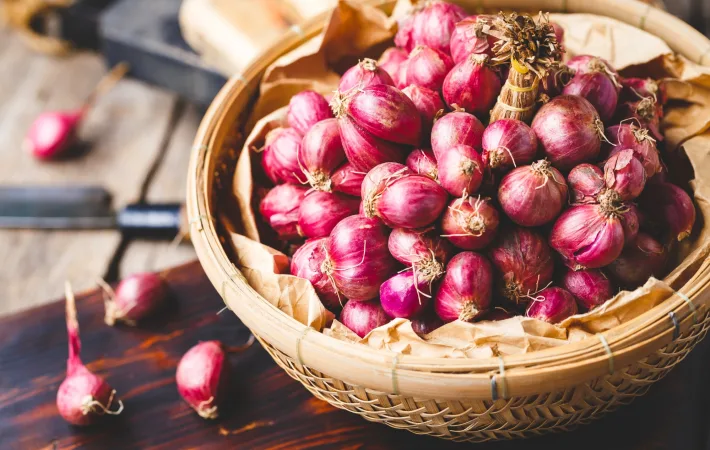
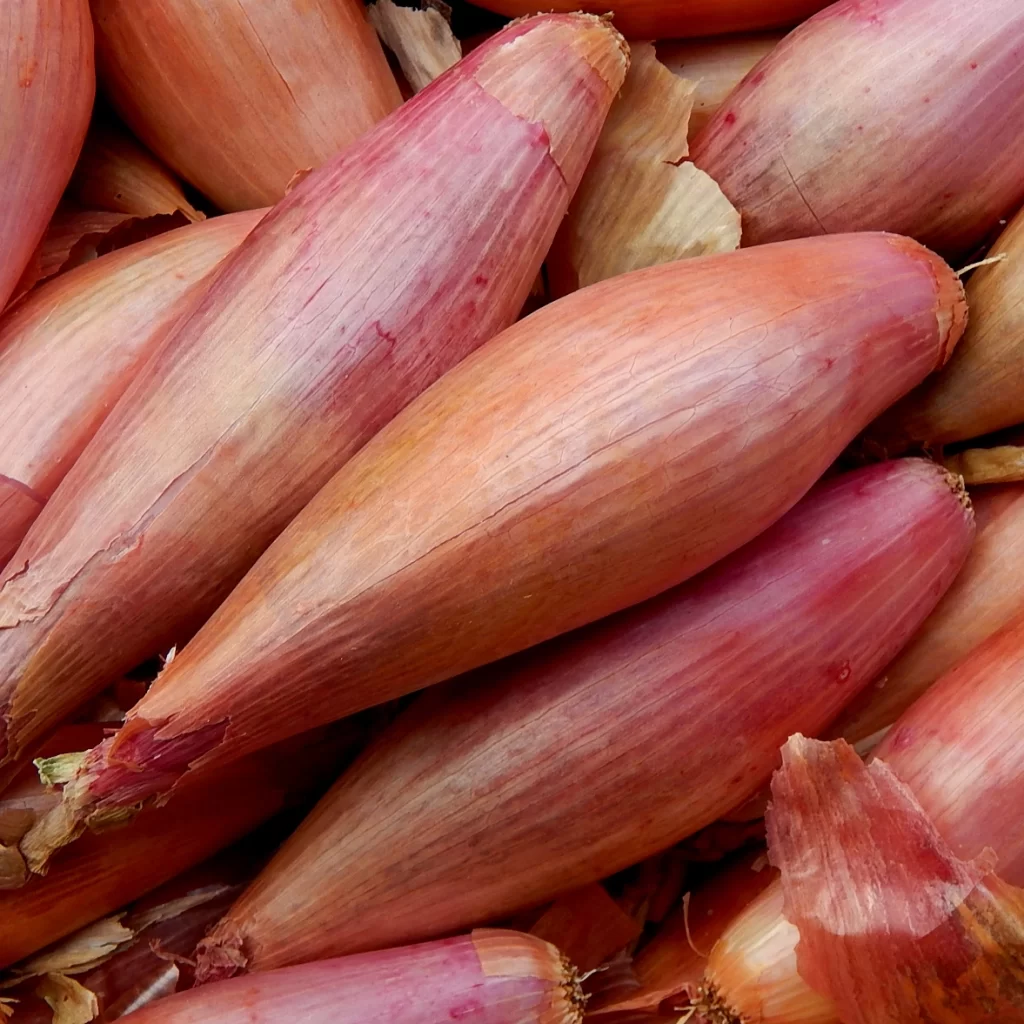
Different varieties may vary slightly in sharpness and sweetness, but all share the same essential characteristics of being milder and more complex than onions.
Related: How to Grow, Harvest and Store Lemon Balm: Complete Guide
Quick Reference Table
| Feature | Shallot | Onion |
| Flavor | Milder, sweeter, garlicky | Stronger, more pungent |
| Structure | Clustered bulbs | Single bulb |
| Culinary use | Vinaigrettes, sauces, garnishes | Soups, stews, bulkier dishes |
| Substitution | Can swap in, gently | Use sparingly in raw dishes |
| Storage | Cool, dry, dark | Same |
| Nutrition | Slightly higher micronutrients | Standard |
Why Chefs and Home Cooks Love Shallots
One of the biggest reasons shallots are beloved in professional kitchens is their ability to bring depth of flavor without overwhelming a dish. Onions can sometimes be too assertive, especially when raw, but shallots integrate smoothly. In small amounts, shallots can build the base of sauces, dressings, and soups. In larger amounts, they can be the star—roasted whole with meats, caramelised as a side, or pickled as a garnish. Their adaptability makes them a staple in fine dining but also approachable for everyday home cooking.
Another practical advantage is portion control. Recipes that require just a little allium flavour—like a pan sauce for two servings—benefit from shallots. Instead of cutting into a large onion and having to store the remainder, a single shallot clove often provides the perfect amount.
So, what are shallots and are they onions? Technically, yes—shallots are a type of onion in the botanical sense. But in the kitchen, they stand apart. Shallots are milder, sweeter, and more complex than onions, making them a valuable ingredient in recipes that call for nuance rather than blunt strength. Understanding this distinction helps you cook with more intention. Instead of defaulting to onions for every recipe, you can choose shallots when you want a dish to have subtle complexity. Whether in French sauces, Southeast Asian garnishes, or your own weeknight cooking, shallots bring a unique character that elevates food from ordinary to memorable.
The next time you see a recipe calling for shallots, don’t dismiss it as just an onion by another name. Embrace the shallot for what it is: a delicate yet powerful flavour booster that has earned its place in kitchens around the world.