Table of Contents
Asian greens have moved from niche produce shelves to everyday kitchens. They bring more than novelty. They offer diverse flavors, high nutrient density, and an impressive level of versatility. More people now look beyond the usual spinach, lettuce, and kale, and are actively seeking out asian vegetables and chinese vegetables for everyday meals. This guide explains what falls under these categories, how they differ, how to use them, and why they deserve space in your kitchen or garden.
What Exactly Are Asian Greens?
Asian greens include a large group of leafy vegetables, stem vegetables, and flowering brassicas traditionally used across East Asia, Southeast Asia, and parts of South Asia. They belong mostly to the Brassica family, but not exclusively. Many species come from Amaranthus, Basella, and Asteraceae families as well.
What makes Asian greens stand out is the spectrum of flavors. Some are mild and tender. Others are peppery, earthy, or even slightly bitter. Many hold their structure well under heat, which is why they’re ideal for stir-fries, hotpots, soups, and braised dishes.
Asian greens are typically:
- fast-growing
- high in micronutrients
- tolerant of warm climates
- flavorful without being heavy
- suitable for quick cooking techniques
They’re also adaptable. You can use them in salads, soups, curries, noodles, fried rice, and even as standalone side dishes.
What Are Chinese Greens?
Chinese greens are a subgroup of Asian vegetables specifically rooted in Chinese cuisine. They include well-known varieties like bok choy, gai lan, napa cabbage, and choy sum. Chinese vegetables have become global staples because they combine strong culinary tradition with practicality. Almost every major produce market now stocks several of them, and Chinese restaurants have introduced these greens to diners worldwide. Chinese greens can be leafy, stalky, flowering, or cabbage-like. Many of them are prized for their mild, slightly sweet taste and ability to pair with garlic, ginger, soy, and sesame without overpowering a dish.
Key traits of Chinese vegetables:
- quick cooking time
- resilience to both heat and water
- crisp textures even after stir-frying
- high levels of vitamins A, C, K, and folate
While all Chinese greens are Asian greens, not all Asian greens are Chinese. Japanese, Korean, Thai, Vietnamese, Filipino, and Malaysian cuisines contribute many of their own varieties, each with distinct profiles.
Nutritional Benefits of Asian Greens
Most asian vegetables and chinese vegetables come from plant families known for their nutrient density. They deliver high levels of vitamins, minerals, antioxidants, and phytochemicals.
Common benefits include:
- Rich in Vitamins and Minerals
- Vitamin A: supports vision, immunity
- Vitamin C: antioxidant and collagen support
- Vitamin K: bone health
- Folate: cellular repair
- Calcium and Potassium: essential electrolytes
- High Antioxidant Capacity: Especially in brassicas like bok choy, gai lan, mustard greens, and mizuna. Their glucosinolates and flavonoids protect cells from oxidative stress.
- Low Calorie, High Fiber: These greens add bulk to meals without adding calories, which is ideal for satiety and digestion.
- Improved Gut Health: Leafy and stem vegetables offer soluble and insoluble fiber that maintain healthy digestion and support a diverse microbiome.
- Anti-Inflammatory Compounds: Many Asian greens contain phytochemicals with anti-inflammatory properties, helpful for reducing chronic inflammation when consumed consistently.
Top 10 Popular Asian Greens & Vegetables
1. Bok Choy (Pak Choi)
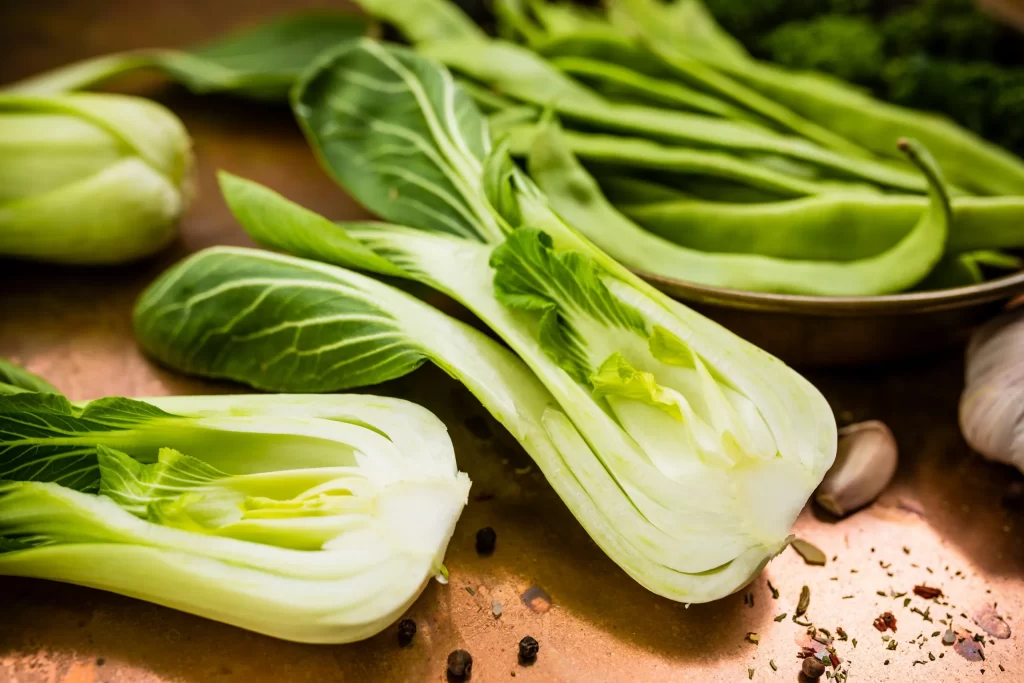
Bok choy is one of the oldest cultivated Chinese vegetables, dating back more than 1,500 years in the Yangtze River Delta. It belongs to the Brassica family but stands out for its two-part structure: crunchy white stalks and soft, spoon-like leaves.
The plant matures fast, often in 30–45 days, which is why it’s commonly grown in urban Asian farms. Temperature swings don’t bother it much, but intense heat can trigger early flowering.
- Flavor: Mild, slightly sweet
- Best for: Stir-fry, soups, steaming
2. Napa Cabbage (Chinese Cabbage / Wombok)
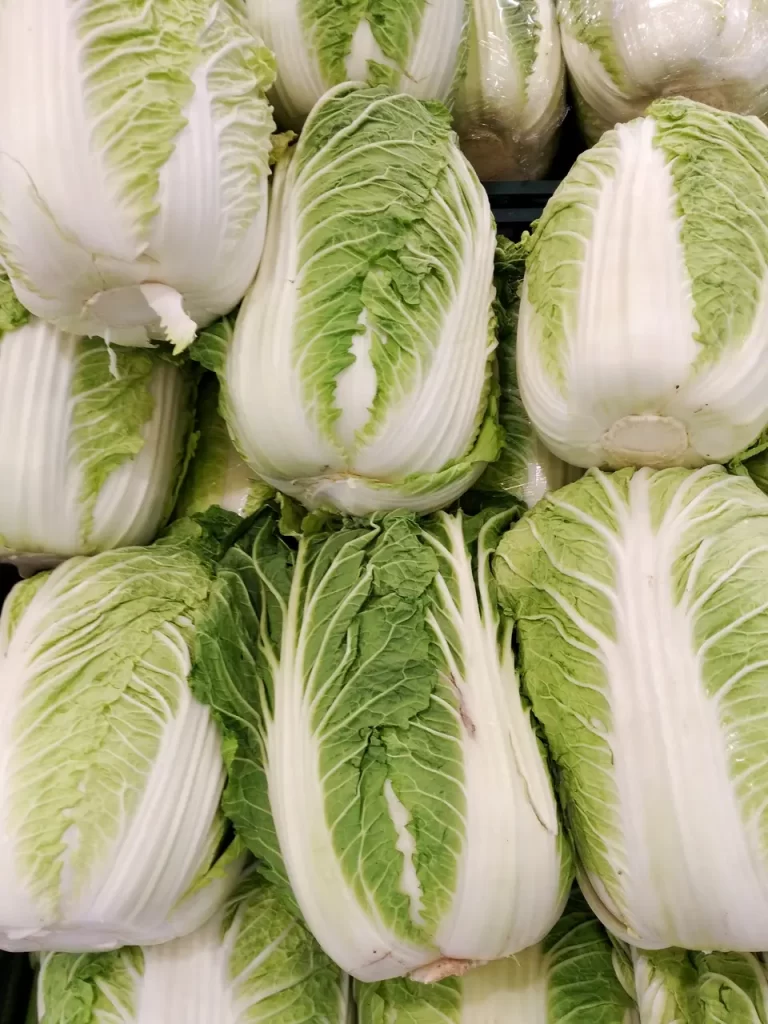
Napa cabbage likely originated in Northern China as a natural hybrid between turnips and bok choy. It has a looser head compared to Western cabbage and holds water in its veins, which explains the juicy bite. Its mild flavor allows it to disappear into soups without overpowering other ingredients. When fermented, its water content reacts beautifully with salt to create the brine essential for kimchi.In dumpling fillings, the cabbage is often salted first to remove excess moisture, preventing soggy wrappers.
- Flavor: Mild and juicy
- Best for: Fermentation, soups, braised dishes
3. Gai Lan (Chinese Broccoli)
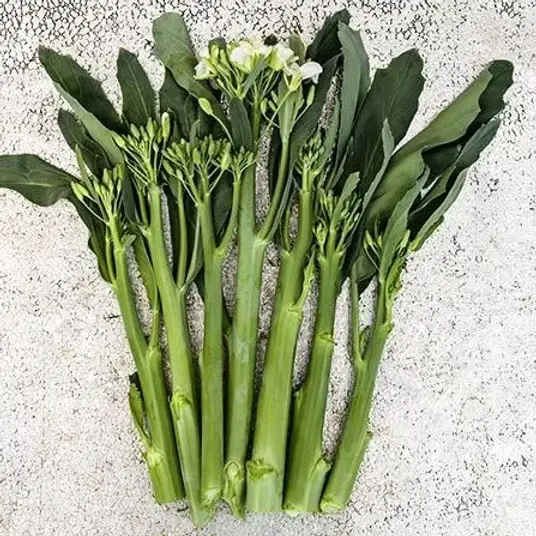
Gai lan is more robust than broccoli, with a denser stem and slightly more bitterness. It thrives in cooler seasons and is one of the top winter greens in Cantonese cuisine. The bitterness is not a flaw but a flavor dimension prized in Southern Chinese cooking. Chefs often blanch gai lan first to soften the fibers, then finish it with oil or oyster sauce. Its leaves have a mineral-rich taste, while the stems retain a snap similar to asparagus.
- Flavor: Slightly bitter, robust
- Best for: Stir-fry, steaming
4. Choy Sum

Choy sum is a flowering brassica with slender stems and delicate leaves. While often confused with bok choy, it is more aromatic and sweeter. Its yellow blossoms indicate prime harvest time. The flowers develop mild nectar-like sweetness, making them a favorite in stir-fries. Because the stems are thin, they cook in less than a minute.
In hotpots, choy sum absorbs broth without falling apart, unlike bok choy which can become too soft. The plant has a high natural water content and wilts faster, which is why Asian markets sell it fresh daily.
- Flavor: Mild with a sweet note
- Best for: Quick stir-fries, noodle soups
5. Tatsoi
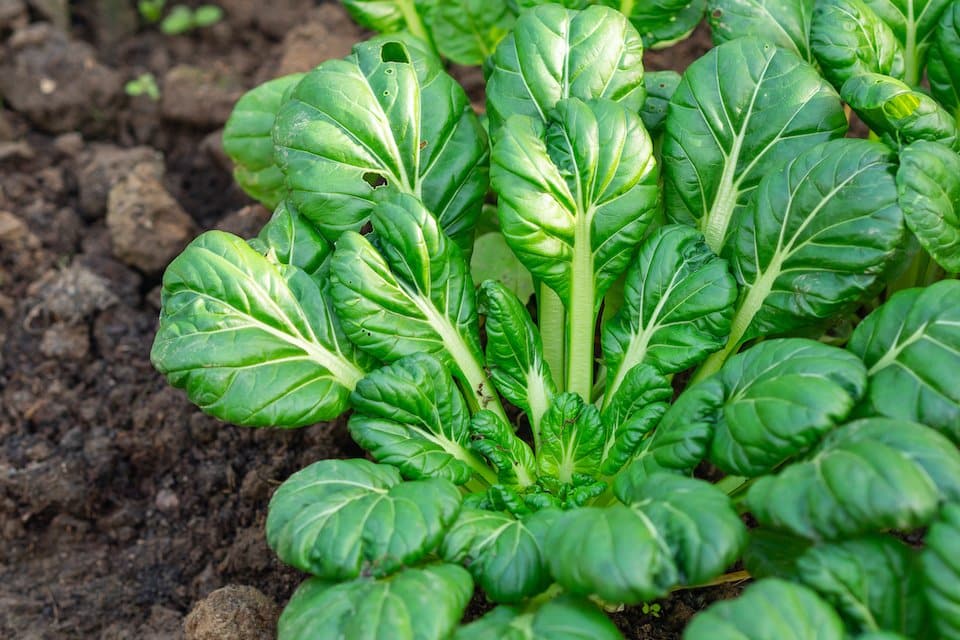
Tatsoi grows close to the soil in a rosette form, with thick glossy leaves. It can survive light frost and becomes sweeter after cold exposure as the plant converts starch to sugar for protection. Its creamy texture after cooking makes it useful as a spinach alternative. Raw tatsoi adds body to salads because of its spoon-shaped leaves. It also holds dressing well without turning soggy.
When used in soups, tatsoi softens quickly and delivers a mild mustard undertone.
- Flavor: Mild mustard flavor
- Best for: Salads, sautéing, soups
6. Mizuna

Mizuna has feathery, serrated leaves that look delicate but hold up under heat. It originated in Kyoto and was historically grown in winter greenhouses called “muro.” Its sharp peppery note adds complexity to salads, noodles, and hotpots. Mizuna doesn’t collapse easily in broth, so it’s a staple in shabu-shabu.
Some modern chefs use mizuna as a replacement for arugula, but mizuna is milder and less bitter. Mizuna absorbs flavors quickly, which is why it’s often added toward the end of cooking.
- Flavor: Peppery, fresh
- Best for: Raw dishes, soups, noodle broths
7. Mustard Greens (Asian Varieties)
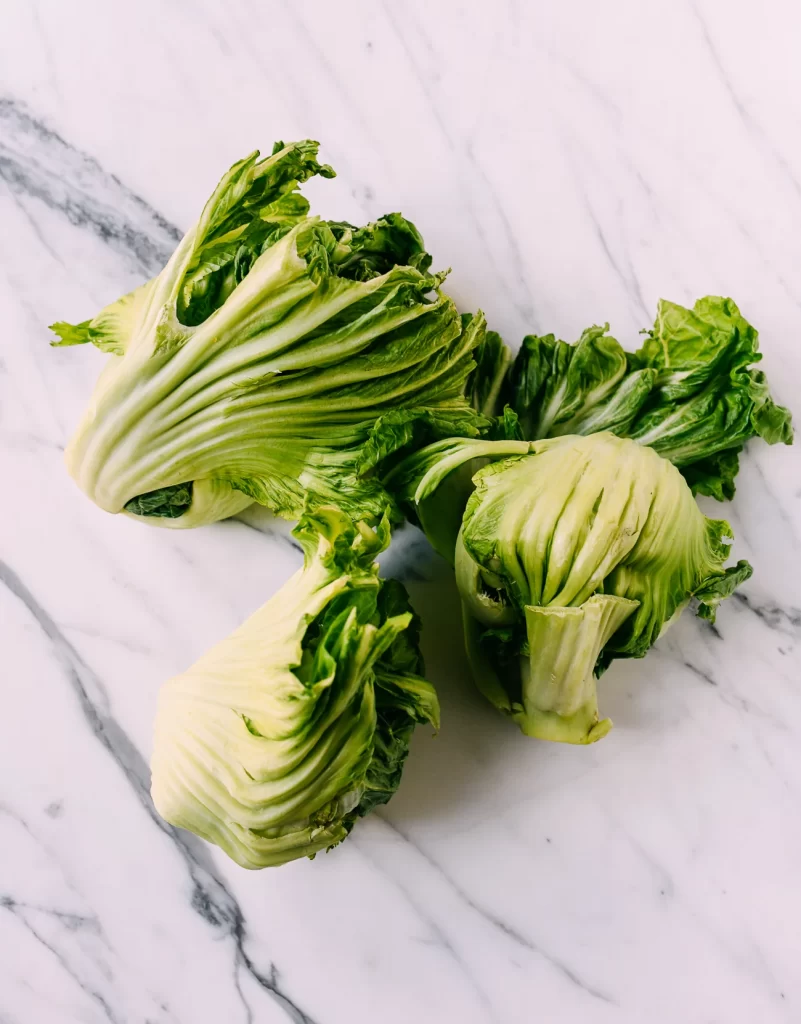
Asian mustard greens come in curly, flat, red-veined, and broad-leaf forms. Their pungency comes from naturally occurring mustard oils that intensify when the leaves are bruised or chopped. These greens are ideal for pickling. In Vietnamese cuisine, they’re fermented with chili and garlic. In China’s Sichuan region, mustard stems are preserved and sold as a popular condiment called zhacai.
When cooked, mustard greens mellow and develop a deep, almost meaty flavor.
- Flavor: Spicy and pungent
- Best for: Pickling, sautéing, soups
8. Water Spinach (Kang Kong / Ong Choy/ Ipomoea aquatica)
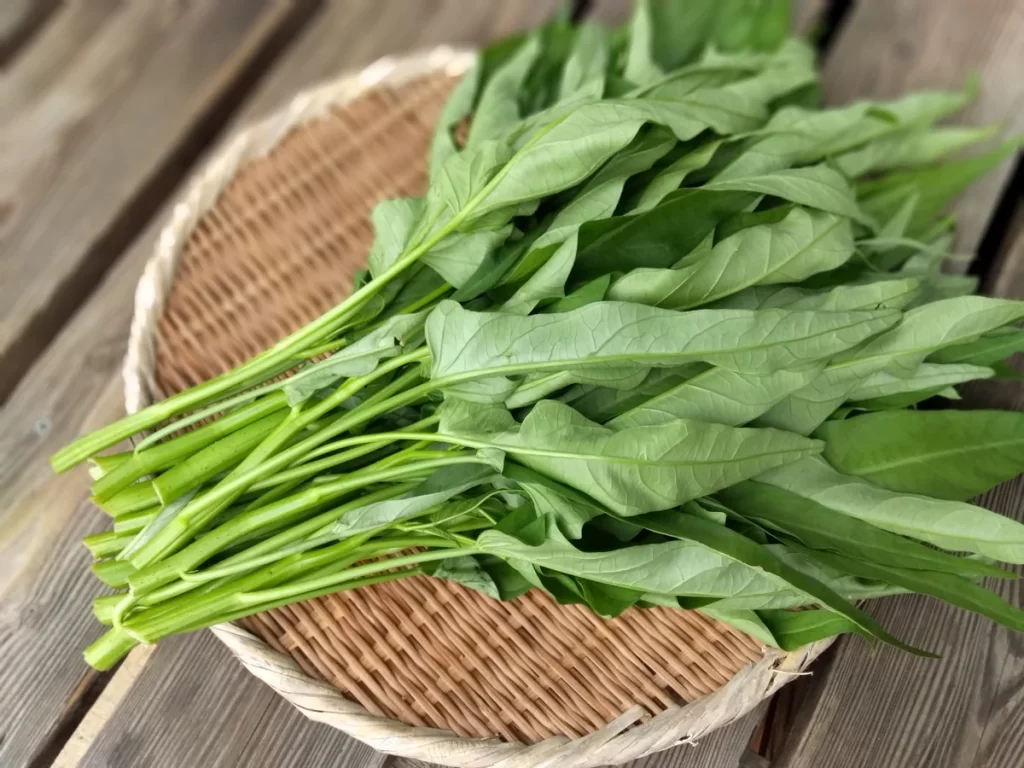
Water spinach grows aggressively in tropical wetlands. Its hollow stems are its trademark feature, allowing heat to pass through quickly, which gives the vegetable a light crispness when stir-fried. In Southeast Asia, water spinach is iconic. The Thai version often uses chili and fermented soy paste. The Filipino version includes garlic and vinegar. Because it cooks in under two minutes, it’s perfect for high-heat wok cooking.
The stems and leaves taste different: stems are crunchy; leaves are soft and silky.
- Flavor: Earthy and mild
- Best for: Stir-fry with garlic and chili
9. Amaranth Greens (Chinese Spinach)
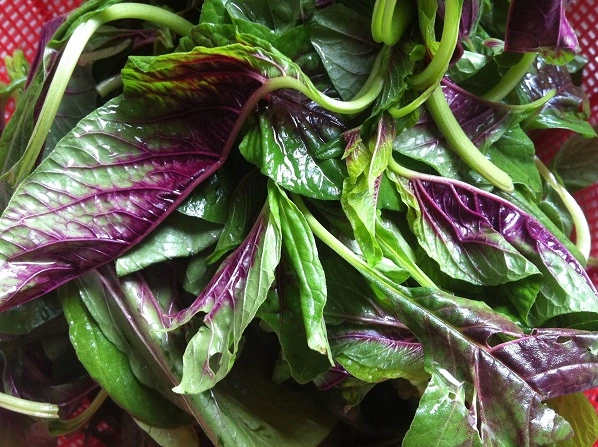
Amaranth has several culturally distinct varieties. Red amaranth turns broth or stir-fry water a vivid pink due to its high betalain content. Green amaranth has a more earthy, spinach-like profile. In Chinese cuisine, amaranth is commonly stir-fried with garlic. In Indian households, it becomes dal or dry sabzi. Its leaves soften quickly and have a naturally smooth mouthfeel.
The stems stay firm longer, adding contrast to dishes.
- Flavor: Slightly earthy
- Best for: Stir-fry, soups
10. Malabar Spinach
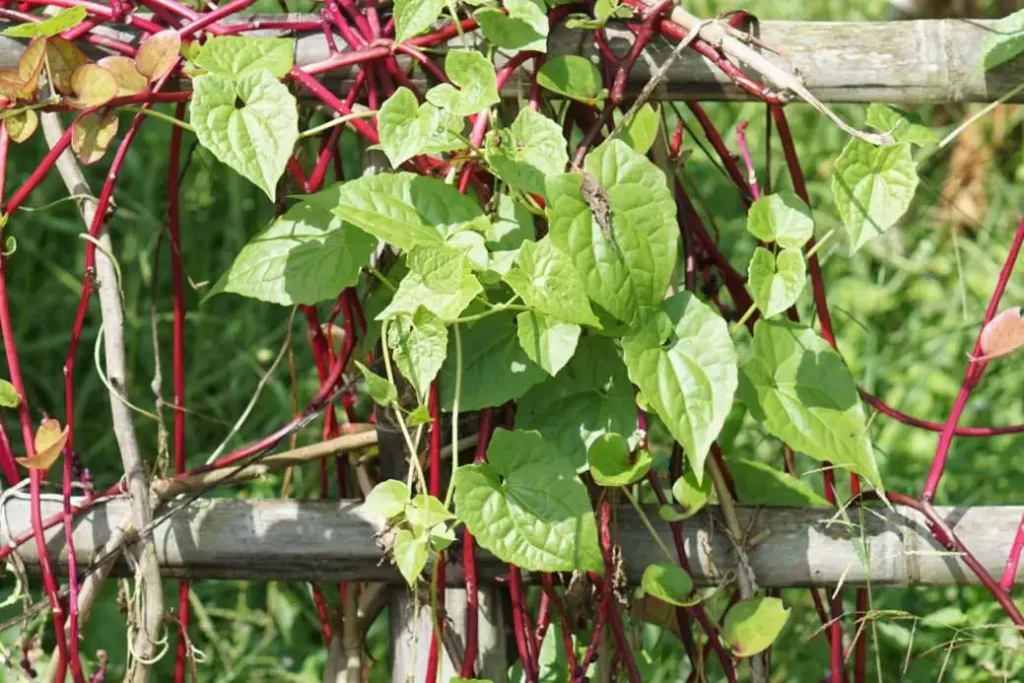
Malabar spinach is a tropical climber with thick, glossy leaves. Unlike traditional spinach, it doesn’t wilt under heat or sun. Its mild mucilaginous quality helps thicken soups and curries. Used widely in Indian, Sri Lankan, and Southeast Asian dishes. The red-stemmed variety adds a purple tint to broths.
Stems are often cooked longer than leaves due to their thickness. When sautéed quickly, Malabar spinach maintains a springy texture.
- Flavor: Mild but slightly mucilaginous
- Best for: Curries, stir-fry
11. Shungiku (Chrysanthemum Greens)
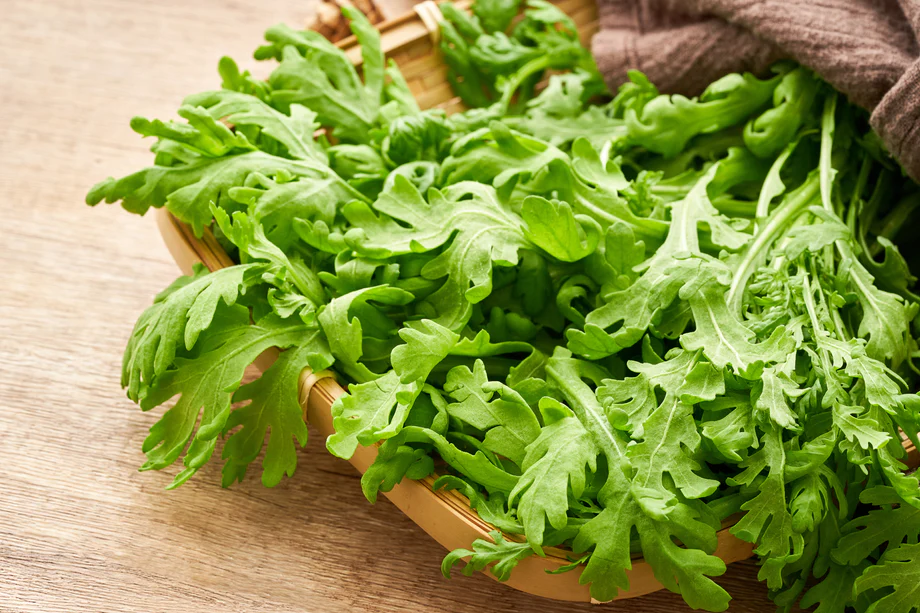
Shungiku has a very distinct aroma that splits opinion. Its herbal and slightly floral profile stands out in hotpots, where it’s added at the end to avoid bitterness. Japanese, Korean, and Chinese cuisines all use it differently. In Korean homes, it’s added to sukiyaki bowls and fish soups. In Japan, it’s used in nabemono. Shungiku wilts quickly, so it’s best cooked last.
- Flavor: Herbal, slight bitterness
- Best for: Hotpot, soups
12. Celtuce (Wosun / Stem Lettuce)
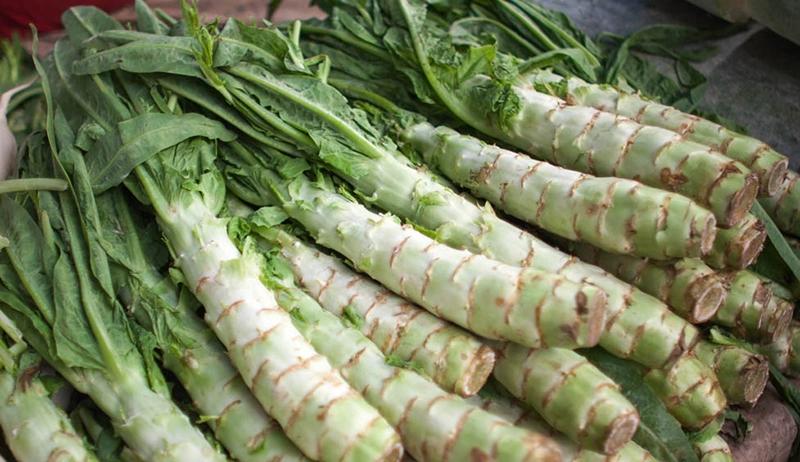
Celtuce is grown mainly for its thick stem, which has a refreshing crunch similar to water chestnut or cucumber. The name combines “celery” and “lettuce” because the flavor hints at both. The stem is peeled to remove the fibrous outer layer, then sliced thin for stir-fries. When pickled, celtuce stays crisp for weeks. Its leaves are edible too, but the stem is the culinary star.
- Flavor: Crisp, nutty
- Best for: Stir-fry, raw salads, pickles
Choosing the Right Asian Greens for Each Cooking Method
Best for Stir-Frying
- Gai lan
- Bok choy
- Choy sum
- Water spinach
- Mustard greens
Best for Soups and Hotpots
- Tatsoi
- Mizuna
- Napa cabbage
- Shungiku
Best for Raw Dishes
- Tatsoi
- Mizuna
- Baby bok choy (thinly sliced)
Best for Fermentation and Pickling
- Napa cabbage
- Mustard greens
- Amaranth stems
Stir-frying typically concentrates flavor and keeps textures crisp. Soup-based cooking allows leaves to soften and absorb broth. Raw use highlights subtle flavors.
How to Choose and Store Asian Greens
Freshness determines flavor and nutritional value.
How to Choose
- Look for vibrant green leaves without yellowing
- Stems should be firm
- Avoid greens with excessive moisture at the base
- Smaller leaves tend to be sweeter and more tender
How to Store
- Wrap unwashed greens in a dry kitchen towel
- Store inside a container or perforated bag
- Refrigerate in the crisper drawer
- For tender greens, use within 3–4 days
- For sturdier greens like gai lan, you may get up to 5–7 days
A quick ice-water bath can revive wilted leaves.
Commonly Confused Asian Greens
- Bok Choy vs Baby Bok Choy: Same plant, different maturity level. Baby bok choy is sweeter and cooks faster.
- Gai Lan vs Broccolini: Broccolini is a hybrid between gai lan and broccoli. Gai lan has thicker stems and a stronger flavor.
- Choy Sum vs Bok Choy: Choy sum has flowering stalks and softer leaves. Bok choy has more structure.
- Mizuna vs Arugula: Both are peppery, but mizuna is milder and has a frillier texture.
- Napa Cabbage vs Regular Cabbage: Napa is softer and juicier with a sweeter profile.