Table of Contents
If your bean plants look like lace and you’re wondering what went wrong, you’re not alone. One of the most frustrating pests for bean growers across North America is the Mexican bean beetle (Epilachna varivestis). This tiny yet destructive insect has been a thorn in the side of home gardeners and farmers alike for decades.
But 2025 brings new insights, smarter strategies, and clearer answers on what truly works—and what doesn’t—when it comes to controlling the Mexican bean beetle. Whether you’re a backyard gardener or a small-scale farmer, this comprehensive guide will walk you through everything you need to know to protect your plants and avoid wasting time on ineffective solutions.
What Is the Mexican Bean Beetle? (And Why It’s So Destructive)
The Mexican bean beetle belongs to the same family as the beneficial ladybug (Coccinellidae), but don’t let that fool you. Unlike their aphid-eating cousins, these beetles are plant feeders—specifically, they target legumes such as snap beans, lima beans, soybeans, and cowpeas.
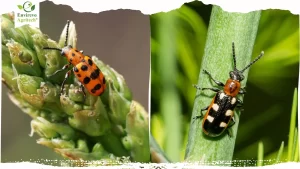
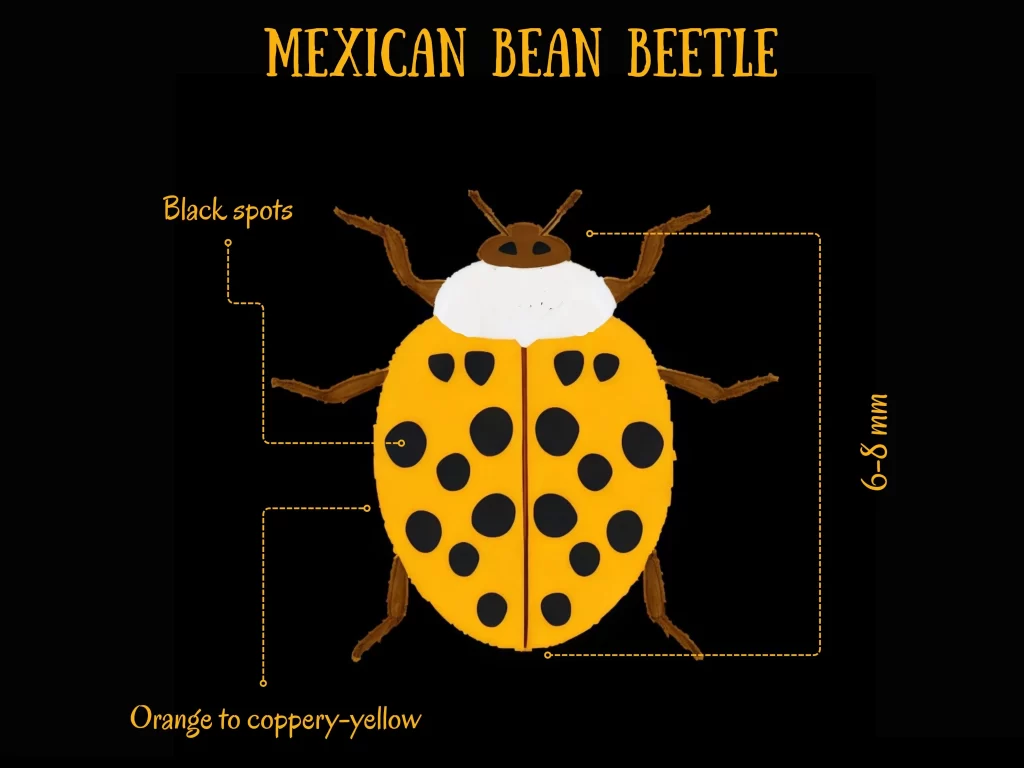
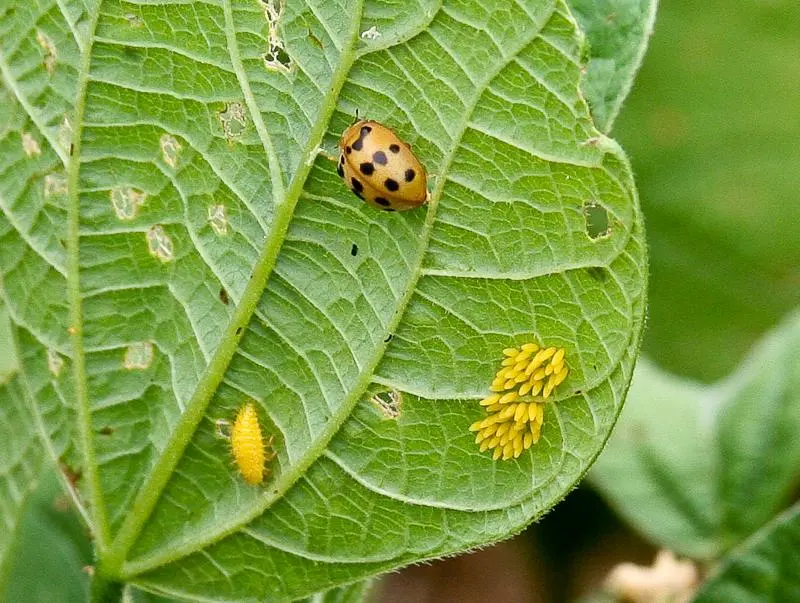
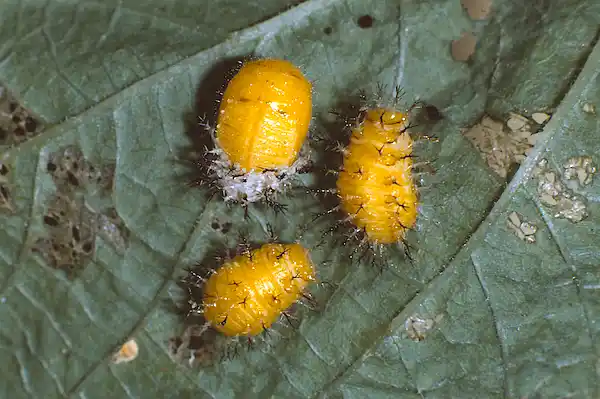
Adult Mexican bean beetles are around 6–8 mm long and appear dome-shaped like ladybugs, but their colouration ranges from orange to coppery-yellow with 16 black spots arranged in three rows on their backs. Larvae are yellowish and covered in soft spines, resembling a cross between a caterpillar and a hedgehog.
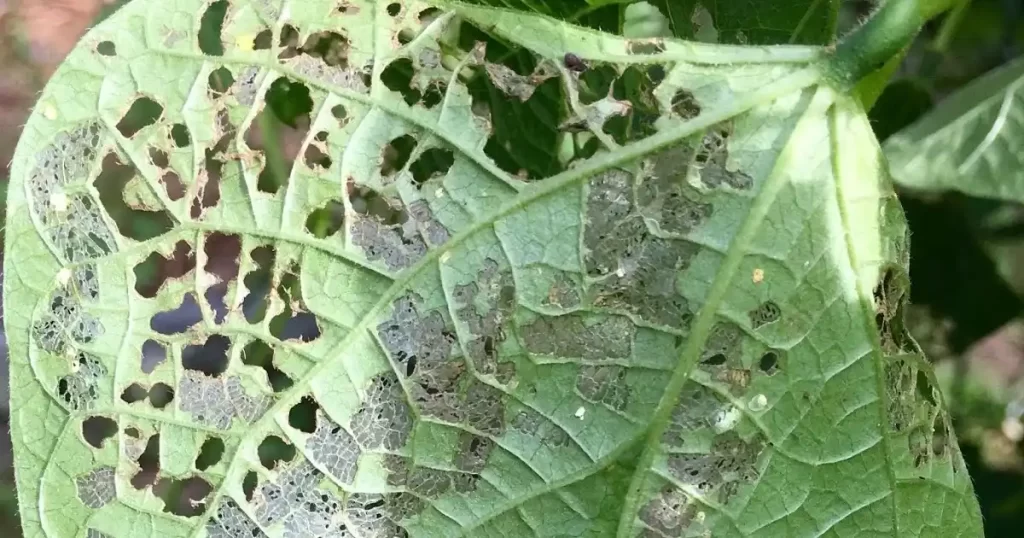
What makes them particularly dangerous is the fact that both larvae and adults feed on plant tissue, especially the undersides of leaves. The damage results in a lacy, skeletonized appearance that reduces the plant’s photosynthetic ability, weakens overall growth, and ultimately leads to reduced yields or complete crop failure if left unchecked.
The lifecycle of the Mexican bean beetle also makes it hard to manage. In warm regions, multiple generations may emerge in a single growing season, especially in places like the southern United States.
How to Identify a Mexican Bean Beetle Infestation
Early detection is the key to effective control. The challenge is that Mexican bean beetles can easily be mistaken for friendly ladybugs, especially when seen quickly on a leaf. Here’s what you should look for:
✅ Signs of Infestation:
- Lacy or skeletonized leaves – The telltale feeding pattern on the underside of bean leaves.
- Clusters of yellow eggs – Typically laid in groups on the undersides of leaves.
- Yellow, spiny larvae – Often found feeding near the egg clusters.
- Copper-orange adults with black spots – Unlike red ladybugs, their colour is duller.
📍 Regions to Watch:
The Mexican bean beetle continues to be a significant pest east of the Rocky Mountains, especially in the Mid-Atlantic, Southeastern, and parts of the Midwest U.S. Warmer winters and longer summers in recent years have also enabled them to persist in areas where they previously struggled to overwinter.
What Works: Proven Mexican Bean Beetle Control Methods in 2025
With years of trial and error—and recent updates in pest control strategies—here’s what actually works against the Mexican bean beetle in 2025.
1. Handpicking & Physical Barriers
While it may seem old-fashioned, manual removal remains one of the most effective early-stage controls for small gardens or raised beds. Inspect your plants daily and remove both adults and larvae. Also, scrape off egg clusters using a piece of cardboard or your fingers.
Another simple but effective measure is using floating row covers. These lightweight fabric barriers prevent beetles from landing on plants to feed or lay eggs. Use row covers early in the season before adults emerge or migrate in. Just be sure to uncover the plants during flowering for pollination.
Pro Tip: Secure row covers tightly at the base to prevent beetles from crawling in.
2. Biological Control: Beneficial Insects
One of the most exciting and eco-friendly developments in Mexican bean beetle control is the use of beneficial insects. The standout performer? Pediobius foveolatus, a parasitic wasp introduced to target Mexican bean beetle larvae.
These tiny wasps lay their eggs inside the beetle larvae. When the wasp larvae hatch, they consume the host from within, effectively neutralizing the pest population. Commercially available and safe for humans, these wasps can be introduced into infested gardens for season-long suppression.
In addition to Pediobius, other predators like spined soldier bugs and assassin bugs may also feed on beetle larvae, although their impact is usually less targeted.
Note: Timing is critical. Beneficial insects are most effective when released just as larvae begin to appear.
3. Neem Oil and Insecticidal Soaps
Neem oil, a naturally occurring pesticide derived from the neem tree, has grown in popularity due to its multifaceted effects. It acts as a feeding deterrent, growth disruptor, and reproductive inhibitor. When applied to affected leaves, neem oil is absorbed into the plant tissue and affects the beetles as they feed.
Insecticidal soaps, made from potassium salts of fatty acids, are also effective—especially against soft-bodied larvae. These products work by breaking down the insect’s outer membrane and must come into direct contact with the pest.
Application Tip: Spray in early morning or late evening to avoid leaf burn and maximize contact time before evaporation.
4. Chemical Insecticides (The Updated 2025 List)
When infestations are severe, chemical control may be necessary. However, it’s important to use targeted, garden-safe products that minimize harm to pollinators and beneficial insects.
As of 2025, the most recommended insecticides for controlling the Mexican bean beetle include:
- Spinosad (organic-compatible, highly effective against larvae and adults)
- Pyrethrins (quick knockdown, though with short residual effect)
- Carbaryl and Malathion (effective but should be used as a last resort due to broader toxicity)
Always follow label instructions and apply treatments during early morning or dusk to reduce harm to pollinators.
5. Crop Rotation and Companion Planting
Crop rotation remains one of the best long-term cultural controls. Avoid planting beans or other legumes in the same location for consecutive years. The Mexican bean beetle overwinters in leaf litter and soil, so rotating crops interrupts their lifecycle.
Additionally, companion planting may provide a subtle layer of defence. Plants like marigolds, garlic, rosemary, and nasturtiums may help repel beetles or mask the scent of bean plants. While not a standalone solution, this method is a smart addition to an integrated pest management (IPM) strategy.
What Doesn’t Work: Common Mexican Bean Beetle Control Myths
Unfortunately, not all advice floating around the internet works. In fact, some methods are ineffective or even harmful to your plants and beneficial insects. Here’s what to avoid:
❌ Diatomaceous Earth for Larvae
While diatomaceous earth (DE) can be effective on crawling insects, it doesn’t work well against the soft-bodied Mexican bean beetle larvae, especially in humid or wet conditions where DE clumps and loses its abrasive properties.
❌ Homemade Garlic or Chili Sprays
These sprays may act as mild deterrents but lack the potency needed to kill or interrupt the beetle’s lifecycle. They may help slightly with adult deterrence but do little to stop eggs or larvae.
❌ Ignoring Infestations Until It’s Too Late
Many gardeners underestimate early signs of damage. By the time leaves look skeletonized, the infestation is usually in full swing and harder to manage.
❌ Unverified Companion Plant Myths
Some online sources claim beans planted near radishes or corn will deter beetles. There’s no scientific backing for these claims—stick to companions with some evidence or strong anecdotal support.
2025 Update: Trends and Research on Mexican Bean Beetle Behaviour
Recent agricultural studies have indicated that climate change may be extending the breeding season of the Mexican bean beetle, particularly in warmer USDA zones like 7–9. Warmer winters mean more beetles are surviving through the off-season, leading to higher first-generation populations in early summer.
This means gardeners in these regions need to:
- Start monitoring earlier in the season (late spring)
- Apply controls proactively rather than reactively
- Consider overwintering habitat cleanup (removing debris and mulch where beetles may hide)
Bonus Tips: Long-Term Mexican Bean Beetle Prevention
Here are some simple but powerful tips for keeping your garden beetle-free:
- Inspect your plants weekly from late spring through summer.
- Remove plant debris at the end of the season to destroy overwintering sites.
- Use a mix of methods (IPM approach) to stay ahead of infestations.
- Plant resistant varieties when available (some snap beans are less attractive to beetles).
- Encourage biodiversity in your garden to create a healthy balance of predator and prey.
Conclusion: Don’t Let the Mexican Bean Beetle Win!
The Mexican bean beetle may be a persistent garden pest, but armed with the right knowledge and tools, you can beat it. In 2025, effective control is all about early action, integrated strategies, and avoiding time-wasting myths.
To recap, here’s what works:
✅ Handpicking and row covers
✅ Beneficial wasps like Pediobius foveolatus
✅ Neem oil and insecticidal soaps
✅ Judicious use of recommended insecticides
✅ Smart cultural practices like crop rotation
And here’s what doesn’t:
❌ Waiting too long to act
❌ Relying solely on home sprays or DE
❌ Ignoring lifecycle timing
❌ Trusting companion planting myths without evidence
By applying this knowledge, your beans can thrive without becoming an all-you-can-eat buffet for these spotted intruders.
Share your experience, tips, or questions in the comments below—we’d love to hear from you!