Table of Contents
Fresh cilantro adds a bright, earthy flavor that instantly elevates your cooking. From tacos and chutneys to soups and salads, this herb is a staple in kitchens worldwide. The best part? You don’t need a big garden or complicated tools to grow it. If you’ve ever wondered how to grow cilantro at home, this guide covers everything from understanding the plant to harvesting and storing it like a pro. Whether you’re growing cilantro in containers, raised beds, or directly in the ground, the process is surprisingly simple once you get the timing and care right.
Cilantro at a Glance: Plant Profile
| Feature | Description |
|---|---|
| Botanical Name | Coriandrum sativum |
| Common Names | Cilantro, Coriander, Chinese parsley |
| Plant Type | Annual herb |
| Native Region | Mediterranean and Western Asia |
| Ideal Temperature | 50°F to 85°F (10°C to 29°C) |
| Soil pH | 6.2–6.8 (slightly acidic to neutral) |
| Sun Exposure | Full sun to partial shade |
| Maturity Time | 45–70 days |
Cilantro leaves are used as a fresh herb, while the seeds, known as coriander, are dried and used as a spice. That means you can get two crops from one plant if grown properly.
Right Spot for Growing Cilantro
Cilantro thrives in full sun but will tolerate light shade, which is crucial in climates with hot summer afternoons. At least six hours of sunlight per day is ideal. Indoors, select a bright windowsill; outdoors, choose garden beds or containers away from heat-reflecting surfaces.

- Sunlight: Cilantro needs at least 4 to 6 hours of direct sunlight daily. In warmer climates, partial shade helps prevent the plant from bolting too early.
- Temperature: Ideal daytime temperatures are between 50°F and 85°F. When temperatures rise above 85°F, cilantro tends to flower quickly, which reduces leaf production.
- Airflow: Choose a spot with good air circulation to minimize fungal problems.
- Containers or Ground: Cilantro grows well in pots, raised beds, or directly in garden soil. If space is limited, containers are an excellent option. Use wide, shallow pots at least 8 inches deep.
Pro Tip: If you live in a hot climate, plant cilantro in a spot that gets morning sun and afternoon shade. This helps extend its leafy growing period.
Preparing the Soil and Containers for Growing Cilantro
Cilantro grows best in loose, well-draining soil that’s rich in organic matter. Compacted or clay-heavy soil can lead to poor root growth and drainage problems.
- Soil type: Loose, loamy soil with excellent drainage.
- pH: Between 6.2–6.8 for optimal growth.
- Compost: Mix in organic matter before planting for nutrients.
- Container choices: Opt for food-safe, drain-holed pots. Use premium bagged potting mix; avoid garden soil indoors.
Steps to Prepare Soil for Cilantro Growing:
- Loosen the top 8–10 inches of soil with a garden fork or tiller.
- Mix in 2–3 inches of organic compost.
- Rake the surface to level it out.
- Water lightly to moisten the soil before planting.
- If you’re growing cilantro in containers, choose a high-quality potting mix with good drainage. A pot with holes at the bottom is essential to prevent root rot.
How to Plant Cilantro Seeds (Step-by-Step)
Cilantro doesn’t transplant well because of its long taproot. It’s best to direct sow seeds where you want them to grow.
Step 1: Pre-Soak the Seeds
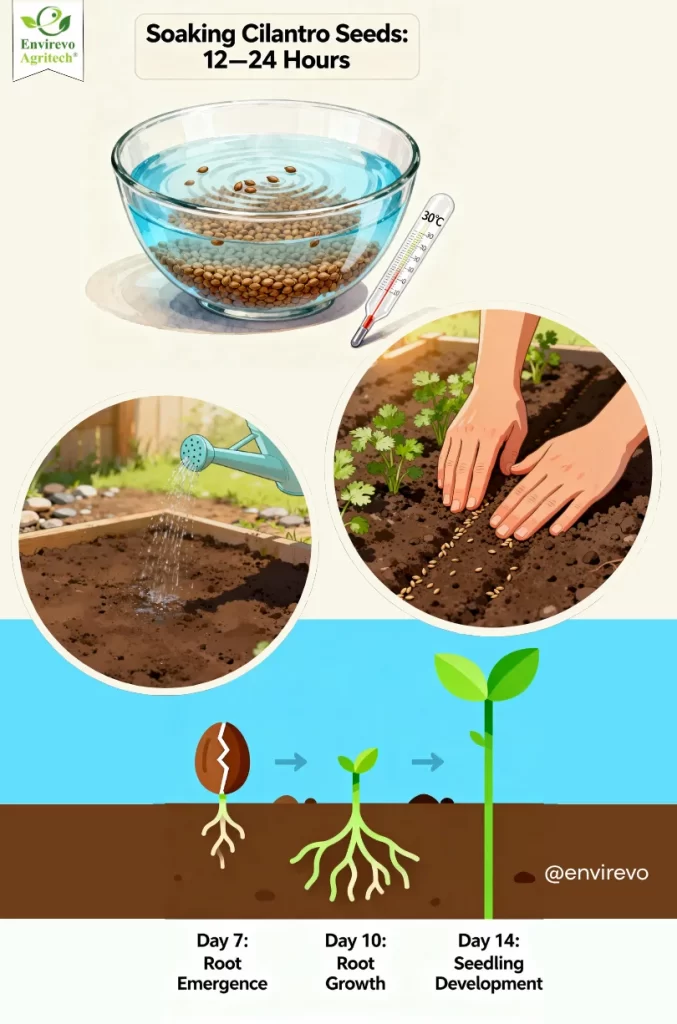
Cilantro seeds are actually two seeds encased in a husk. Soaking them in warm water for 12–24 hours softens the shell and speeds up germination.
Step 2: Planting the Seeds
- Depth: ¼ inch (0.6 cm) deep.
- Spacing: 6 inches (15 cm) between plants, 8–10 inches between rows.
- Gently cover with soil and pat down lightly.
Step 3: Watering
Water the soil gently to avoid displacing the seeds. Keep the soil evenly moist (not soggy) during germination.
Step 4: Germination
Seeds usually sprout within 7–14 days. If temperatures are cooler, germination may take a little longer.
Watering and Fertilizing Cilantro
Cilantro needs consistent moisture to produce tender, flavorful leaves. Uneven watering can stress the plant and trigger early flowering.
Watering Tips:
- Water 2–3 times a week, depending on temperature and soil drainage.
- Keep the top 1–2 inches of soil moist but not waterlogged.
- Use drip irrigation or a watering can with a gentle flow to avoid damaging young seedlings.
Fertilizing Cilantro
- Compost: A well-amended bed often needs no extra fertilizer.
- Light feeding: Periodic use of a balanced fertiliser (10-10-10 or 20-20-20) every 3–4 weeks promotes growth.
- Organic options: Fish emulsion or worm castings for a gentle, natural boost.
Cilantro Plant Care Tips for Healthy Growth
Once your seedlings are up, some simple maintenance steps can keep your cilantro thriving.
- Thinning Seedlings: When the seedlings are about 2 inches tall, thin them to about 6 inches apart. This gives each plant enough room to grow strong leaves.
- Mulching: Applying a thin layer of mulch helps retain soil moisture, regulate temperature, and reduce weeds.
- Preventing Bolting:
- Bolting (premature flowering) is the biggest challenge when growing cilantro. To slow it down:
- Keep the soil consistently moist.
- Provide afternoon shade in hot weather.
- Harvest leaves regularly to encourage vegetative growth.
- Choose slow-bolting varieties if you live in a warm region.
- Pruning: Pinch off flower buds as soon as you see them to extend the leafy harvest period.
Common Cilantro Growing Problems and How to Fix Them
| Problem | Symptoms | Common Causes | Solutions |
|---|---|---|---|
| Bolting | Early flowering, bitter leaves | High temperatures, drought stress, overfertilizing | Plant during cooler months, provide afternoon shade, harvest regularly, choose slow-bolting varieties. |
| Aphids & Whiteflies | Yellowing or curling leaves, sticky residue (honeydew) | Warm, humid environment; lack of natural predators | Spray neem oil or insecticidal soap, encourage ladybugs, maintain airflow. |
| Powdery Mildew | White powdery patches on leaves | Poor air circulation, overhead watering, humidity | Water at soil level, space plants properly, prune excess foliage, use organic fungicide if needed. |
| Root Rot | Wilting, yellowing leaves, soft roots | Overwatering, poor drainage | Improve soil drainage, reduce watering, grow in well-draining pots or raised beds. |
| Slow Growth | Stunted plants, pale or weak leaves | Poor soil, low sunlight, nutrient deficiency | Add compost or organic fertilizer, ensure 4–6 hours of sunlight, thin overcrowded seedlings. |
How to Harvest Cilantro Without Killing the Plant
he best time to harvest cilantro is when the plant reaches about 6 inches in height, usually around 3 to 4 weeks after germination.
Harvesting Technique:
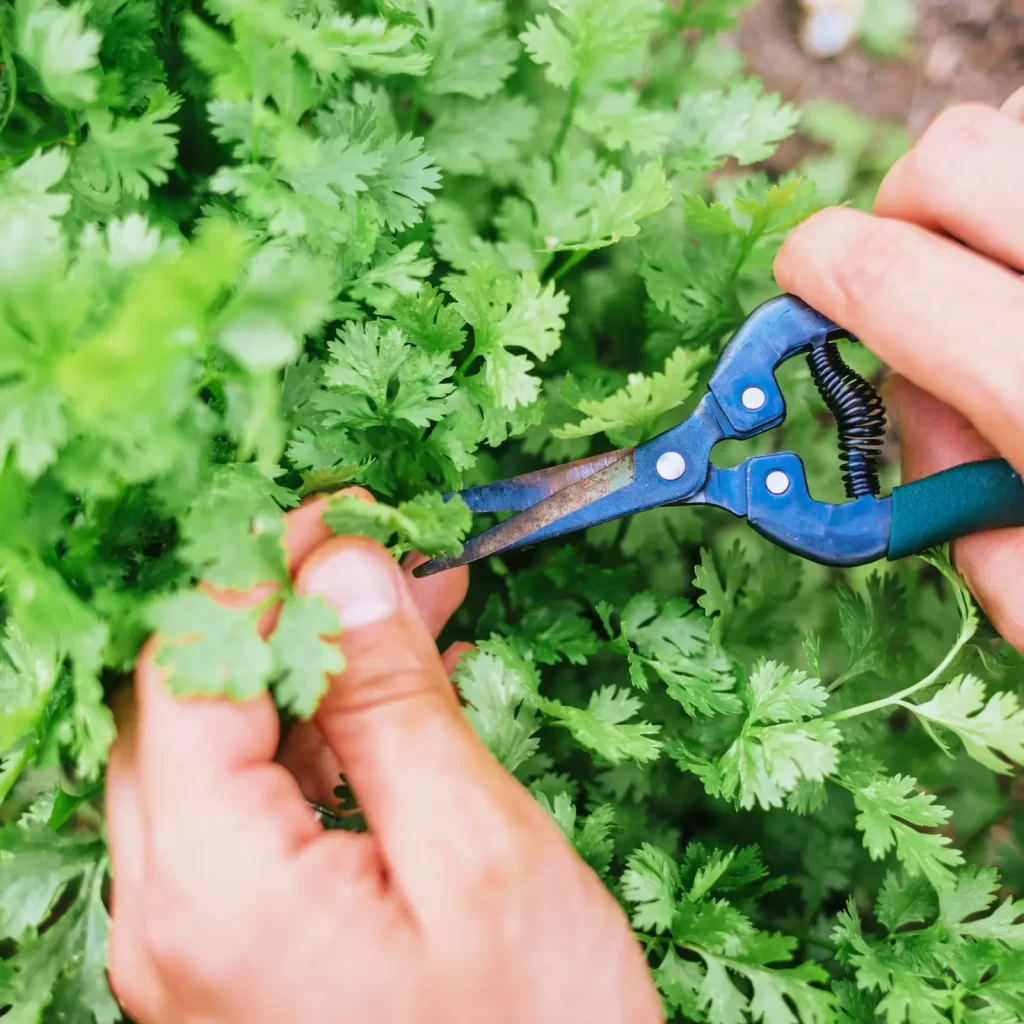
- Use clean scissors or garden shears.
- Cut leaves from the outer stems first, about 1–2 inches above the soil.
- Leave the inner stems intact to allow for regrowth.
- Harvest regularly to keep the plant producing fresh leaves.
Important: Avoid cutting more than one-third of the plant at a time. Overharvesting can stress the plant and reduce future yields.
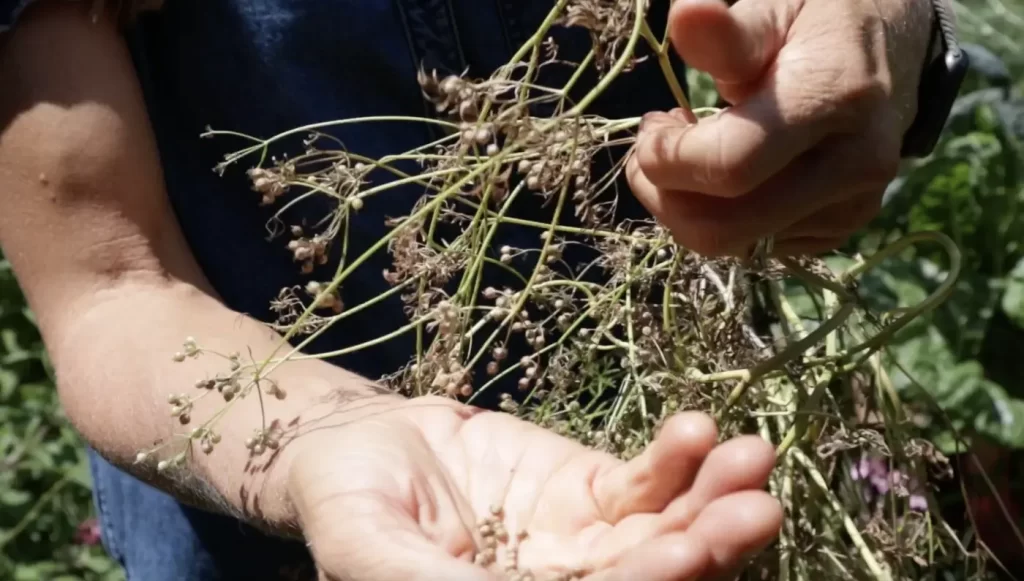
Harvesting Coriander Seeds
If you let the plant flower and go to seed:
- Wait until the seed heads turn brown and dry.
- Snip off the seed heads and place them in a paper bag.
- Shake to collect the coriander seeds.
- Store them in an airtight container.
This way, you can enjoy both cilantro leaves and coriander spice from the same plant.
Final Thoughts
Now you already know how to grow cilantro at home is a simple skill that pays off quickly. This fast-growing herb gives you flavorful leaves and coriander seeds with minimal effort. Whether you grow it in a pot on your windowsill or a raised bed in your garden, the key is to keep it cool, moist, and harvested regularly.
With the right planting time, good soil, and proper care, you can enjoy a fresh, steady supply of cilantro for months. Once you master cilantro growing, you’ll never need to rely on wilted store-bought herbs again.
FAQs on How to Grow Cilantro
Can cilantro grow year-round?
Yes, in mild climates or indoors with grow lights, cilantro can be grown year-round. In hot climates, it’s best to plant during cooler months.
How long does it take to grow cilantro?
Cilantro typically takes 45–70 days from sowing to harvest. Young leaves can be harvested in as little as 3–4 weeks.
Why does my cilantro bolt so quickly?
Cilantro bolts when temperatures rise above 85°F or if the soil dries out too often. Keeping the plant cool and moist delays bolting.
Can I grow cilantro from cuttings?
While possible, cilantro grows best from seeds. Cuttings may root but won’t be as productive as seed-grown plants.
How often should cilantro be watered?
Water 2–3 times a week or whenever the top inch of soil feels dry. Avoid letting the soil dry out completely.