Table of Contents
Few flowers combine old-world charm with easy modern gardening like the dianthus. Known for its spicy scent and diverse flowers, dianthus is a staple in gardens worldwide. Whether called “pinks,” “carnations,” or “Sweet William,” these blooms bring classic cottage-style charm and offer practical benefits, such as robustness, drought resistance, and months of color. This guide provides a detailed discussion on how to grow and care for dianthus. It covers everything from selection to maintenance, based on expert horticultural knowledge and global gardening experience.
What Is Dianthus?
The word dianthus comes from the Greek words dios (divine) and anthos (flower), which explains why gardeners often call it the “divine flower.” Dianthus comprises over 300 species and countless hybrids, all members of the Caryophyllaceae family.
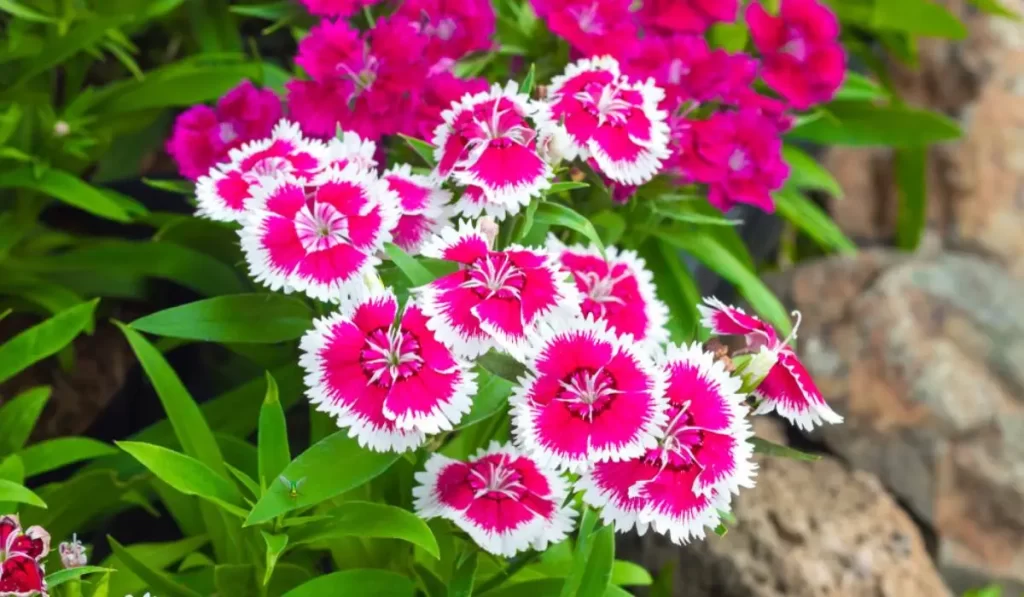
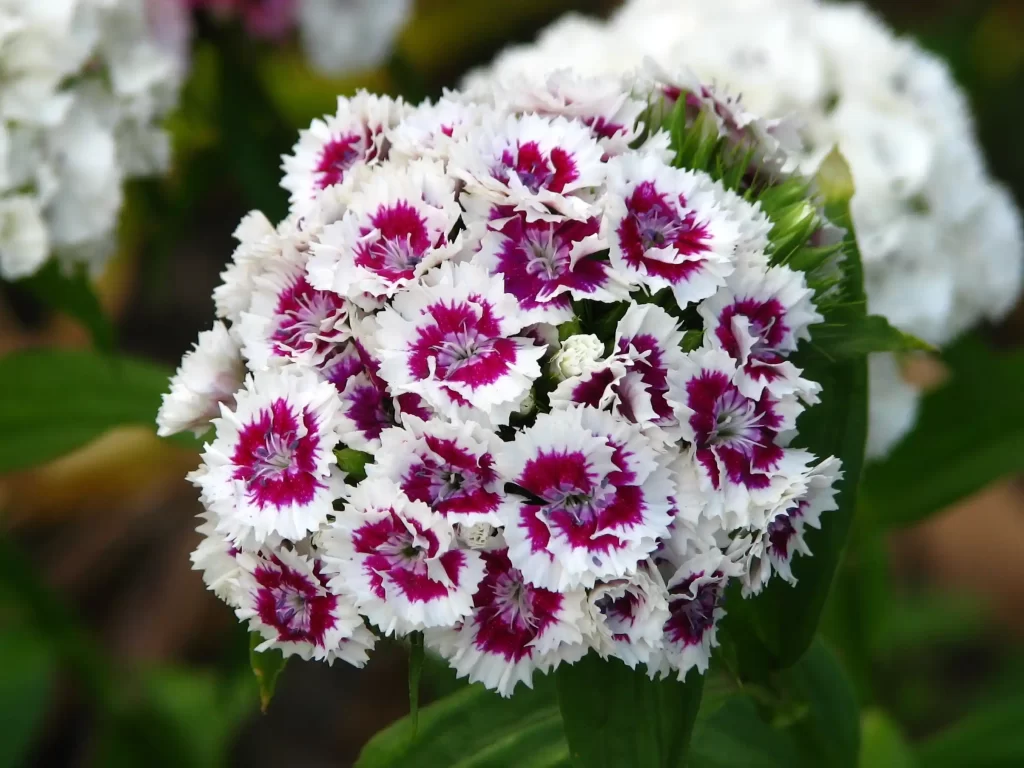
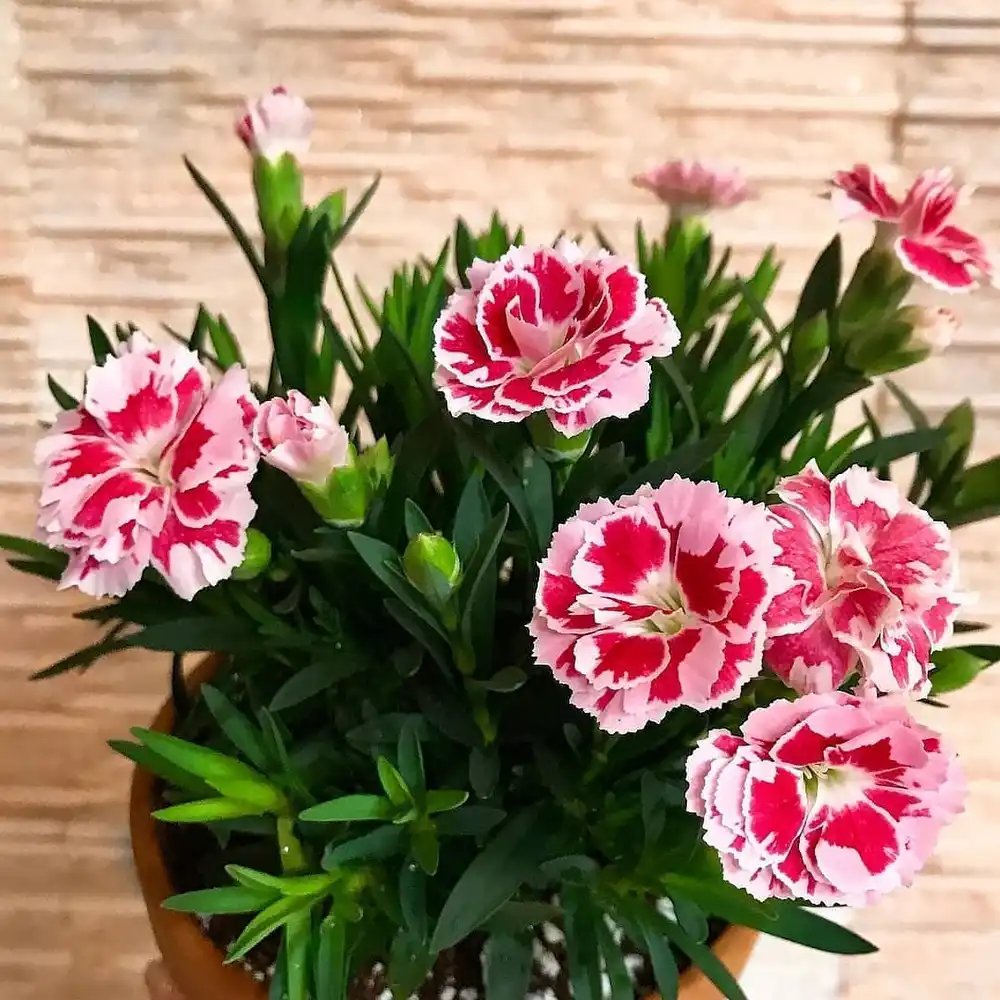
Dianthus plants are available in annual, biennial, and perennial forms, making them versatile options for gardeners with different needs. Traditionally, “pinks” (Dianthus plumarius) and “carnations” (D. caryophyllus) steal the spotlight—though “Sweet William” (D. barbatus), cheddar pinks, China pinks, and alpine types are equally valued for their adaptability and beauty. Some varieties even showcase striking bicolor combinations. The blooms are typically small to medium in size but compensate with their intensity of color and strong fragrance.

Another reason gardeners love dianthus is their pollinator appeal. The spicy-scented blooms attract bees, butterflies, and even hummingbirds, making them an asset in wildlife-friendly gardens.
Popular Varieties of Dianthus
With over 300 species and countless hybrids, choosing the right dianthus can be overwhelming. Here are some of the most popular types to consider for your garden:
- Dianthus chinensis (Chinese Pinks): These are typically grown as annuals, producing vibrant flowers in shades of pink, red, and white. Chinese pinks are compact, making them excellent for borders, edging, and containers.
- Dianthus barbatus (Sweet William): A biennial or short-lived perennial, Sweet William is beloved for its dense flower clusters that bloom in late spring and early summer. They come in a wide range of colors and patterns, often with a charming bicolor look.
- Dianthus caryophyllus (Carnations): Perhaps the most famous of all dianthus, carnations are cultivated both as garden flowers and for the cut-flower industry. They are known for their large, ruffled blooms and long-lasting fragrance.
- Dianthus plumarius (Cottage Pinks): These are perennial dianthus with frilly petals and a strong clove scent. They are low-growing and spread easily, making them a perfect choice for cottage gardens and rockeries.
- Dianthus gratianopolitanus (Cheddar Pinks): Named after Cheddar Gorge in England, these perennials are compact, mat-forming plants ideal for ground cover. They feature narrow, bluish-green leaves and bright, fragrant flowers.


| Variety | Plant Type | Height (inches) | Features | Hardy Zones |
| D. chinensis | Annual | 6-30 | Bushy, brightly colored | 6-9 |
| D. barbatus | Biennial | 12-24 | Upright, dense flower clusters | 3-9 |
| D. caryophyllus | Annual/Perennial | 24-36 | Tall, long-stemmed, used in arrangements | 3-9 |
| Dianthus plumarius | Perennial | 12-24 | Frilled, clove-scented, compact | 3-9 |
| D. gratianopolitanus (“Firewitch”) | Perennial | 6-15 | Mat-forming, drought tolerant | 3-9 |
How to Grow Dianthus Flowers
Growing dianthus successfully starts with choosing the right location, soil, and planting method. Let’s look at the essentials.
Choosing the Right Location
Dianthus loves full sun and thrives best when it receives at least 6 hours of direct sunlight daily. In hotter climates, some afternoon shade is beneficial to protect the plants from scorching. The soil should be well-draining and slightly alkaline. Heavy, waterlogged soil increases the risk of root rot. If your garden has clay soil, amend it with sand, perlite, or organic compost to improve drainage.
Planting Dianthus
You can grow dianthus from seeds, cuttings, or nursery-bought young plants.
From Seeds
- Timing: Sow seeds indoors 6–8 weeks before last frost, or outdoors after danger of frost passes. Biennials and perennials sown in spring may flower late in the season.
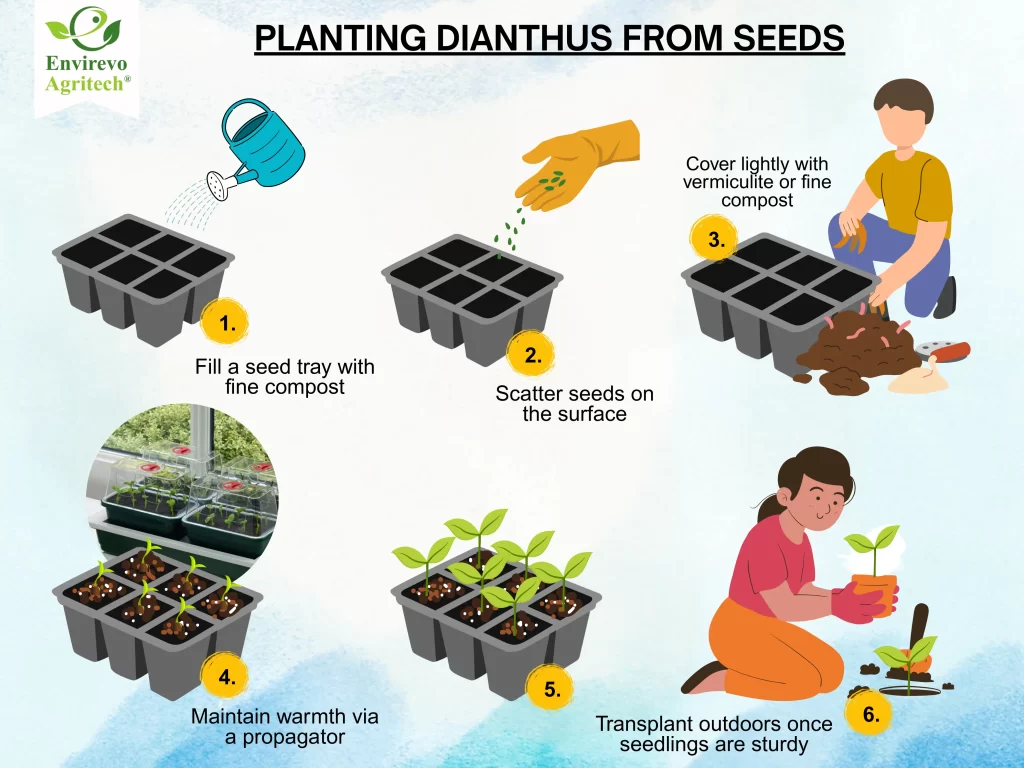
- Sowing steps:
- Fill a seed tray with fine compost, moisten using a fine-rosed watering can.
- Scatter seeds on the surface.
- Cover lightly with vermiculite or fine compost.
- Maintain warmth via a propagator if starting early.
- After germination, thin seedlings to ensure a distance of at least 12 to 30 cm (6 to 12 inches) for air circulation.
- Transplant outdoors once seedlings are sturdy and frost risk is past.
From Purchased Plants
- Timing: Typically planted out in spring when soil can be worked, or in autumn if available.
- Planting procedure:
- Loosen garden soil to a depth of 30 cm (12 inches); mix in organic matter and horticultural grit.
- Dig a hole twice the width of the plant’s root ball, deep enough so the top is level with the surrounding soil.
- Place plant, backfill gently, and firm soil. Water thoroughly.
- Space perennials 12–24 inches apart; annuals and biennials may be planted closer.
- For containers, use free-draining potting mix.
When planting outdoors, maintain a spacing of 6–12 inches, depending on the variety. This ensures proper air circulation, reducing the risk of disease.
Companion Planting
Dianthus pairs beautifully with other sun-loving plants like lavender, salvia, geraniums, and echinacea. Avoid pairing them with plants that prefer moist or shaded conditions, as these differences in water and light needs will make one or both plants unhappy.
Dianthus Care Guide
Once planted, dianthus is fairly easy to maintain, but they do appreciate some attention in watering, feeding, and pruning.
Watering
Dianthus plants are drought-tolerant once established, but regular watering is crucial for seedlings and newly planted specimens.
- Young plants: Water deeply after planting and maintain consistent moisture until roots are established—never allow roots to dry completely.
- Established plants: Water weekly in hot weather; reduce watering in cool or rainy seasons.
- Avoid overhead watering: Use drip irrigation or a water can at the soil surface to prevent leaf diseases.
- Signs of overwatering: Yellow leaves, black spots at the crown, and wilt indicate the need to reduce watering.
Fertilizing
For healthy growth and abundant blooms, dianthus benefits from light but regular feeding. Use a balanced fertiliser or one that is slightly higher in phosphorus to promote flowering. Avoid high-nitrogen fertilisers, which encourage leafy growth at the expense of blooms. Feed once at planting and then every 4–6 weeks during the growing season.
Fertilizer Choices
- Perennials: Apply a balanced granular fertiliser or slow-release tablets in spring. Side-dress with compost to refresh nutrients.
- Annuals/Biennials: Use liquid fertiliser monthly during peak blooming.
- Carnations and cutting types: Prefer regular light feedings, avoiding excess nitrogen that leads to leggy growth and fewer blooms.
Pruning and Deadheading
- Deadheading: Regularly cutting spent blooms promotes continuous flowering. Use sharp scissors or pruners to snip dead heads just above the nearest set of healthy leaves.
- Season-End Pruning:
- Fall/early winter: Cut back perennial Dianthus to 2–3 cm (1 inch) above ground after last flush of blooms. Remove faded stems and brown leaves.
- Mulch: Apply a thin scattering of grit or gravel to insulate the crown without trapping moisture.
- Dividing and Renewal: Every 3–5 years, divide mature clumps in early spring or autumn if growth thins at the center. Keep young, vigorous outer sections—discard woody central growth.
Mulching and Soil Maintenance
Applying a thin layer of mulch helps retain soil moisture and suppress weeds. However, keep mulch away from the crown of the plant, as too much moisture around the base can lead to rot. If your soil tends toward acidity, a light application of garden lime once a year will help maintain the slightly alkaline conditions that dianthus loves.
Mulching Tips: Gravel mulch is preferred to organic mulch, as it resists rot and provides drainage. Organic mulches can create conditions favorable to fungal diseases.
Overwintering Dianthus
In regions with mild winters, perennial dianthus can survive with little extra care. However, in colder zones, some protection is necessary.
- Mulch protection: Apply a 2–3 inch layer of straw or shredded leaves around the base to insulate the roots.
- Container plants: Move pots to a sheltered spot, such as a garage or porch, during extreme cold.
- Cutting back: In late fall, cut back perennial dianthus to about 2–3 inches above ground. This conserves energy for the following spring.
For annuals, you can allow them to reseed naturally, or collect seeds for the next season.
Common Problems and Solutions
Common Pests
- Slugs and snails: Attracted to moist foliage; hand-pick, or create barriers using copper tape or eggshells.
- Aphids: Can cluster on shoots—remove with water spray or introduce beneficial insects.
- Spider mites, sow bugs, leaf miners: Inspect regularly and treat with insecticidal soap or neem oil if infestations occur.
Diseases
- Crown/root rot: Caused by poor drainage or overwatering. Discard affected plants, improve soil, and reduce moisture.
- Rust: Orange spots on leaves—remove infected foliage.
- Powdery mildew: White, powdery leaf coating—improve air flow and avoid wetting leaves.
- Fusarium wilt: Causes yellowing and wilting. Unfortunately, infected plants should be removed.
Growth Issues
- Yellowing leaves: Usually a sign of overwatering or nutrient imbalance.
- Weak stems: Caused by too much nitrogen fertiliser.
- Failure to bloom: Often linked to lack of sunlight or skipped deadheading.
Propagation: How to Multiply Dianthus
- By Seed: Collect dry, mature seed pods after flowering, then sow in trays or garden beds.
- By Cuttings:
- Stem cuttings: Take non-flowering shoots during summer. Cut below a leaf node, remove lower leaves, and plant in moist compost.
- Rooting: Keep cuttings moist and warm; roots should form within weeks, at which point transplant as detailed above.
- By Division: Mature, woody clumps can be split in spring. Use a sharp knife to separate plant into sections, keeping roots intact for transplanting.
Landscaping Ideas with Dianthus
Dianthus fits beautifully into many garden designs:
- Borders and edging: Their compact growth habit makes them excellent along pathways and garden edges.
- Rock gardens: Low-growing dianthus varieties thrive in rocky, well-drained soils.
- Containers and hanging baskets: Perfect for patios, balconies, and small gardens.
- Pollinator-friendly gardens: Plant dianthus alongside bee- and butterfly-attracting plants for a lively, fragrant garden.
Quick Tips for Success
- Pick varieties suited to climate and use.
- Plant in full sun, in well-drained, slightly alkaline soil.
- Deadhead regularly to extend blooming.
- Divide and renew older clumps every few years.
- Be vigilant about drainage to avoid crown rot.
- Mulch with gravel or grit, not organic matter.
- Embrace diversity—mix colors and forms for maximum landscape impact.
Explore the world of Dianthus and discover why this heirloom has remained a global gardening favorite for centuries. With proper care, your Dianthus will reward you with dazzling blooms and garden memories season after season. Dianthus is a garden classic for good reason. With its vibrant colors, fragrant blooms, and versatile uses, it offers something for every gardener—whether you’re filling a flower bed, edging a path, or creating a pollinator haven. By choosing the right variety, giving it proper care, and handling common challenges, you can enjoy dianthus flowers from spring right through to autumn.
The best part? Dianthus doesn’t just bring beauty; it brings longevity and fragrance to your outdoor space, rewarding you year after year with its cheerful presence. If you’re looking for a plant that combines charm, ease, and reliability, dianthus is hard to beat.
FAQs About Growing Dianthus
When do Dianthus bloom?
Plants typically bloom late spring to early summer; deadheading can extend the bloom period intermittently through summer and fall.
How much sun do Dianthus need?
Full sun is critical for best flower production—at least six hours per day. In shaded areas, reduced flowering and increased disease risk may occur.
Are Dianthus toxic to pets?
Dianthus may be mildly toxic to cats and dogs. Keep pets away; ingestion causes minor irritation or discomfort, and flower petals can sometimes cause skin reactions.
Can dianthus grow indoors?
Yes, provided they receive enough sunlight or supplemental grow lights. Containers should have excellent drainage.
Are dianthus deer-resistant?
Yes, most dianthus varieties are unappealing to deer due to their fragrance and foliage texture.
How do you keep dianthus blooming all season?
Regular deadheading, moderate feeding, and proper sun exposure are the keys.