Table of Contents
For many homeowners and passionate gardeners, the weekend routine quickly becomes a never-ending battle against nature’s most stubborn elements. Hours are spent hunched over garden beds pulling invasive weeds, hauling heavy bags of commercial wood mulch, and fixing patches of washed-out soil after heavy rains. It is an exhausting cycle that costs both significant physical energy and a continuous financial investment year after year. But what if you could replace this demanding chore with a permanent, self-sustaining alternative?
The strategic installation of an evergreen ground cover completely transforms these high-maintenance zones into lush, permanent green carpets that protect and beautify your landscape simultaneously. Instead of spending your weekends managing dirt, you can enjoy a beautifully structured yard where nature does the heavy lifting for you.
Top Evergreen Ground Cover Plants for Full Shade
Shaded areas under massive mature trees, beneath low decks, or along the north-facing walls of a home are notoriously difficult to manage. Traditional turf grass planted in these zones quickly becomes thin, yellow, and patchy due to the lack of direct sunlight. Instead of fighting an uphill battle with grass seed, these four shade-loving evergreen ground covers offer an ideal solution for low-light environments.
1. Pachysandra (Japanese Spurge)
- Botanical Name: Pachysandra terminalis
- Hardiness Zones: 4 to 9
- Best For: Deep shade, dry soil under tree canopies, and uniform borders.
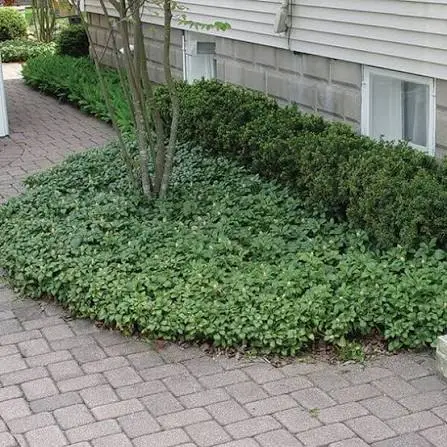
Pachysandra is a classic choice for deep, dark areas where almost nothing else will grow. This incredibly tough-as-nails evergreen spreads via underground runners, forming a neat carpet of glossy, rich green leaves arranged in attractive rosettes. Growing to a uniform height of roughly 6 to 12 inches, it provides a clean, structured appearance that works well along formal walkways and large woodland beds.
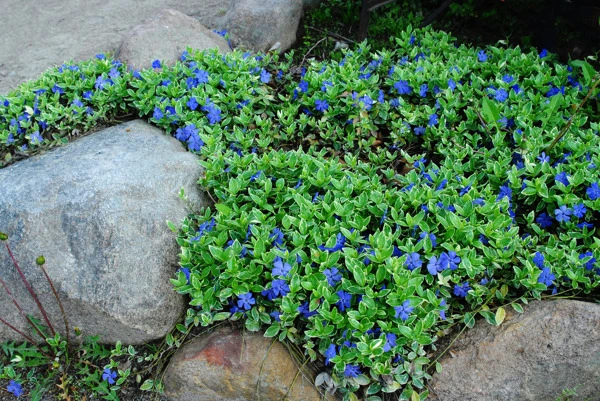
2. Vinca Minor (Lesser Periwinkle)
- Botanical Name: Vinca minor
- Hardiness Zones: 4 to 9
- Best For: Rapid coverage on shaded slopes, rock walls, and underplanting shrubs.
If you need an area filled out quickly, Vinca minor (often called Lesser Periwinkle or Creeping Myrtle) is an exceptional choice. This low-trailing plant features slender, creeping stems that root at every node they touch, weaving a tight, low-profile mat across the soil. The leaves are smooth, lance-shaped, and dark green with a glossy sheen that reflects dappled light beautifully.
3. Ajuga Reptans (Bugleweed)
- Botanical Name: Ajuga reptans
- Hardiness Zones: 3 to 9
- Best For: Adding deep color contrast, filling heavy clay soils, and suppressing low weeds.
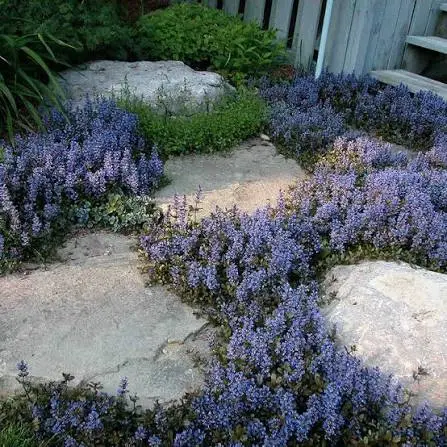
For homeowners who want to break up the monotony of green foliage in the shade, Ajuga (commonly known as Bugleweed) provides exceptional color options. This fast-spreading perennial ground cover produces thick, fleshy stolons that quickly blanket bare dirt. While the standard species features dark green leaves, popular cultivars like ‘Catlin’s Giant’ or ‘Burgundy Glow’ offer stunning shades of deep bronze, metallic purple, cream, and rose.
4. Heuchera (Coral Bells / Alumroot)
- Botanical Name: Heuchera spp.
- Hardiness Zones: 4 to 9
- Best For: Variegated patterns, accent textures, and semi-shaded borders.
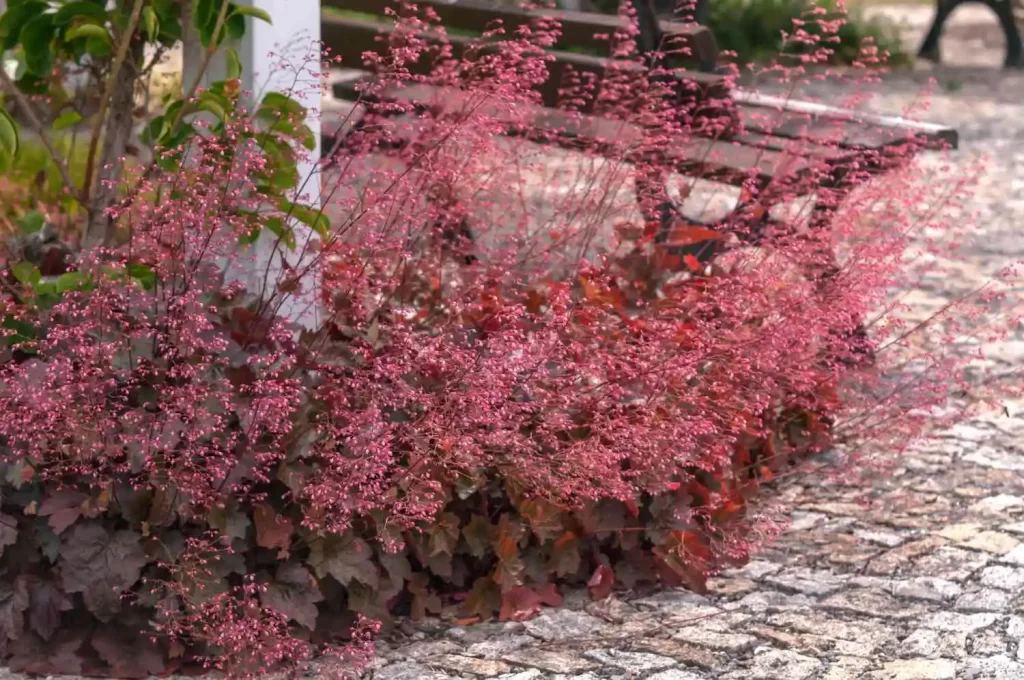
While technically classified as clumping perennials, many species of Heuchera (Coral Bells) retain their vibrant foliage throughout mild winters, making them excellent, high-value evergreen options for partial to full shade. Rather than spreading via aggressive runners, Heuchera grows in dense, mounding rosettes that can be massed together to create a gorgeous, quilted ground cover effect.
Best Evergreen Ground Cover for Full Sun and Dry Areas
Blazing sun, high summer temperatures, and fast-draining, nutrient-poor soils can scorch delicate plants, leaving your yard looking parched and dusty. The following selections are rugged, sun-loving evergreen ground covers that turn these challenging spots into beautiful features.
5. Creeping Thyme
- Botanical Name: Thymus serpyllum / Thymus praecox
- Hardiness Zones: 4 to 9
- Best For: Walkways, spaces between stepping stones, rock gardens, and high-sun slopes.
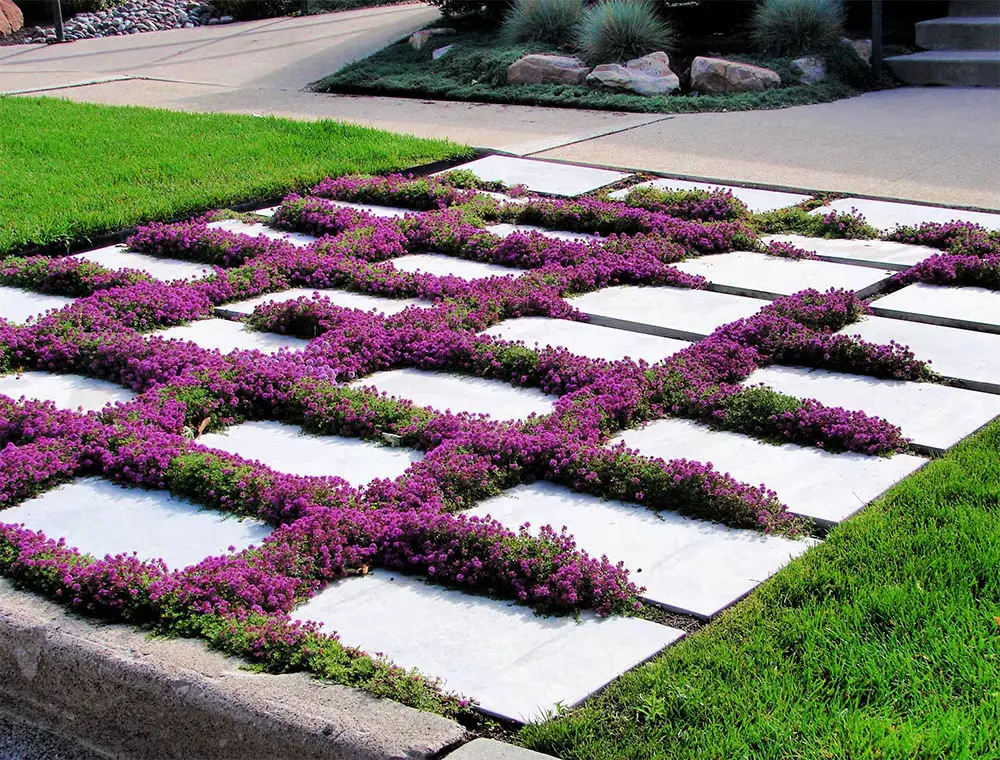
Creeping Thyme is one of the most versatile and rewarding sun-loving ground covers available. This low-profile, woody perennial grows just a few inches off the ground, forming a tight, aromatic cushion of tiny, needle-like green leaves. When summer arrives, the entire mat erupts into a sea of vibrant pink, lavender, or crimson blossoms that act as a major magnet for honeybees and butterflies.
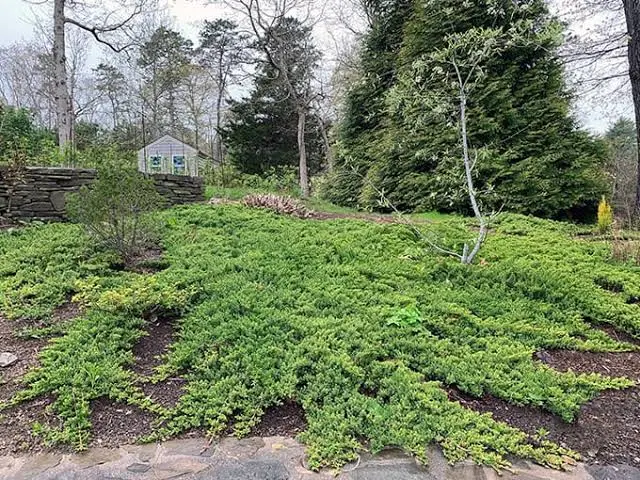
6. Creeping Juniper
- Botanical Name: Juniperus horizontalis
- Hardiness Zones: 3 to 9
- Best For: Hot and arid hillsides, coastal areas, deer resistance, and rugged erosion control.
When it comes to pure, unadulterated toughness on a sun-drenched slope, nothing competes with Creeping Juniper. This prostrate coniferous evergreen is practically indestructible, shrugging off severe drought, blistering heat, poor rocky soils, winter road salt, and heavy winds. It features long, arching branches covered in scale-like blue-green or silvery foliage that creates a thick, structural blanket over the earth.
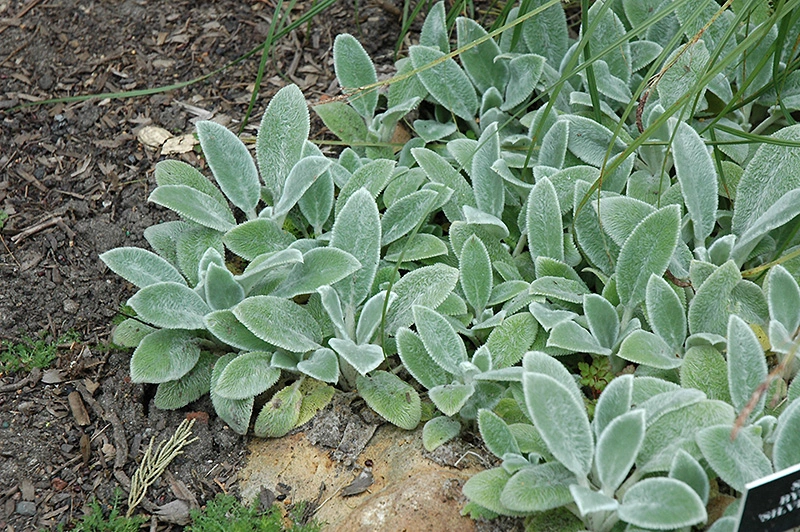
7. Lamb’s Ear
- Botanical Name: Stachys byzantina
- Hardiness Zones: 4 to 9
- Best For: Visual contrast, silver accents, and hot, dry border fronts.
Stachys byzantina, universally known as Lamb’s Ear, offers an entirely unique tactile and visual element to the sunny garden. The leaves are large, thick, and covered in a dense coating of soft, velvety silver-white hairs, giving them the exact texture of a young lamb’s ear. This silver coloration is not just for show; the pale hairs reflect intense sunlight and trap moisture, allowing the plant to thrive in baking heat and drought conditions that would wilt other species.
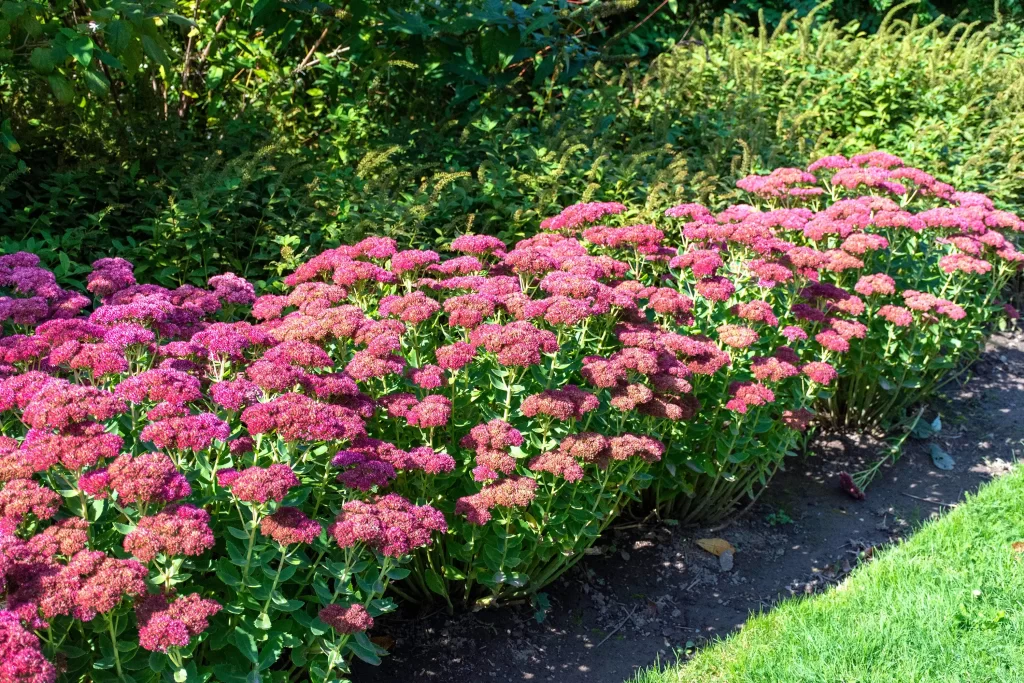
8. Stonecrop (Sedum)
- Botanical Name: Sedum spp. / Petrosedum
- Hardiness Zones: 3 to 9
- Best For: Nutrient-poor soils, rock gardens, green roofs, and ultra-low-maintenance zones.
For areas with exceptionally poor, sandy, or rocky soil where nothing else seems to survive, Stonecrop (Sedum) is an absolute lifesaver. These hardy succulent-style ground covers store water directly inside their thick, fleshy leaves, allowing them to withstand weeks of drought without showing signs of stress. They spread easily, rooting from broken stems or creeping stolons to form a low, dense mat.
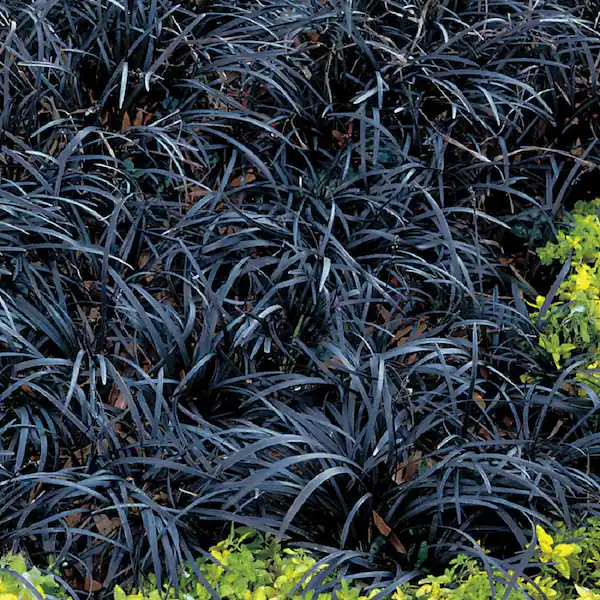
9. Black Mondo Grass
- Botanical Name: Ophiopogon planiscapus ‘Nigrescens’
- Hardiness Zones: 5 to 10
- Best For: Contemporary garden designs, structural borders, and high-contrast accent planting.
For gardeners looking to introduce dramatic, modern elegance into their low-maintenance yard, Black Mondo Grass is an elite choice. While it looks like a traditional turf grass, it is actually a member of the asparagus family. It features striking, arching, strap-like leaves that are a true purple-black color, providing a stark contrast against light-colored gravel paths, stone walls, or bright green companion plants.
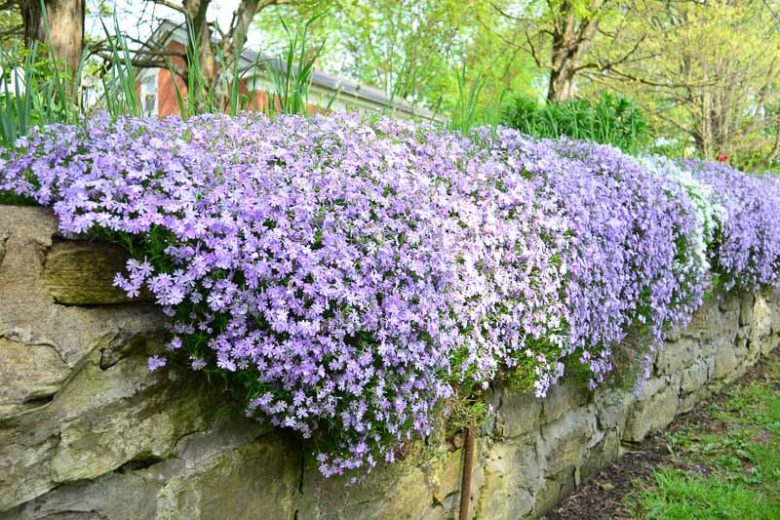
10. Creeping Phlox
- Botanical Name: Phlox subulata
- Hardiness Zones: 3 to 9
- Best For: Cascading over retaining walls, rock gardens, and intense spring color displays.
Creeping Phlox (also known as Moss Phlox) turns sunny garden borders into breathtaking focal points every spring. This low-growing, mat-forming evergreen features dense, carpet-like mounds of prickly, needle-like green foliage that stays green through the winter months.
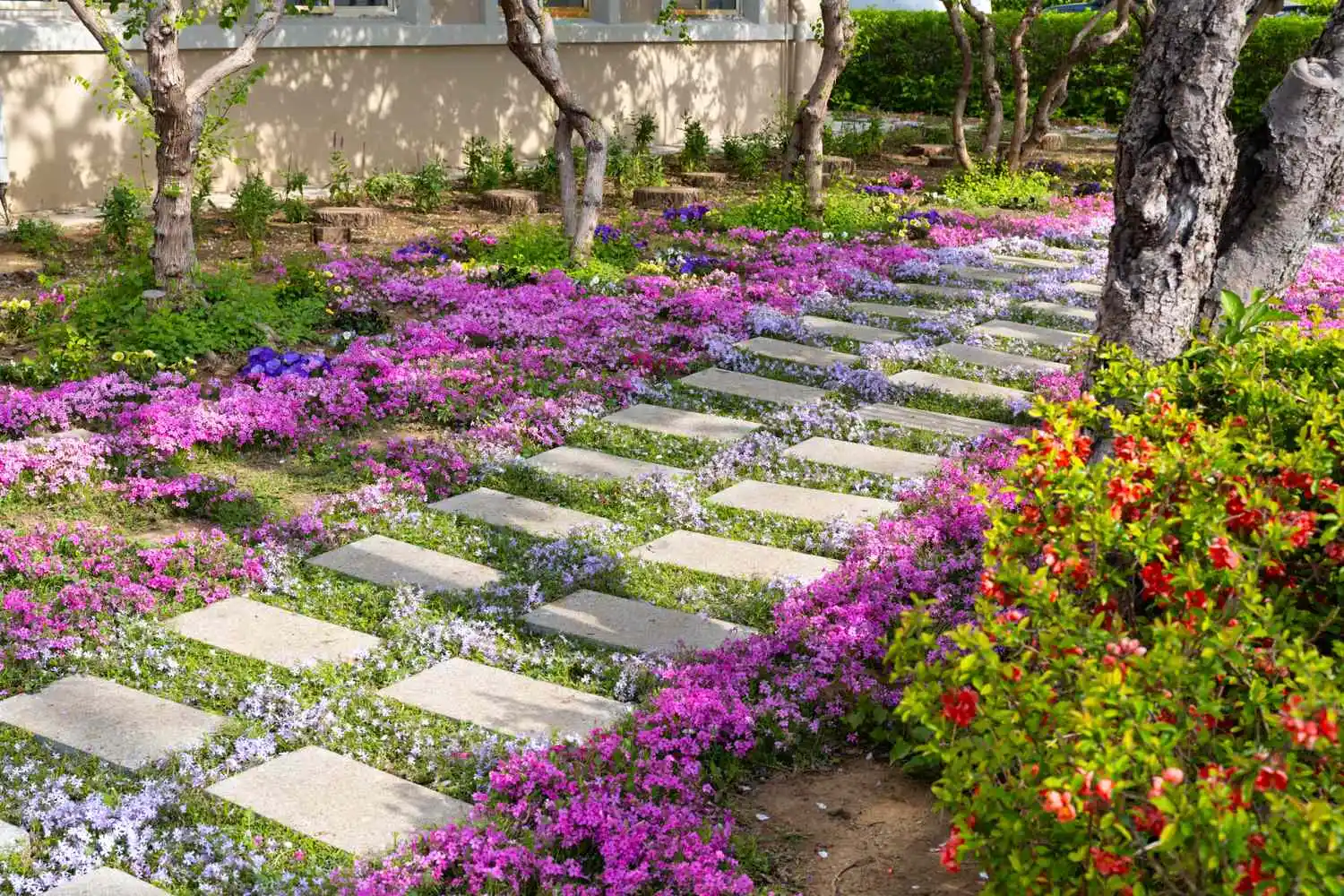
In early spring, the green carpet is completely hidden beneath a blanket of five-petalled flowers in brilliant shades of pink, purple, lavender, blue, or crisp white. It loves full sun and thrives in loose, rocky, or sandy soils where drainage is sharp. It is frequently used to drape over stone retaining walls or to anchor sunny slopes, offering a beautiful alternative to plain wood mulch while drawing in early emerging butterflies and pollinators.
Before buying any plants, look up your official USDA Plant Hardiness Zone. This classification system measures the average minimum winter temperature of your region. Because evergreen ground covers retain their leaves throughout the winter, they bear the brunt of freezing winds and heavy snowfall. Selecting a plant that is fully hardy in your zone ensures it will survive severe winter freezes without dropping its leaves or suffering terminal root damage.
Transforming your landscape with a high-performance evergreen ground cover is one of the smartest upgrades you can make for your property. By replacing labor-intensive grass lawns, bare dirt patches, or deteriorating wood mulch with a vibrant, self-sustaining living carpet, you permanently reduce your weekend workload. You save valuable time, cut down on water bills, eliminate the need for chemical weed killers, and protect your precious topsoil from erosion—all while enjoying a lush garden aesthetic that remains beautiful throughout the winter months.
What do you think? Which corner of your yard needs a low-maintenance makeover first? Are you dealing with dry shade under trees or a hot, sun-baked slope? Let us know your thoughts and questions in the comments below!