Table of Contents
Farming is no longer just about soil and sweat — it’s about sensors, data, and intelligent machines. Precision agriculture robotics is transforming how we grow food, combining robotics, AI, and automation to make farming more efficient and sustainable. From autonomous tractors and drone sprayers to robotic harvesters that work around the clock, this technology is rewriting the future of agriculture. Let’s take a closer look at how these smart farming systems work, what’s driving their rapid adoption, and how they’re reshaping the global food landscape.
What Are Precision Agriculture Robotics?
“Precision agriculture” has been around for decades—using data, GPS and analytics to manage variability in fields. But when we add robotics, we move from “measure and decide” to “act autonomously and precisely.” So: precision agriculture robotics refers to robotic systems—ground vehicles, aerial drones, hybrid bots—that operate in agricultural environments to perform tasks with high accuracy, reduced human intervention, and data-driven decision making.
These systems include:
- Autonomous tractors or field rovers that plant, till, spray, or harvest.
- Drone fleets that monitor crop health, map fields, or apply treatments.
- Specialized robots for targeted weeding, fruit-picking, or intra-farm logistics.
- Smart sensor networks and robotic interfaces that process data and control machines in real time.
Key Enabling Technologies
Robotics in agriculture doesn’t exist in isolation—it rides on several technological pillars:
- Sensors & Imaging: Multispectral, hyperspectral, thermal, LiDAR sensors allow robots and drones to “see” plant health, pest damage, nutrient deficiency, soil structure.
- Artificial Intelligence & Computer Vision: Algorithms enable robots to interpret sensor data, recognise weeds vs crops, and make decisions (where to spray, how much, when to harvest).
- Connectivity / IoT / Data Analytics: Real-time links between machines, field networks and cloud platforms make data actionable. Robots become part of an ecosystem.
- Robotic Hardware / Navigation / Autonomy: GPS/RTK for accurate positioning, advanced actuators for delicate tasks, safe navigation systems to avoid obstacles and operate in varied terrain.
- Energy & Power Systems: Longer battery life, solar assist, efficient motors—all make robots viable in remote fields.
How It Differs From Conventional Farming or Basic Precision Agriculture
Precision agriculture robotics differs from earlier precision-farming methods in several key ways:
- Degree of automation: Traditional precision agriculture often means applying variable rate fertiliser or irrigation using GPS maps and human oversight. Robotics adds autonomy—machines themselves act.
- Task complexity and adaptation: Robots can perform complex physical tasks (weeding, harvesting, targeted spraying) that go beyond just data collection.
- Scale of data-action loop: With robotics, the loop (sense → decide → act) becomes tighter and faster—robots sense data, decide and act in near real-time.
- Labour & sustainability focus: Robotics addresses labour shortages, rising costs and sustainability pressures in a way variable-rate tech alone cannot.
The Rise of Smart Farming
Why now? Several converging factors are pushing the adoption of precision agriculture robotics.
Labour and Cost Pressures
Agriculture globally faces a tightening labour market, rising wages and fewer seasonal workers. Robots offer a way to fill that gap—especially for repetitive, hazardous or precision-intensive tasks.
Demand for Increased Yield & Resource Efficiency
With growing populations and climate pressures, farms must do more with less. Robots help maximise yields, reduce waste of water/fertiliser/pesticides, and minimise soil damage by optimising operations.

Sustainability, Environmental and Regulatory Drivers
Regulators and markets are pushing for reduced chemical runoff, lower carbon footprints and more efficient resource use. Precision agriculture robotics supports those goals—targeted treatments, less soil compaction, less overlap in operations.
Technological Readiness
Sensors, AI, connectivity and robotics hardware have matured and costs have dropped. Drones were first; now ground robots are following. That timing makes robotics feasible for more farms.
Investment & Market Growth
Ag-tech investors are putting capital behind robotics startups, driving innovation and scaling production, which is lowering cost per unit and improving reliability.
Use Cases & Real-World Applications of Precision Agriculture Robotics
Here’s a closer look at how robotics is being applied across agriculture.
Crop Monitoring & Data Collection
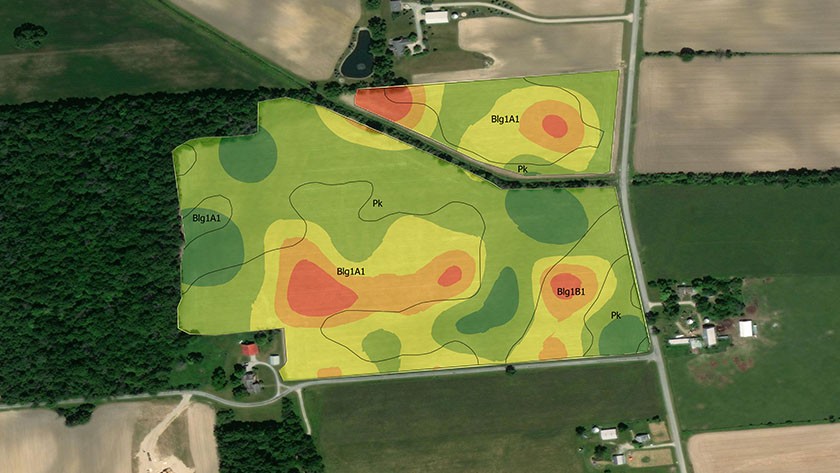
Drones and ground robots scan fields to detect nutrient deficiency, stress, pest infestation, moisture levels and canopy structure.
- Example: A ground rover traverses between rows with multispectral sensors and detects early yellowing—robots flag zones for attention.
- This level of insight allows precision interventions rather than blanket treatments.
Autonomous Field Operations
Robots are employed for tasks such as planting, mowing, spraying, and weeding.
- Weeding robots: Some systems physically remove weeds rather than relying solely on herbicides—reducing chemical use and creating a sustainability win.
- Targeted spraying: Robots can precisely apply agrochemicals only where needed, reducing overlap and lowering input costs.

Harvesting / Fruit Picking
One of the more challenging frontiers: picking delicate crops (fruits, vegetables).
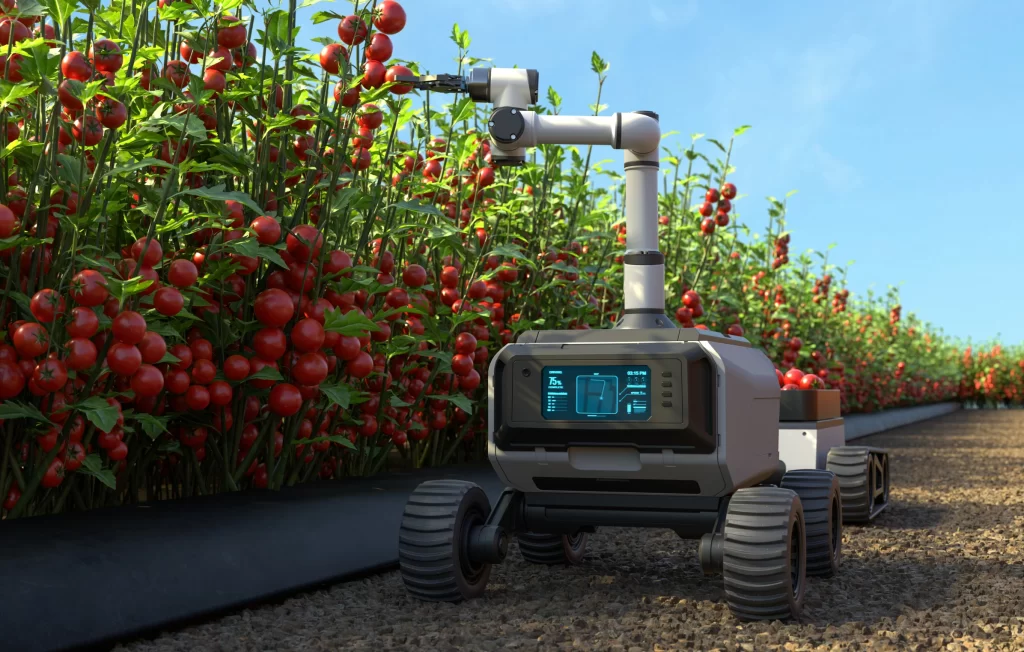
- Robotic pickers with vision systems identify ripe fruit, navigate complex plant geometry and gently harvest.
- While still less widespread than simple monitoring robots, this application is advancing rapidly and addresses high-cost, high-labour tasks.
Logistics & Farm Operations
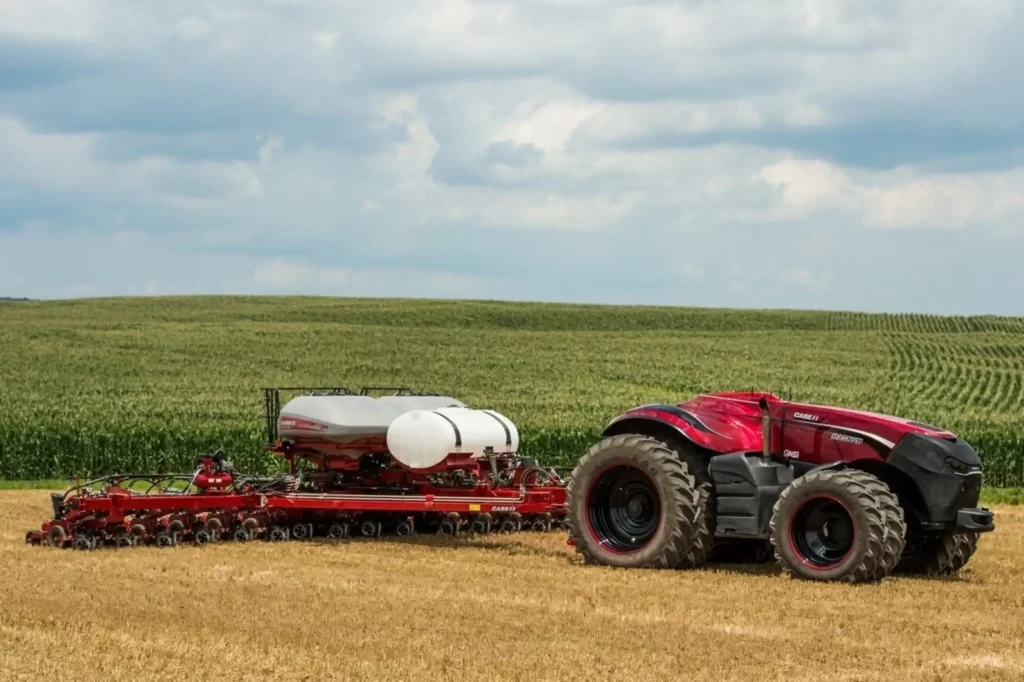
Beyond crop tasks, robotics is also used for intra-farm transport, autonomous tractors, and field vehicles.
- Autonomous tractors can follow GPS/RTK paths, coordinate with other machines, and operate day and night.
- Robots ferry harvested produce, deploy inputs, or serve as mobile sensor stations—integrating into a broader farm automation ecosystem.
Emerging & Niche Applications
- Indoor / Vertical Farming: Smaller robots navigate tight spaces, manage plants in vertical shelves.
- Multi-robot systems: Drones and ground bots working in tandem—for example, drones survey broadly, ground bots act on detailed tasks from the data.
- Livestock robotics: While not strictly crop-focused, robotics that monitor or manage animals hint at cross-sector synergies—feeding, milking, health checks.
Benefits of Precision Agriculture Robotics
Robotics in agriculture isn’t just cool tech—it brings concrete advantages.
Increased Crop Yield & Quality
Robots’ ability to act precisely mean fewer missed spots, more timely interventions and better overall crop outcomes. When plants get the right inputs at the right time, yields and quality go up.
Reduced Inputs & Cost Savings
Because robots can apply exactly what’s needed, where it’s needed, farms save on fertiliser, pesticides, water. That translates to lower cost per unit, higher profit margins and often improved environmental credentials.
Labour Efficiency & Safety
By automating repetitive, dangerous or tedious work—night operations, field scanning, chemical spraying—robots let human labour focus on higher-value tasks (supervision, strategy). Safety improves too (less human exposure to chemicals or heavy equipment).
Richer Data & Decision Support
Robots don’t just act—they generate data. Detailed logs of where they went, what they measured, what actions they took. That data feeds analytics, improving decision making, planning and adaptation.
Sustainability & Environmental Gains
Less chemical runoff, less soil compaction, more efficient water use. Robots can help meet regulatory or market demands for more sustainable production. That’s increasingly important for brand value, market access and consumer trust.
Challenges, Risks & Barriers
This isn’t technology fairy-dust—there are real barriers and risks to navigate.
- High Upfront Investment: Robotic systems require significant capital—hardware, software, integration, maintenance. For many farms (especially smaller ones) the cost-benefit calculus is still emerging.
- Technological Complexity & Maintenance: Robots in rough field conditions face dust, weather, uneven terrain, plant interference. They must be rugged and reliable—and they need maintenance and support. Without proper service, machines can fail at critical times.
- Integration with Existing Systems & Workflows: Farms often have legacy equipment, data systems and processes. Integrating robots into this ecosystem takes planning—connectivity, data compatibility, training, change management.
- Skills Gap: Using robotics means a shift in skill sets. Farmers or operators will need to understand robotics, data analysis, connectivity, software updates. That creates a learning curve (and sometimes resistance).
- Crop, Terrain and Climate Variability: What works in flat open fields may not suit hilly terrain, dense vegetation, unpredictable weather. Robots need adaptation to local conditions—variability remains a challenge.
- Reliability & Regulatory Considerations: When machines act autonomously, safety matters. Machines that spray chemicals, harvest crops or travel large distances must be safe, reliable and compliant with regulations (labour, environment, equipment standards).
- Risk of Over-Promise: There’s hype. Some robots deliver enormous value, others are still prototypes. Farms adopting too early or over-expecting may be disappointed. It’s important to temper optimism with realistic assessment of what’s feasible now.
Future Trends & What’s Next in Precision Agriculture Robotics
Looking ahead, there are several trends worth watching—and some speculative leaps worth asking about.
Multi-Robot Fleets & Collaboration
One robot doing one task is useful. But imagine fleets—drones, ground rovers, autonomous tractors—all coordinating, sharing data, acting simultaneously. A robot surveys a field, tags issues, the weeding robot zooms in, the sprayer follows up. That synergy is coming.
Increased Autonomy & General-Purpose Robots
Today many robots are task-specific (weed removal, harvesting, spraying). The next wave: general-purpose field robots that can adapt to tasks, crops, terrain—much like a “farm assistant” robot.
Integration with Advanced AI & Decision-Making Systems
As AI improves (including large-language-models and decision-support), robots will not only act but help plan—“Based on weather and soil data, here’s when and how I should act.” That elevates robotics from tool to partner.
Affordable Robotics for Small and Medium-Sized Farms
Historically, robotics has favoured large farms. The future will see smaller, modular, lower-cost robotics solutions—making precision agriculture robotics accessible to smaller operations.
Sustainability-Driven Design
Expect more robots built for sustainability: solar-powered machines, energy-efficient motors, biodegradable materials, systems designed to minimise environmental footprint rather than just maximise yield.
Speculative: Fully Autonomous Farms & New Crop Paradigms
In the long term: farms where robots plant, monitor, harvest, transport—humans intervene only for strategic decisions. And new crops or farming systems (vertical farms, urban farms) built around robotics from day one.
What This Means for the Agriculture Industry
- Shift in business models: equipment-as-a-service, robot fleets rented rather than bought.
- Job profiles change: fewer manual labour roles, more technicians, data analysts, robotics operators.
- New ecosystems of agritech start-ups, service providers, data platforms.
- Regional implications: tailored robotics solutions for emerging markets, smallholder farmers, horticulture.
How Farmers and Agritech Companies Can Get Started
If you’re a grower, agritech developer, or content creator in the space of smart farming, here are practical steps to engage with precision agriculture robotics—not just conceptually but operationally.
- Assess Pain Points and Needs
- Identify the major constraints in your operation: labour shortage? high input cost? yield variability?
- Pinpoint tasks where robotics could provide the biggest payoff (weeding, spraying, harvesting, monitoring).
- Understand Technology Maturity & Options
- Evaluate available solutions in the market: drones, rovers, autonomous tractors, weeding bots.
- Consider maturity: is the tech proven in your crop/region/scale?
- Factor in support and maintenance: local availability of service, spare parts, training.
- Pilot Small-Scale and Track Metrics
- Start with a pilot in a limited field or section rather than full deployment.
- Define metrics upfront: cost per hectare, yield change, labour hours saved, input reductions.
- Monitor and document results carefully.
- Build Data Infrastructure
- Robotics don’t exist without data. Ensure you have sensors, connectivity, data handling systems.
- Choose platforms that allow you to integrate data from robotics, field maps, farm management software.
- Train People and Manage Change
- Engage your team early. Robotics may alter workflows; operators need to understand and trust machines.
- Provide training on software, maintenance, data interpretation.
- Develop new standard operating procedures (SOPs) incorporating robotics.
- Calculate ROI and Plan for Scale
- Use pilot data to calculate return on investment (ROI) and payback period.
- Factor in not just hardware cost, but ongoing maintenance, software subscriptions, training.
- Plan scaling: which fields, which tasks, what resources.
- Stay Informed & Flexible
- Technology evolves quickly. Stay updated on new robotics solutions, regulatory changes, service models.
- Be open to shifting your approach as new options become available.
- For Content Creators/Strategists
- If you’re writing about or marketing robotics solutions: focus on pain points, case data, clear value-propositions.
- Storytelling matters: real stories from users, clear visuals of robots in operation, outcomes.
- Speak the language of farmers/operations people: reliability, ease of use, ROI, sustainability—not just tech specs.
Conclusion
Precision agriculture robotics is more than a buzzword. It represents a meaningful shift in how we farm: moving from human-manual labour and blanket treatments to data-driven, autonomous machines performing complex agricultural tasks. The benefits—higher yields, lower inputs, labour savings, better sustainability—are real. But adoption isn’t without challenges: cost, technical complexity, integration, and farm-specific limitations matter.
What’s clear is that the future of smart farming will increasingly be shaped by robotics, connectivity and intelligence. For growers, technologists and content creators alike, engaging with this shift now — exploring the viable options, testing, building data systems, planning for scale — will position you ahead of the change rather than being caught behind it.
So ask: Where in your operation could robotics make the biggest difference? What’s holding you back? And how will you act in the next 12-24 months to move from concept to action?