Table of Contents
If you’ve ever spotted a black fuzzy caterpillar crawling across a sidewalk, garden bed, or forest trail, you’ve probably paused to take a closer look. Black fuzzy caterpillars are among the most commonly encountered caterpillars in North America, particularly during fall months. These small, bristly creatures are fascinating, mysterious, and sometimes a bit intimidating. Many people wonder: Is it dangerous? Will it sting? Can it predict the weather?
The term black fuzzy caterpillar doesn’t refer to just one insect but a variety of species. Some are completely black, while others have striking orange or yellow markings. Most are harmless, though a few can cause mild skin irritation or even painful stings if handled carelessly. In this guide, we’ll explore everything you need to know about these intriguing caterpillars—from proper identification and behavior to myths, safety tips, and their vital role in the ecosystem.
What is that black fuzzy caterpillar?
When people say “black fuzzy caterpillar,” they usually mean a caterpillar covered in dense, hair-like bristles. These bristles, also called setae, serve several purposes: they deter predators, protect against cold weather, and sometimes even contain toxins.
These caterpillars vary greatly in appearance. Some are:
- All black fuzzy caterpillars with no other color markings.
- Orange and black fuzzy caterpillars are often associated with folklore.
- Yellow and black fuzzy caterpillars, which may appear more striking and are sometimes confused with stinging species.
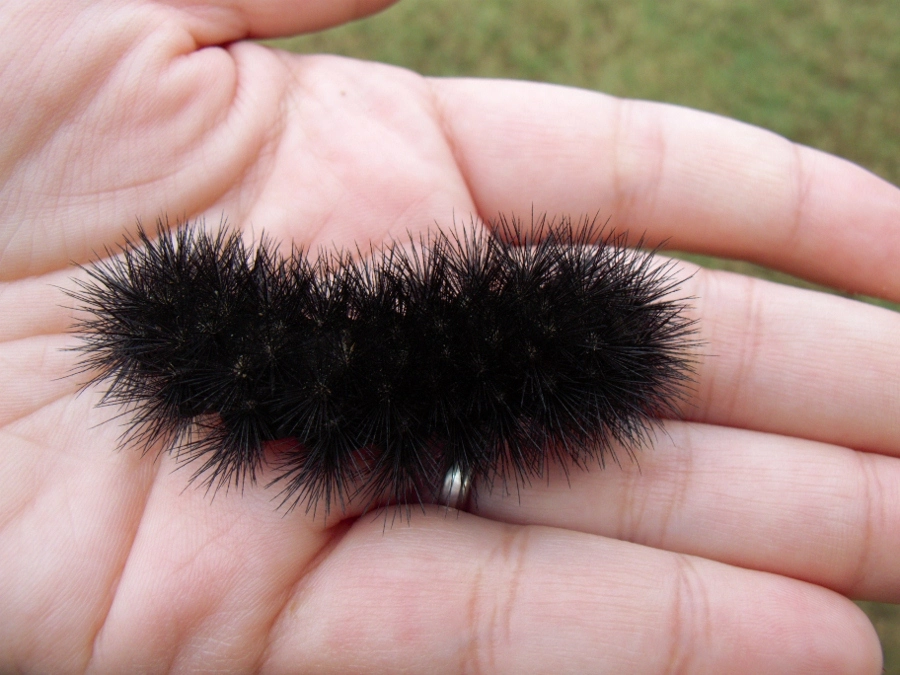
While their appearance differs, one thing remains constant: they are the larval stage of moths. A black fuzzy caterpillar moth might look completely different once it emerges from its cocoon. The transformation is part of the fascinating process of metamorphosis.
Common Types of Black Fuzzy Caterpillars
Identifying the exact species of a fuzzy caterpillar is important, especially since some are completely harmless while others can irritate the skin. Below are the most common black fuzzy caterpillars you might encounter in different regions, including Texas, Florida, and other parts of North America.
1. Woolly Bear Caterpillar (Pyrrharctia isabella)
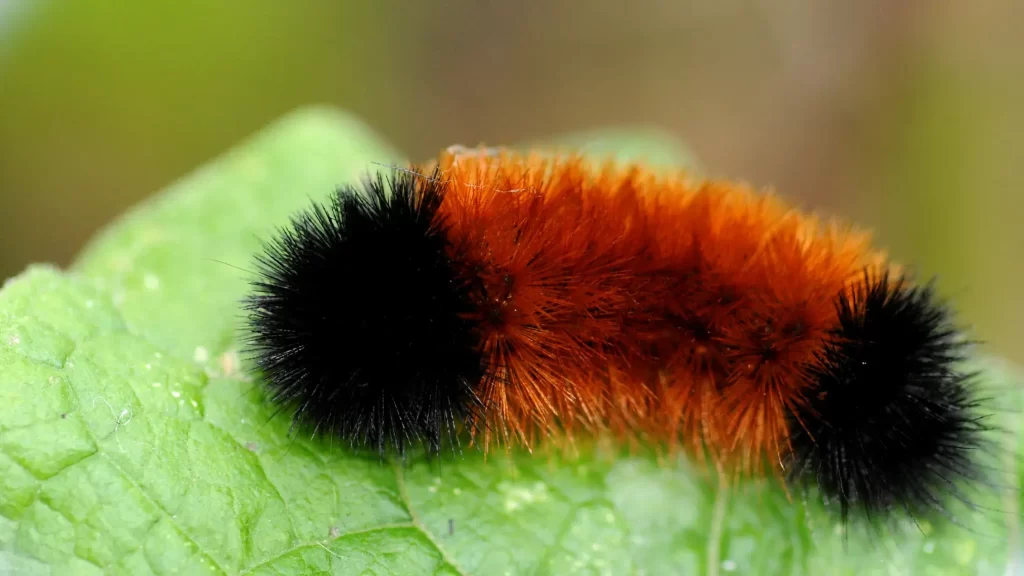
The woolly bear is perhaps the most famous orange and black fuzzy caterpillar. It’s easily recognized by its distinctive color pattern: black bands at the head and tail with a reddish-orange or brown band in the middle.
- Size: 1.5 to 2 inches long
- Habitat: Meadows, gardens, forests, and suburban areas
- Geographic range: Found across North America, from Canada to the southern United States
2. Giant Leopard Moth Caterpillar (Hypercompe scribonia)
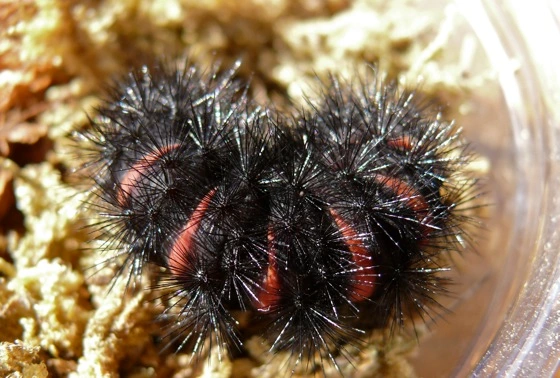
This big black fuzzy caterpillar is completely covered in black bristles. When it curls into a defensive ball, bright red or orange rings between its segments become visible. This visual warning signals to predators that it might not be tasty or safe to eat.
- Size: Up to 3 inches long
- Habitat: Wooded areas, gardens, near agricultural land
- Range: Eastern United States, especially common in New England to Texas and Florida
3. Saltmarsh Caterpillar (Estigmene acrea)
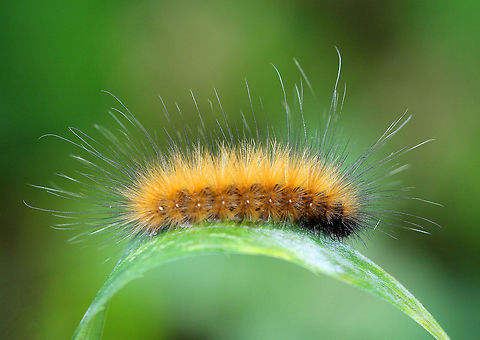
The saltmarsh caterpillar is more variable in color. While many are black fuzzy caterpillars, others may appear brown, yellow, or orange. These caterpillars tend to be more social, often appearing in groups as they feed on grasses and crops.
- Size: 1.5 to 2 inches long
- Habitat: Agricultural fields, salt marshes, and gardens
- Range: Widespread across the United States, including Texas and much of the United States
4. Hickory Tussock Caterpillar (Lophocampa caryae)
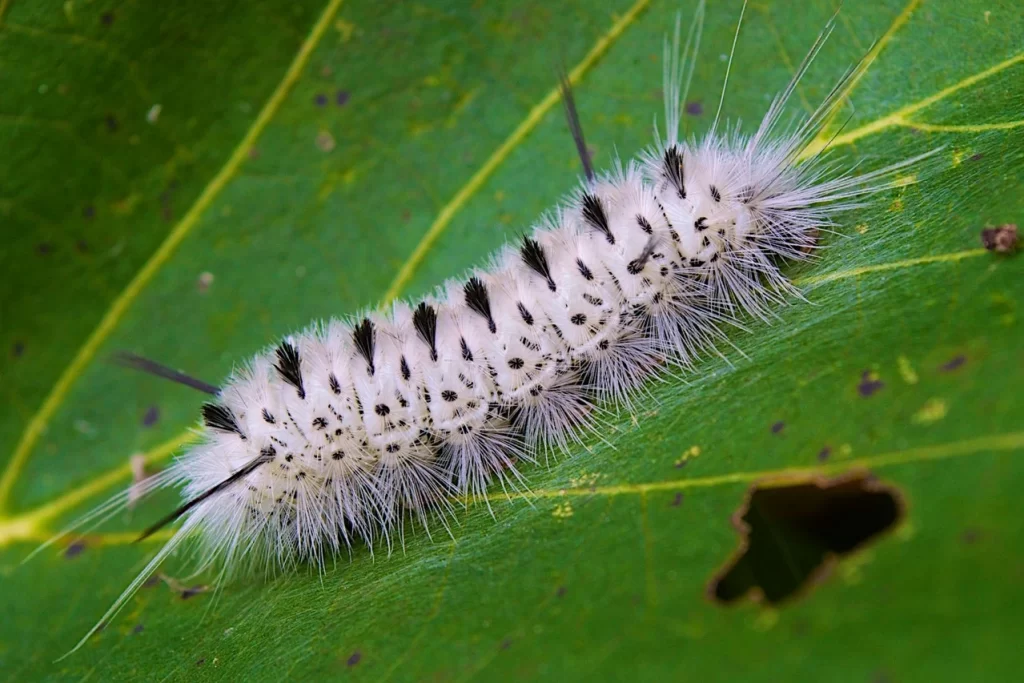
While not entirely black, this caterpillar is worth mentioning because people often search for it when looking up fuzzy black caterpillars. Its white body is covered with black tufts of hair, creating a striking contrast.
- Size: 1.5 inches long
- Habitat: Deciduous forests, especially near hickory, walnut, and pecan trees
- Range: Northeastern North America from Maine to North Carolina, west to Wisconsin
- Safety warning: Venomous – the hairs can cause skin irritation, rashes, and allergic reactions
Are Black Fuzzy Caterpillars Poisonous?
Most black fuzzy caterpillars are harmless. The woolly bear and giant leopard moth caterpillar, for example, do not have venomous spines. However, some can cause mild skin irritation when their bristles break off and embed in the skin.
Species like the hickory tussock caterpillar and the puss caterpillar can deliver more intense reactions, including:
- Red, itchy rash
- Localized swelling
- Burning or stinging sensations
- In rare cases, nausea or difficulty breathing
What to do if you’re stung:
- Remove hairs or spines: Use tape to gently lift them off the skin.
- Wash the area: Clean thoroughly with soap and cool water.
- Treat symptoms: Apply a cold compress and take an antihistamine if needed.
- Seek medical attention: If symptoms worsen or you experience severe pain, see a doctor immediately.
| Caterpillar | Distinct Features | Danger Level |
|---|---|---|
| Woolly Bear | Black–orange–black bands | Harmless |
| Giant Leopard Moth | All black, red rings when curled | Harmless |
| Saltmarsh Caterpillar | Variable color: black, yellow, or brown | Mild irritation possible |
| Hickory Tussock | White body with black tufts | Can irritate skin |
Fun Facts and Folklore
The orange and black fuzzy caterpillar, or woolly bear, has been part of North American folklore for centuries. In some rural communities, people hold annual “woolly bear festivals,” celebrating these caterpillars and their supposed ability to forecast winter weather.
Other interesting facts:
- Some species can survive being frozen solid during the winter, thawing out in spring to continue their life cycle.
- Birds often avoid eating fuzzy caterpillars due to their texture and defensive chemicals.
- The giant leopard moth caterpillar’s red rings are a natural warning sign to predators.
How Did Caterpillars Become Associated With Weather Forecasting?
Before modern meteorology, humans relied on natural observations to predict weather patterns. The association between caterpillars and weather forecasting represents a fascinating convergence of ancient folklore, colonial necessity, and modern media influence. This curious connection, while scientifically unfounded, has deep cultural roots and continues to capture public imagination more than 75 years after gaining scientific attention.
The transformation from local folklore to national phenomenon began with Dr. Charles Howard Curran, a respected entomologist and Curator of Insects and Spiders at the American Museum of Natural History in New York City. Curran, along with fellow entomologist Mont Cazier and their wives, traveled to Bear Mountain State Park, approximately 40 miles north of New York City. They collected 15 banded woolly bear caterpillars and carefully measured the lengths of their black and brown bands. The expedition was accompanied by New York Herald Tribune reporter John O’Reilly.
Curran’s studies were lighthearted and never scientifically rigorous, but newspapers loved the idea. Headlines like “Caterpillar Predicts Tough Winter Ahead!” captured the public’s imagination, cementing the woolly bear’s reputation as a tiny, fuzzy weather forecaster. Dr. Curran continued his study for eight more years but was never able to fully conclude whether the woolly bear was a reliable prognosticator. But the folklore continues to this day.
What to Do When You Encounter Black Fuzzy Caterpillar
If you come across a large black fuzzy caterpillar in your garden or on a trail:
- Observe, don’t touch: Admire it without direct contact.
- Use gloves or tools: If you must move it, use a stick or wear gloves.
- Teach kids and pets caution: Especially in areas where stinging caterpillars are common.
- Encourage biodiversity: Caterpillars play a vital role in the ecosystem, eventually becoming pollinating moths.
Why Black Fuzzy Caterpillars Are Important
Though they sometimes chew through garden plants, these caterpillars are a key part of nature. They:
- Serve as a food source for birds and small mammals.
- Help control vegetation by feeding on specific plants.
- Become moths, some of which act as important nighttime pollinators.
By learning to identify and respect them, we can coexist with these fascinating insects while protecting ourselves and our gardens.
By understanding which caterpillars live in your area, you can identify them accurately, avoid risks, and appreciate their role in nature. Whether you spot a yellow and black fuzzy caterpillar on a tree branch or a large black fuzzy caterpillar crossing a garden path, take a moment to observe one of nature’s most remarkable transformations in progress.
FAQ
What does a black fuzzy caterpillar turn into?
It turns into a moth, such as the giant leopard moth or Isabella tiger moth, depending on the species.
Is a black fuzzy caterpillar poisonous?
Most are harmless, but some, like the puss caterpillar or hickory tussock, can cause painful stings or skin irritation.
What happens if you touch a black fuzzy caterpillar?
Many are safe to touch, but some can leave tiny bristles that cause itching, rashes, or mild irritation.
How long do caterpillars live?
Caterpillars usually live 2–5 weeks before pupating, though some species overwinter and can live several months as larvae.
What does a black fuzzy caterpillar mean?
It often symbolizes change and transformation, and in folklore, the orange and black fuzzy caterpillar is linked to winter weather predictions.