Table of Contents
In 2025, agriculture stands at the cusp of a technological revolution. The integration of advanced robotics into farming practices is not just a futuristic concept but a present-day reality reshaping how food is produced. Agricultural robots are addressing critical challenges such as labor shortages, the need for sustainable practices, and the demand for increased efficiency. This comprehensive exploration delves into the top agricultural robots transforming farming in 2025, highlighting their features, benefits, and the pivotal role they play in modern agriculture.
The Rise of Agricultural Robots
The agricultural sector is experiencing a significant shift towards automation, driven by various factors:
- Labor Shortages: A declining agricultural workforce has necessitated the adoption of robots to perform labor-intensive tasks.
- Technological Advancements: Breakthroughs in AI, machine learning, and sensor technologies have made sophisticated agricultural robots feasible and effective.
- Sustainability Goals: Robots enable precision agriculture, reducing waste and promoting environmentally friendly farming practices.
According to market research, the global agricultural robots market is projected to grow from USD 8.13 billion in 2025 to USD 26.35 billion by 2032, exhibiting a CAGR of 18.3% during the forecast period .
Top 10 Agricultural Robots Transforming Farming in 2025
1. John Deere’s Autonomous Tractor
John Deere has unveiled a new lineup of autonomous tractors designed to address labor shortages in agriculture. This autonomous tractor is equipped with 16 strategically placed stereo cameras, providing a comprehensive 360-degree view of its surroundings and an onboard Nvidia GPU for real-time processing, allowing them to perform tasks such as soil tilling, planting, and spraying without human intervention . The integration of AI and computer vision enables these tractors to navigate fields with precision, enhancing productivity and efficiency.

- These tractors seamlessly integrate with John Deere’s suite of precision agriculture tools, including AutoPath™, AutoTrac™ Turn Automation, and the John Deere Operations Center™ Mobile.
- Farmers can operate and monitor these autonomous tractors remotely using the John Deere Operations Center Mobile app. The app provides access to live video feeds, images, data metrics, and allows for adjustments to various operational parameters such as speed and depth .
2. Ecorobotix’s ARA Ultra-High Precision Sprayer
Ecorobotix has developed the ARA sprayer, which utilizes AI Plant-by-Plant™ software with high-definition cameras to identify and target individual plants. This technology allows for precise application of herbicides, reducing chemical use by up to 95% . The ARA sprayer promotes sustainable farming by minimizing environmental impact and preserving soil health. The ARA sprayer’s adaptability is further enhanced by its compatibility with a wide range of crops. Ecorobotix has developed over 20 crop-specific algorithms, including new additions for carrots, cauliflower, broccoli, leek, soybean, and cotton.

- ARA sprayer Equipped with six high-resolution cameras and 156 precision nozzles, the system achieves an unprecedented spray accuracy of 6×6 cm (2.4×2.4 inches).
- One of the most compelling advantages of the ARA sprayer is its ability to drastically reduce the use of plant protection products. Field reports have demonstrated chemical savings ranging from 70% to 95%, depending on weed density and crop type. For instance, the Vegetable Consultancy Services (VCS) in the UK reported up to 96% reduction in chemical usage across 1,000 hectares, highlighting the sprayer’s efficiency and cost-effectiveness.
3. FarmWise’s Titan FT-35
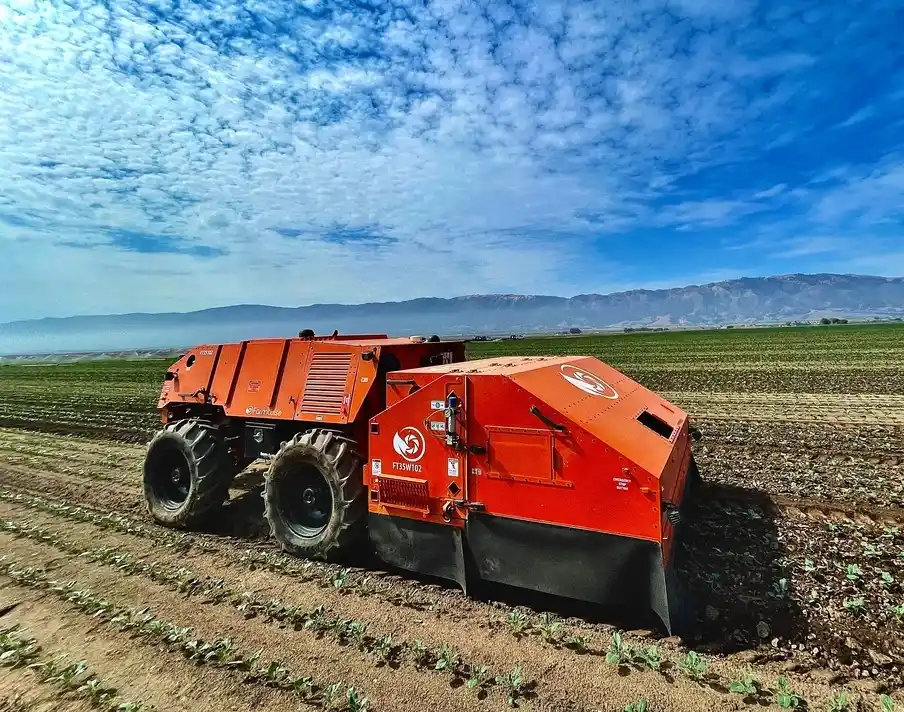
The FarmWise Titan FT-35 stands at the forefront of agricultural innovation in 2025, offering a transformative solution to the persistent challenges of labor shortages and sustainable farming practices. The Titan FT-35 employs sophisticated machine learning algorithms and high-resolution cameras to distinguish crops from weeds with remarkable accuracy. Weighing approximately three tons, the Titan FT-35 is built for durability and extended field operations. Its onboard diesel generator ensures prolonged activity across large tracts of land without the limitations of battery life.
The Titan FT-35 has been successfully deployed across various farms in California and Arizona, particularly in the Salinas, Santa Maria, and Yuma Valleys. It has proven effective in managing weeds in crops such as lettuce, broccoli, cauliflower, and celery. Farmers have reported significant reductions in manual weeding labor and improvements in crop quality.
4. Agrobot SW6010
Agrobot’s SW6010 is equipped with 30 robotic arms and AI-powered vision systems to identify and harvest ripe strawberries with precision. This technology minimizes fruit damage and addresses labor shortages in fruit-picking industries . By automating the harvesting process, the SW6010 improves efficiency and reduces reliance on manual labor.
AI-Powered Vision System (AGvision): Utilizes high-resolution cameras and artificial intelligence to assess fruit ripeness based on color, size, and shape. The system captures 20 images per second, enabling real-time analysis and decision-making for optimal harvesting.
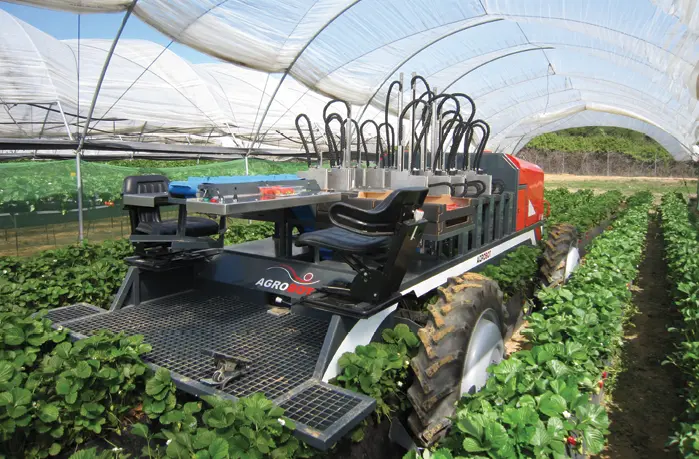
- Capable of harvesting up to 100 hectares in three days, significantly reducing the time and labor required for strawberry picking.
- Hydrostatic Drive System: Powered by a Perkins 403D-15 diesel engine and a Parker Hannifin PV01 axial-piston pump, the SW6010 features a hydrostatic drive that allows precise speed control. This ensures synchronization between the vehicle’s movement and the harvesting process.
- Built with stainless steel and military-grade aluminum, the SW6010 is designed for durability and reliability in various field conditions.
5. Solinftec’s Solix
Solinftec’s Solix is a lightweight robot capable of 24/7 operation. It performs tasks such as scouting, targeted spraying, and insect control using minimal chemicals. The Solix enhances field monitoring and promotes eco-friendly pest management, contributing to sustainable farming practices.
Solix’s AI-driven recognition system identifies specific weed species and applies herbicides precisely where needed.
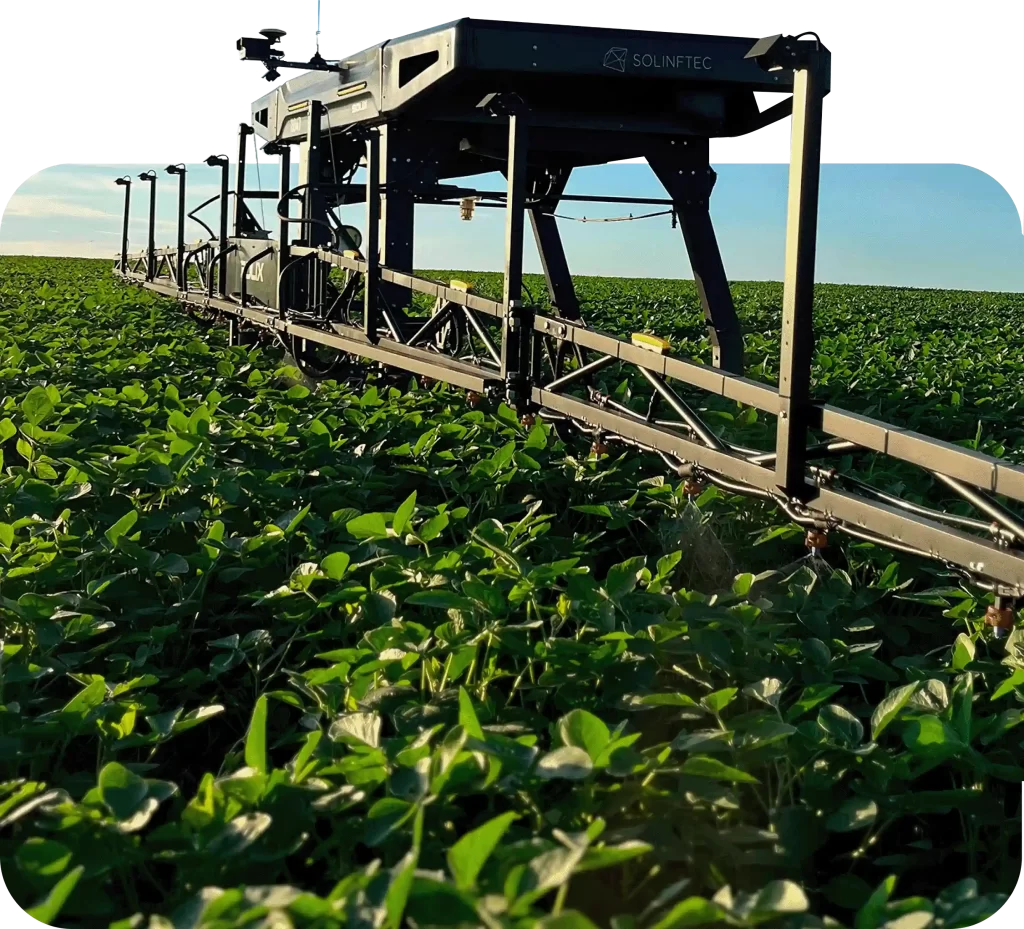
- By applying inputs only where necessary, Solix has achieved up to 98% reduction in herbicide volumes, contributing to more sustainable agriculture.
- Solix’s precise application of chemicals and non-chemical pest control methods reduce environmental contamination and promote biodiversity.
6. Bonsai Robotics’ Orchard Harvester
Bonsai Robotics has developed vision-based autonomous machines designed for tree crop harvesting. These robots navigate orchards to harvest crops like almonds efficiently, mitigating labor shortages and reducing operational costs . The technology aims to lower orchard operating costs, benefiting both producers and consumers.
Bonsai Robotics has strategically partnered with established manufacturers like Flory Industries and Orchard Machinery Corporation (OMC) to integrate its autonomous systems into existing harvesting equipment.
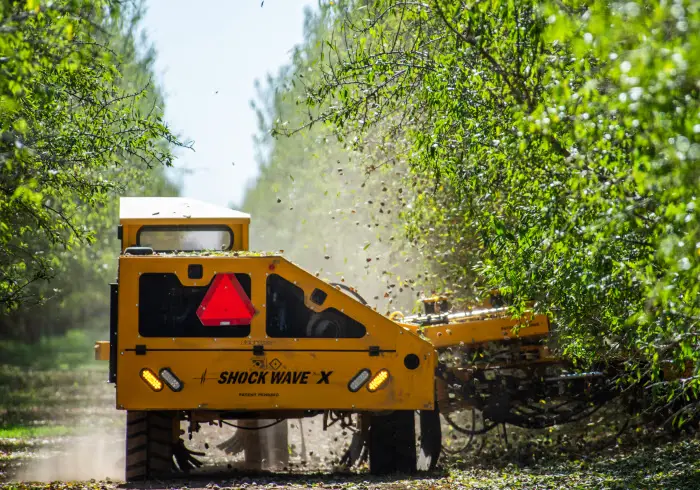
- Advanced Vision Systems: Utilizes AI and computer vision to navigate and operate in GPS-denied environments.
- Collaborative Integration: Partners with established manufacturers to retrofit existing equipment with autonomous capabilities.
- Enhanced Monitoring: Provides detailed telemetry for improved oversight and decision-making.
7. SwarmFarm Robotics’ Modular Field Robots
SwarmFarm Robotics offers modular, autonomous farming robots capable of performing various agricultural tasks such as fertilizing, weeding, and soil tilling. These robots empower farmers with customizable solutions and promote sustainable practices . The company’s ‘Right to Repair’ ethos allows farmers to maintain their robots independently, enhancing accessibility and reducing downtime.

- Customizable Platform: Attach different implements for spraying, weeding, mowing, or planting.
- Collaborative Swarms: Deploy multiple units to work together, boosting field coverage without soil damage.
- Reduced Chemical Use: Precision application cuts down pesticide and herbicide use by up to 90%.
- Lower Operational Costs: Automated operations reduce labor costs and machinery wear and tear.
8. Arugga’s Polly Pollination Robot
Arugga’s Polly is an AI-driven robot designed to assist in pollinating crops like tomatoes. It identifies flowers ready for pollination and uses air puffs to pollinate them, outperforming traditional methods . Polly enhances pollination efficiency and crop yields, addressing challenges associated with declining pollinator populations.
Notably, tomatoes pollinated by Polly have shown yields up to 20% higher than those achieved through manual pollination and up to 5% higher than traditional bumblebee pollination.

- Unlike bumblebees, Polly can operate effectively in a range of environmental conditions, including greenhouses with LED lighting and UV screening, where traditional pollinators may struggle.
- One operator can manage a fleet of up to 20 Polly units, significantly reducing labor requirements and associated costs.
9. Naïo Technologies’ Oz Robot
The Oz robot by Naïo Technologies is a compact, fully electric robot guided by RTK GPS. It performs tasks such as weeding, seeding, and hoeing with high precision, providing small-scale farmers with affordable automation solutions.
The robot operates on rechargeable lithium-ion batteries, allowing for zero-emission farming. On a full charge, Oz can run autonomously for up to 8–10 hours, depending on the terrain and workload.
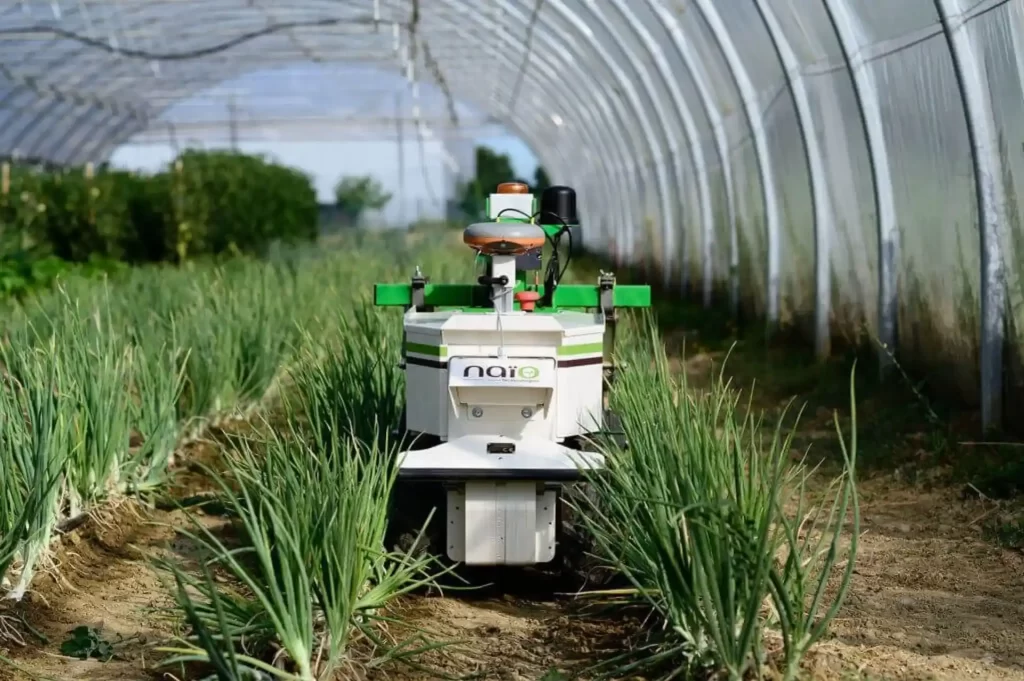
- Farmers can manage Oz using a user-friendly mobile app or dashboard, tracking progress, adjusting routes, and modifying tasks in real time.
- Oz Robot Equipped with RTK GPS and advanced sensors, the Oz robot navigates crop rows with centimeter-level precision. Its real-time data processing ensures safe and efficient movement, even in narrow or challenging field layouts.
10. Kubota’s Smart Autonomous Sprayer
In 2025, Kubota’s Smart Autonomous Sprayer stands out as one of the most transformative agricultural robots in the field of precision spraying. The robot uses computer vision technology to identify specific areas that require treatment. Powered by RTK-GPS and LiDAR, the sprayer navigates fields with precision. It avoids obstacles, follows optimized routes, and operates autonomously for long hours, minimizing human intervention.
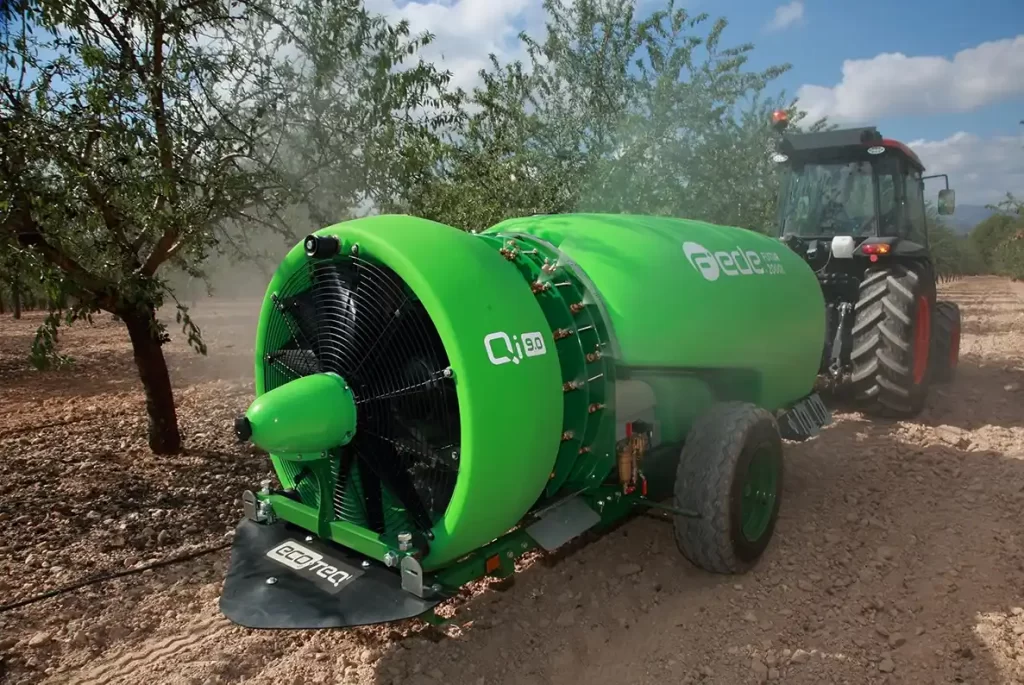
- Farmers can monitor spray coverage, chemical usage, and crop health data in real-time via an integrated dashboard. This supports data-driven decision-making and improves long-term farm planning.
- The unit is designed to be fully electric or hybrid, aligning with modern sustainability goals by reducing fuel usage and emissions.
You may also like:
Benefits of Integrating Agricultural Robots
The adoption of agricultural robots offers numerous advantages:
- Labor Efficiency: Robots alleviate labor shortages by automating repetitive tasks, allowing human workers to focus on more complex activities.
- Precision Agriculture: Advanced sensors and AI enable precise application of inputs, reducing waste and enhancing crop yields.
- Sustainability: Robots promote environmentally friendly practices by minimizing chemical use and conserving resources.
- Economic Impact: Automation reduces operational costs and increases profitability for farmers.
Challenges and Considerations
Despite the benefits, integrating agricultural robots presents challenges:
- High Initial Costs: The financial investment required for robotic technology can be a barrier for some farmers.
- Technical Complexity: Operating and maintaining advanced robots necessitates technical expertise.
- Regulatory and Ethical Issues: Concerns related to data privacy, job displacement, and regulatory compliance must be addressed.
The Future of Farming with Agricultural Robots
The future of agriculture is poised for further transformation through robotics:
- Integration with AI and IoT: Enhanced connectivity and data analysis will optimize farming operations.
- Scalability: Robotic solutions will become more accessible to farms of various sizes.
- Global Implications: Advanced agricultural practices will contribute to global food security and sustainability.
Conclusion
The future of farming is no longer a distant vision—agricultural robots are here, and they’re transforming how we grow food, manage resources, and sustain the planet. From autonomous tractors and intelligent drones to fruit-picking machines and AI-powered weeders, these innovations are tackling long-standing challenges like labor shortages, rising input costs, and environmental sustainability.
In 2025, the adoption of agricultural robots is not just a trend; it’s a necessity. They are helping farmers boost productivity, improve crop health, reduce chemical use, and gather real-time data for smarter decision-making. Whether you’re a large-scale producer in the Midwest or a small specialty grower in California, robotic solutions are more accessible, scalable, and cost-effective than ever.
But the biggest takeaway? These technologies are empowering farmers—not replacing them. By automating repetitive, time-consuming tasks, agricultural robots free up time and labor to focus on high-level planning and innovation. As more farms integrate robotics into daily operations, the entire industry is becoming more resilient, efficient, and future-ready.
If you’re looking to stay competitive and sustainable in 2025 and beyond, investing in agricultural robotics is no longer optional—it’s essential.