Table of Contents
Pitcher plants, known for their carnivorous traps, are often admired for their strange beauty and ecological uniqueness. But there’s more to these plants than their pitcher-shaped leaves. When they bloom, pitcher plant flowers captivate botanists and hobbyists alike with their intricate structures, rich colors, and fascinating adaptations.
In this comprehensive guide, we’ll explore the world of pitcher plant flowers—how they bloom, what they smell like, how to encourage flowering, and what makes each species distinct. This guide is especially useful for plant enthusiasts in the United States, where several native pitcher plant species thrive.
Understanding the Flowering Mechanism of Pitcher Plants
Pitcher plant flowers are not an afterthought in these carnivorous wonders. They are a vital part of their reproductive strategy, carefully evolved to avoid competing with their carnivorous mechanisms. Unlike the pitchers that trap insects for nutrients, the flowers are positioned high above the plant, often on tall stalks, to ensure pollinators don’t end up as prey. Most pitcher plant species are pollinated by insects like bees and flies, which are attracted to the unique scent and shape of the flowers.
The floral architecture varies depending on the genus—Sarracenia, Nepenthes, and Cephalotus all have distinct structures. For example:
- Sarracenia (North American pitcher plants) typically produce nodding, umbrella-shaped flowers with five petals.
- Nepenthes (Asian tropical pitcher plants) bear more understated, unisexual flowers that grow on long inflorescences.
- Cephalotus follicularis, native to Australia, features small, creamy-white flowers that bloom above the carnivorous foliage.
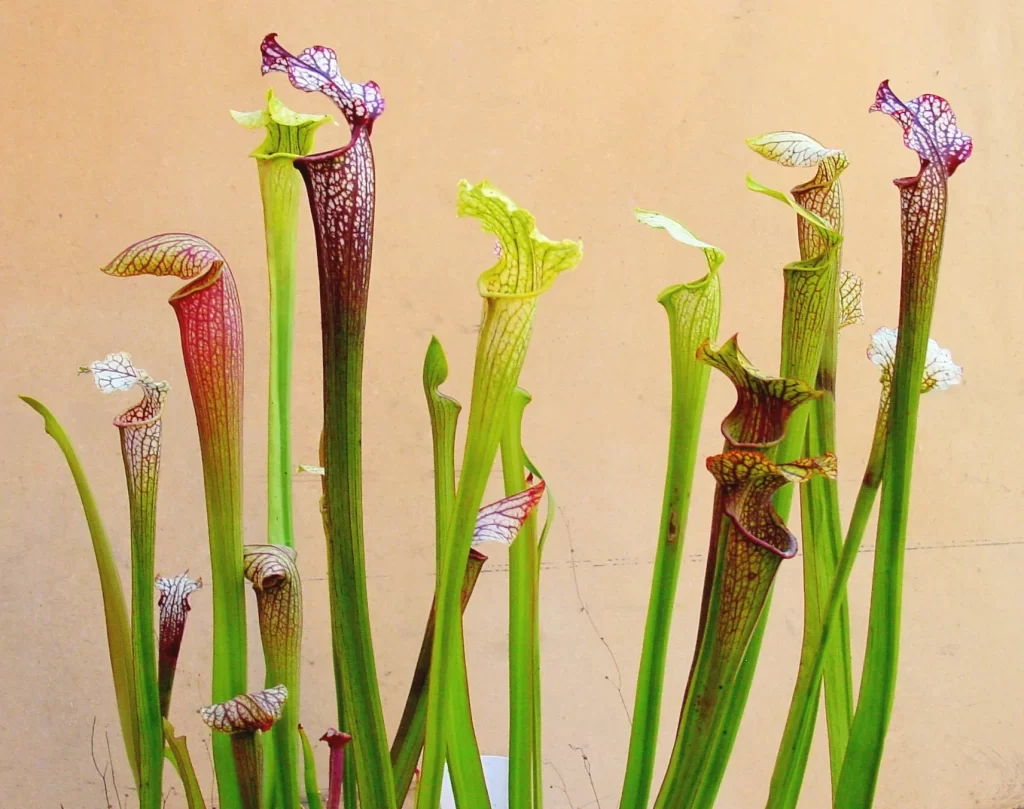

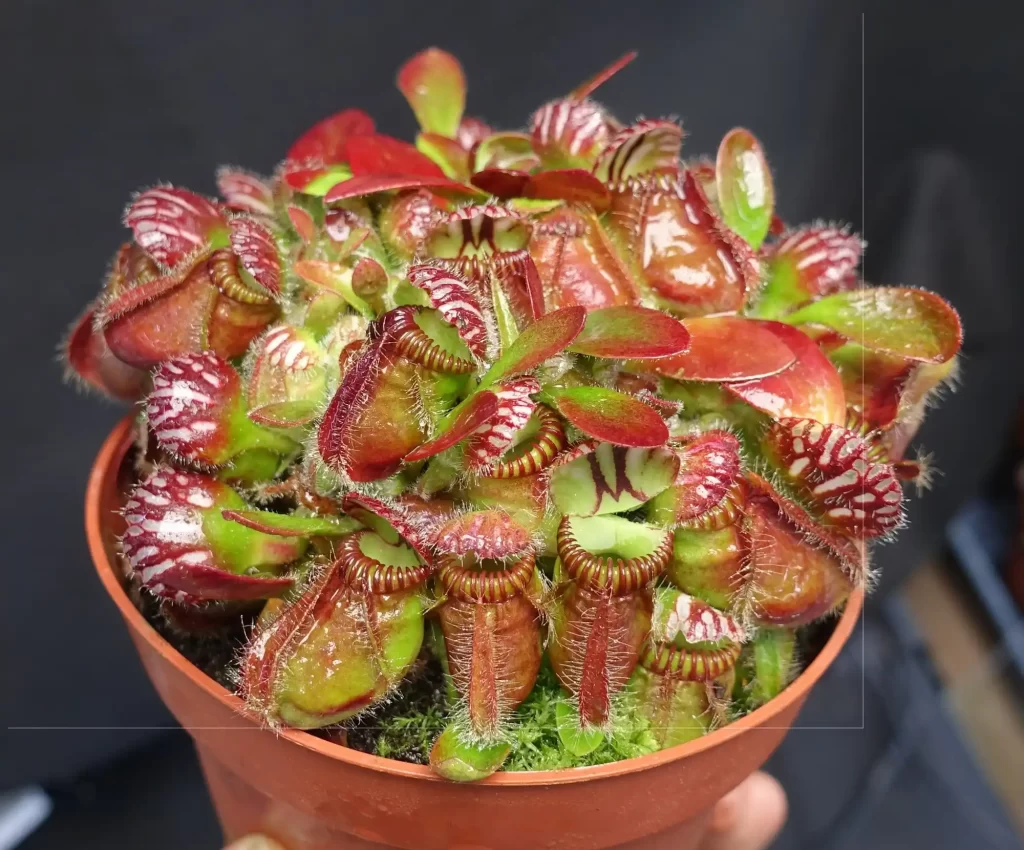
This separation between traps and flowers is a clever ecological adaptation: it ensures the plants can both feed and reproduce without conflict.
When Do Pitcher Plants Bloom?
Pitcher plants have a fairly predictable bloom cycle that varies depending on the species and growing region. For species native to the United States—particularly those in the Sarracenia genus—flowering typically occurs in early to late spring, depending on local climate.
Bloom Timing by Region:
- Southern U.S. (Florida, Georgia, Alabama): Blooming begins as early as March or April.
- Mid-Atlantic/Northeast (Maryland, New Jersey, New York): Expect blooms in late April to early June.
- Northern states (Michigan, Maine): Flowering may start in late May or June due to cooler spring temperatures.
The flowers often emerge before or alongside the first pitchers. This is another smart adaptation—it keeps pollinators safe from the plant’s digestive traps.
For tropical Nepenthes, flowering can occur year-round, depending on the consistency of the environment. They thrive in equatorial climates, where light and temperature don’t vary much seasonally.
Related:
- Elephant Ear Plant Care: Expert Tips to Grow Giant, Lush Leaves!
- Plumbago Plants – How to Grow and Care for Plumbago Plants
- No More Replanting! Discover 15 Stunning Self-Seeding Flowers That Practically Plant Themselves!
- Poisonous Flowers List (With Pictures): Beautiful But Deadly
What Do Pitcher Plant Flowers Smell Like?
One of the most fascinating aspects of pitcher plant flowers is their scent. Unlike the pitchers themselves—which may emit faint odors to lure prey—flowers produce scent compounds to attract pollinators. But these scents can be unexpected.
Notable Scents by Species:
- Sarracenia flava: Commonly known as the yellow pitcher plant. Often smells like cat urine to human noses—a trait that surprisingly attracts pollinators like bees and flies. This scent is most noticeable during the spring when the flowers bloom.
- Sarracenia rubra: Also known as the sweet pitcher plant. It offers a sweeter, pleasant fragrance. Which some describe it as smelling like cherry or raspberry.
- Sarracenia purpurea: Usually mild and earthy.
- Nepenthes species: Often have little to no scent, depending on the variety and flower maturity.
- Cephalotus: Emits a light, sweet scent, barely detectable to humans.
These scents, although strange to us, are evolutionarily designed to appeal to the plant’s primary pollinators. Insects use scent more than visual cues, so getting the smell right is critical for these plants’ reproductive success.
Anatomy of a Pitcher Plant Flower
The design of pitcher plant flowers is highly efficient and adapted to ensure cross-pollination. Here’s a closer look at their parts, particularly in the Sarracenia genus:
Key Structures:
- Sepals: Five in number, often large and colorful, forming a cup around the reproductive parts.
- Petals: Also five, they may drape over the stigma like a parachute.
- Style: Central umbrella-like structure with radial stigmas at each tip—where pollen must land for fertilization.
- Stamens: Located inside the flower, these produce pollen.

This unique design encourages insect pollinators to enter the flower from below, brushing against stamens and stigmas in the process. As they exit, they carry pollen to the next flower, ensuring genetic diversity.
Popular Species of Pitcher Plants and Their Flowers
1. Sarracenia leucophylla (White-Topped Pitcher Plant)
- Region: Southeastern U.S. (especially Alabama and Florida)
- Flower Color: Deep red to maroon
- Bloom Time: April to May
- Fragrance: Mild, musky

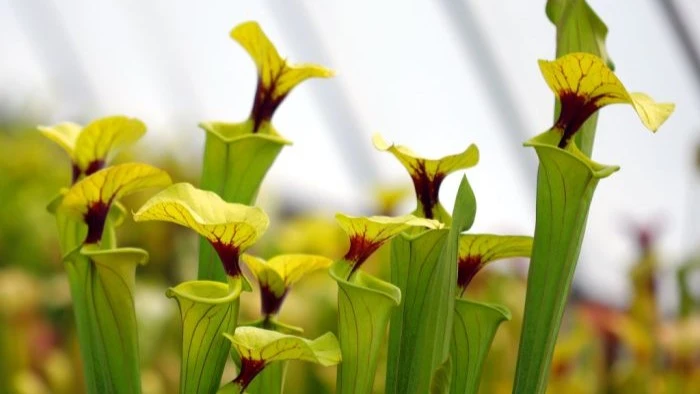
2. Sarracenia flava (Yellow Pitcher Plant)
- Region: Coastal Plains from the Carolinas to Mississippi
- Flower Color: Bright yellow
- Bloom Time: Early spring (March to April)
- Fragrance: Strong, urine-like (attractive to pollinators)
3. Sarracenia purpurea (Purple Pitcher Plant)
- Region: Northern U.S., Canada, Great Lakes
- Flower Color: Reddish purple
- Bloom Time: May to June
- Fragrance: Mild, earthy

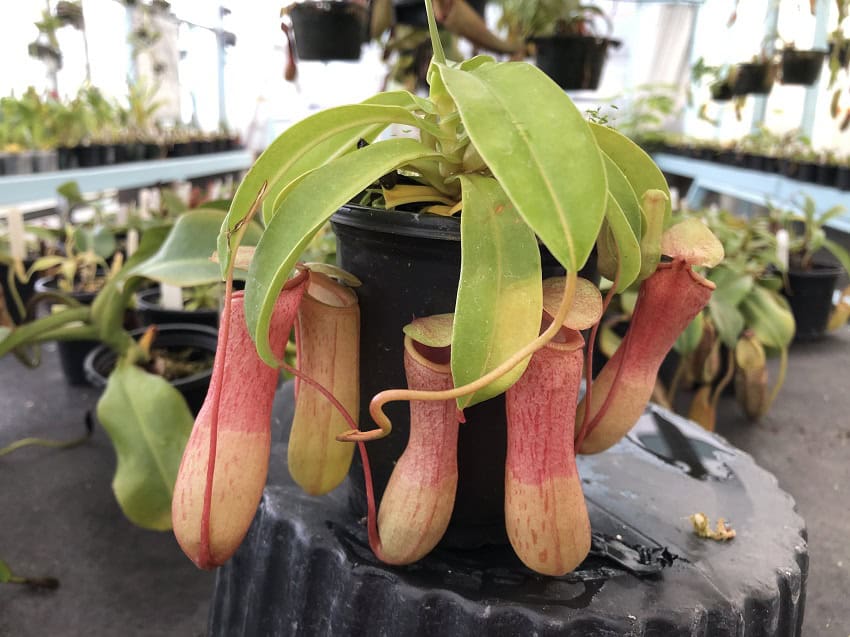
4. Nepenthes ventricosa (Tropical Pitcher Plant)
- Region: Philippines (popular in cultivation worldwide)
- Flower Color: Pale yellow or green
- Bloom Time: Year-round in stable climates
5. Cephalotus follicularis (Australian Pitcher Plant)
- Region: Southwest Australia
- Flower Color: White, delicate
- Bloom Time: Spring to early summer
How to Encourage Pitcher Plant Flowering
Growing a pitcher plant that flowers is deeply rewarding. However, getting your plant to that point requires specific care.
1. Provide Adequate Light
Sarracenia and other North American species require full sun exposure (6+ hours daily). If kept indoors, use strong grow lights—preferably full-spectrum LEDs. Nepenthes prefer bright, indirect light. Avoid direct midday sun, especially for highland species.
2. Use Proper Soil
Pitcher plants grow in nutrient-poor environments. Use a mix of sphagnum peat moss and perlite or sand (no fertilizers). Avoid potting soils with added nutrients, as these can harm the plant.
3. Ensure Correct Watering Practices
Always use distilled, reverse osmosis, or rainwater. Tap water typically contains minerals that accumulate and damage the plant’s roots. Keep the soil moist but not waterlogged. Use a tray watering system, especially for Sarracenia.
4. Maintain Seasonal Dormancy (For Temperate Species)
Sarracenia and other North American species require a 3-4 month winter dormancy to flower. During this period:
- Reduce watering slightly
- Provide cooler temperatures (35°F to 50°F)
- Limit light exposure
Without dormancy, these plants often survive but won’t bloom.
5. Be Patient
Pitcher plants often take 3–6 years to reach maturity. Don’t expect flowers from young seedlings or recently divided rhizomes.
Common Problems & Solutions
Problem: No Flowers
- Likely Causes: Inadequate dormancy, poor light, immature plant
- Solution: Adjust conditions and give it time
Problem: Flower Buds Wilt Prematurely
- Likely Causes: Underwatering, pest infestations
- Solution: Ensure consistent moisture, inspect for aphids or mites
Problem: Pitchers Dying During Flowering
- Likely Causes: Normal seasonal shift or resource reallocation,
- Solution: Focus on feeding and post-bloom care
In the vast and diverse world of carnivorous plants, pitcher plant flowers stand out as unexpected marvels. These blossoms are not only vital for the plant’s reproduction but also add aesthetic and scientific intrigue to any collection. Understanding their blooming habits, regional variations, and care requirements gives growers a richer, more fulfilling experience. Whether you’re nurturing a North American Sarracenia or a tropical Nepenthes, encouraging flowering is a rewarding goal that signals your plant is thriving. By tailoring your care to each species’ unique needs and embracing the seasonal rhythms of nature, you can enjoy both the beauty of the pitchers and the rare delight of their elusive flowers.