Table of Contents
Hydroponics often looks intimidating to first-time growers. You see tubes, pumps, lights, and nutrient tanks and think, “This seems complicated.” The truth is, it doesn’t have to be. Not all hydroponic setups demand daily monitoring and constant fine-tuning. Some systems can run for weeks with minimal intervention. That’s exactly what low-maintenance hydroponic systems are designed for. They’re simple, affordable, and perfect for beginners who want fresh produce without becoming full-time greenhouse managers.
In this guide, we’ll explore how these systems work, which ones are best for beginners, how to set them up, and what to grow for the best results.
What Makes a Hydroponic System “Low Maintenance”
Not all hydroponic systems are created equal. A system that requires constant pumping or precise automation is more likely to need daily care. But low-maintenance hydroponic systems share a few core features:
- Fewer or no moving parts
Passive systems like Kratky don’t rely on pumps or timers. This reduces failure points. - Stable nutrient reservoirs
A larger nutrient solution volume buffers pH and EC changes, so the system remains stable longer. - Simple design
Fewer components make cleaning and troubleshooting straightforward. - Plants suited to low-tech growing
Leafy greens and herbs can thrive in static water setups. - Easy maintenance cycles
You don’t need to replace or top up water every day—sometimes not even for weeks.
These principles make the difference between a system that feels like a chore and one that quietly grows plants in the background.
Best Low-Maintenance Hydroponic Systems for Beginners
Below are the most popular and practical hydroponic systems that require minimal effort to run. Each method offers different levels of simplicity and scalability, so you can choose what fits your goals.
Kratky Method — Truly Passive Growing

The Kratky method is often called the “set it and forget it” hydroponic system. It’s non-circulating, meaning it doesn’t require a pump or electricity. Plants are suspended above a nutrient-rich reservoir; their roots grow downward into the solution and collect both water and nutrients as needed. The air gap between the solution and the plant base provides oxygen.
How it works:
- A container holds a nutrient solution.
- Plants sit in net pots with their roots suspended above the solution.
- As plants consume nutrients and water, the level drops, creating an air gap for root oxygenation.
Why it’s low-maintenance:
- No pumps, timers, or moving parts.
- No need to top up daily—sometimes not at all for the entire growing cycle.
- Perfect for small spaces like kitchen counters, balconies, or windowsills.
Best plants: Lettuce, basil, mint, spinach, pak choi, cilantro.
Maintenance schedule:
- Check water level every 1–2 weeks.
- Refresh nutrient solution after each growth cycle.
- Keep the reservoir covered to block light and prevent algae growth.
Deep Water Culture (DWC) — Simple Automation
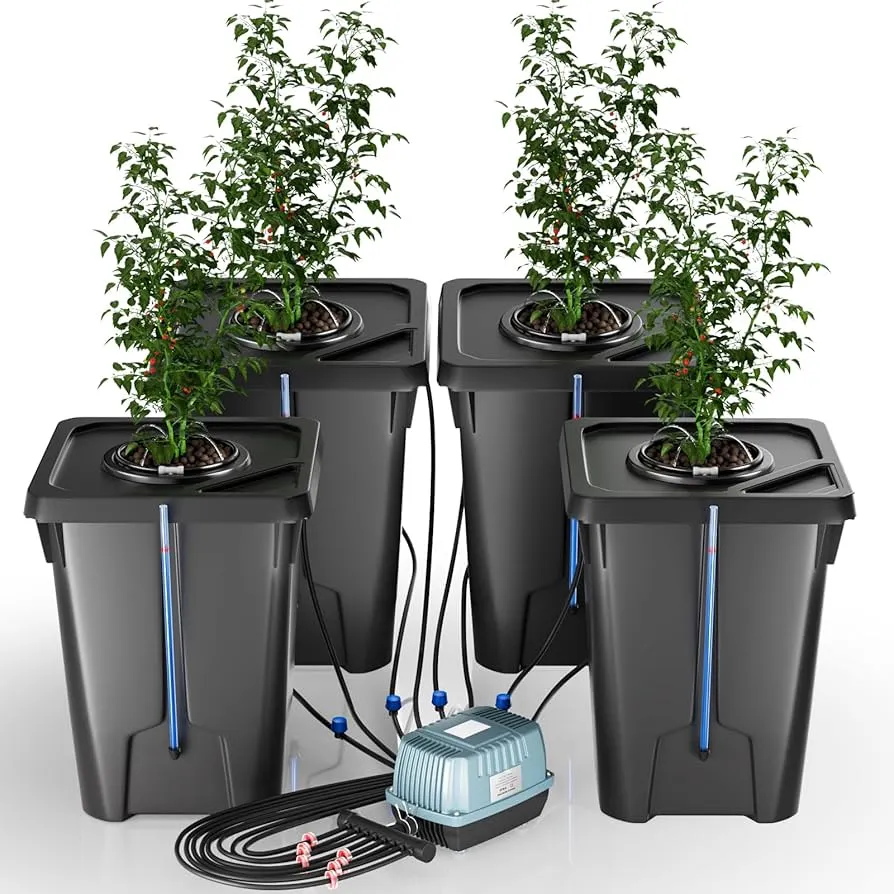
DWC is still beginner-friendly but involves a single air pump to keep roots oxygenated. It’s ideal for those who want a slightly more active system without daily labor.
How it works:
- Plants float on a raft or sit in net pots on a lid.
- Roots are submerged in a nutrient solution.
- An air pump and air stone provide oxygen, keeping the water fresh.
Why it’s low-maintenance:
- Simple once set up.
- Nutrient solution lasts weeks without major adjustment.
- Works well for larger plants than Kratky.
Best plants: Lettuce, kale, basil, chard, peppers.
Maintenance schedule:
- Top up the nutrient solution every 7–10 days.
- Check pH weekly.
- Replace the solution every 2–3 weeks.
Pro tip: Use a larger reservoir to reduce how often you need to top up.
Wick System — Passive & Consistent
The wick system is one of the oldest and simplest hydroponic designs. It uses capillary action to deliver nutrients to the plant roots. Plants sit in pots filled with an inert medium, and a wick passes from the base of each pot into a reservoir of nutrient solution. Capillary action draws nutrients up as needed—no pumps, timers, or ongoing adjustments required.
How it works:
- A container holds the nutrient solution.
- A wick (cotton rope or felt strip) draws the solution up to the plant roots in the growing medium.
- The plant absorbs water and nutrients passively.
Why it’s low-maintenance:
- No pump or electricity.
- No water level management required.
- Continuous, slow nutrient delivery keeps plants healthy.
Best plants: Herbs, lettuce, small greens, strawberries.

Maintenance schedule:
- Refill the reservoir when it gets low.
- Replace solution every 2–3 weeks.
- Clean the wick periodically to prevent clogging.
Limitations:
- Not suitable for heavy-feeding plants like tomatoes or cucumbers.
- Works best for small to medium-sized setups.
Plug-and-Play Hydroponic Kits (Smart Gardens)
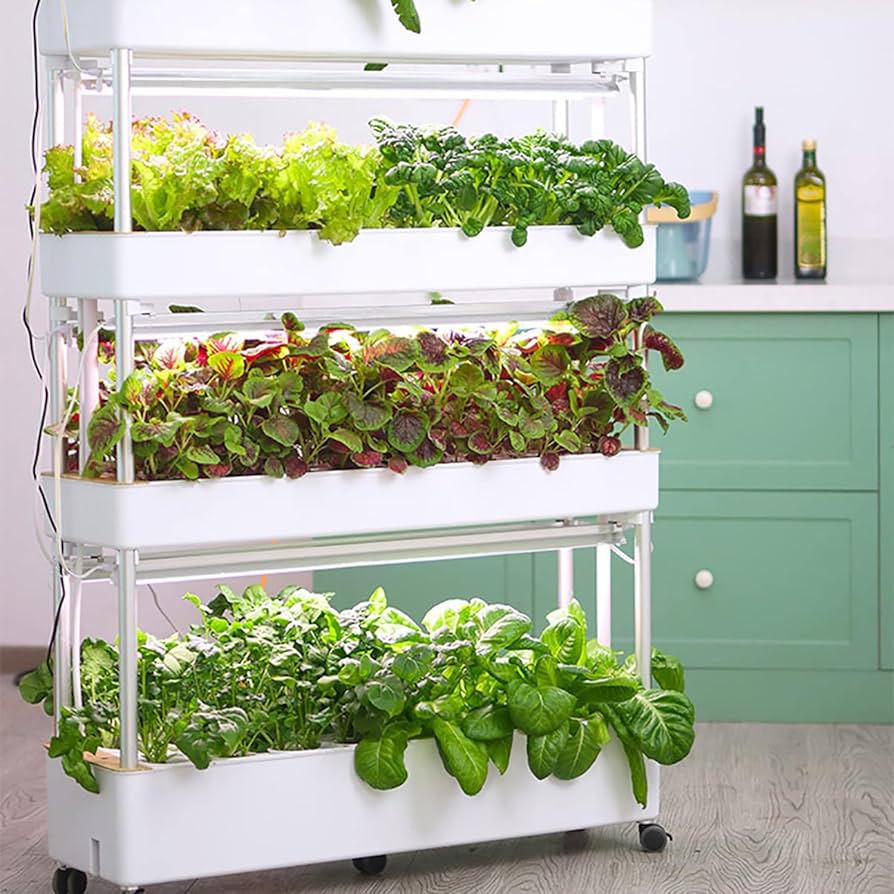
The latest generation of hydroponics features “smart” indoor kits with automated lights, water pumps, and app controls. Examples include Aerogarden, Click & Grow, and Gardyn. They combine ease of setup with maintenance alerts and community assistance.
Pros:
- Fully automated lighting and nutrient delivery
- Ideal for apartment dwellers
- Modern design — looks great on a kitchen counter
Cons:
- Higher upfront cost
- Limited space for larger plants
Microgreens Trays — Short Cycle, Almost No Maintenance
Microgreens are perfect for anyone who wants quick results with minimal setup. Since they’re harvested in 7–14 days, they don’t require pumps or complex maintenance.
How it works:
- Seeds are grown on a mat or shallow tray with a thin layer of nutrient solution or water.
- Roots absorb moisture through capillary action.
- No long-term maintenance needed.
Why it’s low-maintenance:
- No pumps or air stones.
- No nutrient changes during a short growing cycle.
- Easy to clean and reuse trays.
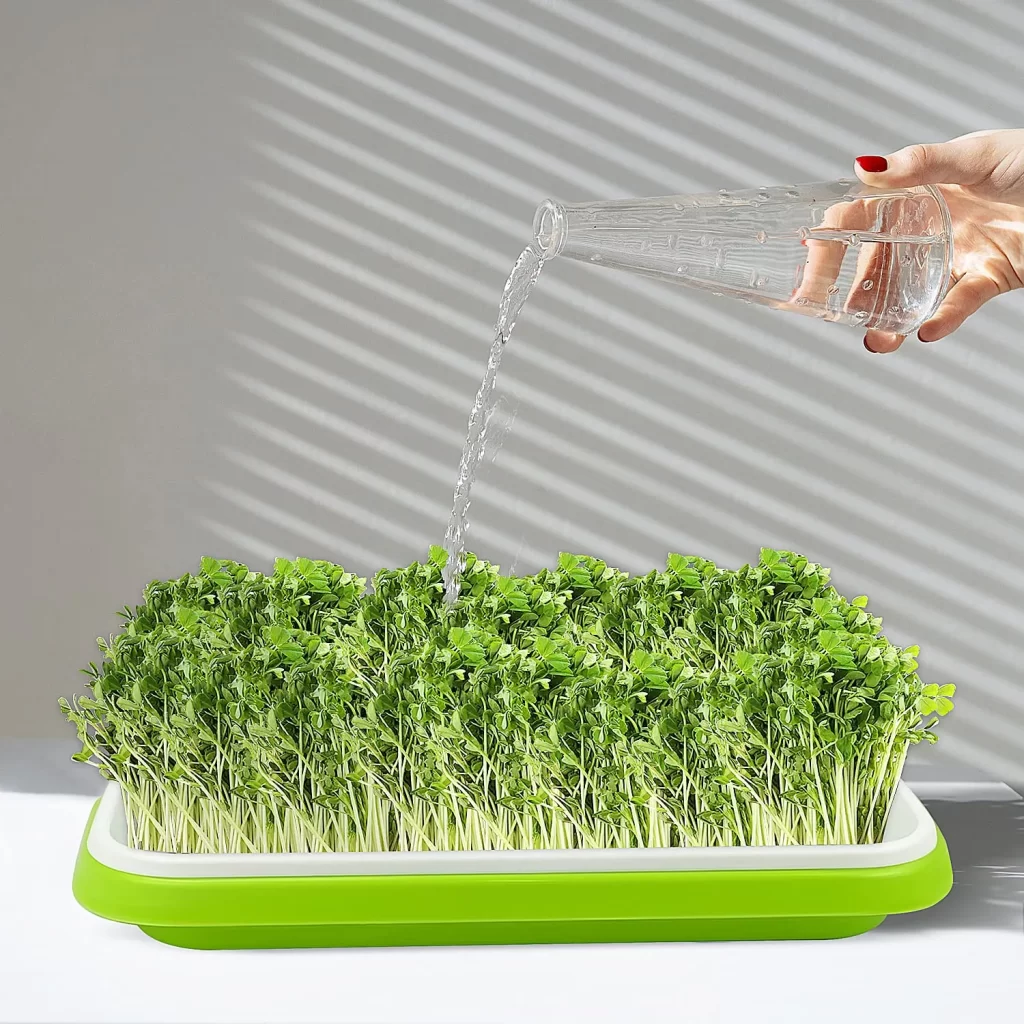
Best plants: Radish, arugula, sunflower, pea shoots, mustard.
Maintenance schedule:
- Mist daily or keep the mat moist.
- Harvest in 1–2 weeks.
- Rinse trays between cycles.
Choosing the Right Low-Maintenance Hydroponic Systems for You
Different systems work best for different goals. Here’s a quick way to narrow it down:
| Goal | Best System | Maintenance Level | Best Plants |
|---|---|---|---|
| Zero electricity | Kratky / Wick | Very low | Lettuce, herbs |
| Moderate automation | DWC / Low-flow drip | Low | Lettuce, peppers, greens |
| Short cycle harvest | Microgreens trays | Minimal | Microgreens |
| Compact indoor gardening | Kratky | Very low | Herbs, lettuce |
| Balcony or outdoor | DWC / Drip | Low | Leafy greens, small fruits |
Ask yourself:
- How much space do I have?
- How often can I check the system?
- Do I want active or passive growing?
- Which plants do I want to grow?
This clarity helps you build a system that truly fits your lifestyle.
Final Thoughts
Low-maintenance hydroponic systems are an excellent entry point for anyone curious about growing food without soil. They’re simple, affordable, and surprisingly productive. Start small. A single Kratky container with lettuce or basil can teach you the basics without overwhelming you. Once you understand how plants respond, you can expand or automate further. Hydroponics doesn’t have to be complicated. It can be as easy as a bucket of water, some nutrients, and a bit of patience.