Table of Contents
Looking for a fast-growing, vibrant flowering plant that thrives with minimal care? Plumbago plants, also known as sky flowers or leadworts, might be the perfect addition to your landscape. These brilliant blue bloomers are beloved for their extended flowering season, versatility in the garden, and ability to attract pollinators.
Whether you’re a beginner gardener or a seasoned green thumb, growing Plumbago plants is both rewarding and surprisingly simple. This comprehensive guide covers everything you need to know about how to grow and care for Plumbago plants—from planting and pruning to pest control and propagation.
About Plumbago Plants
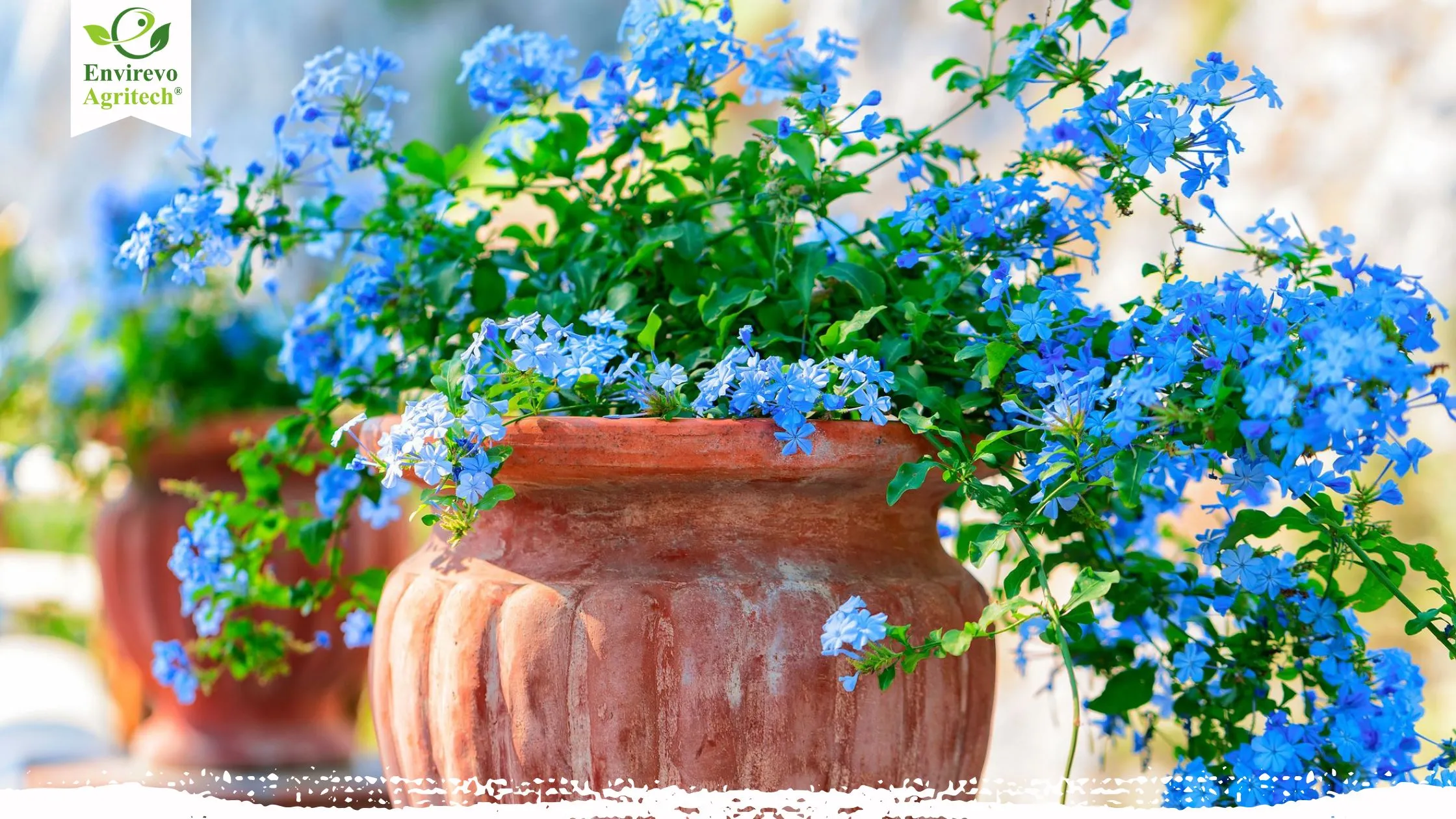
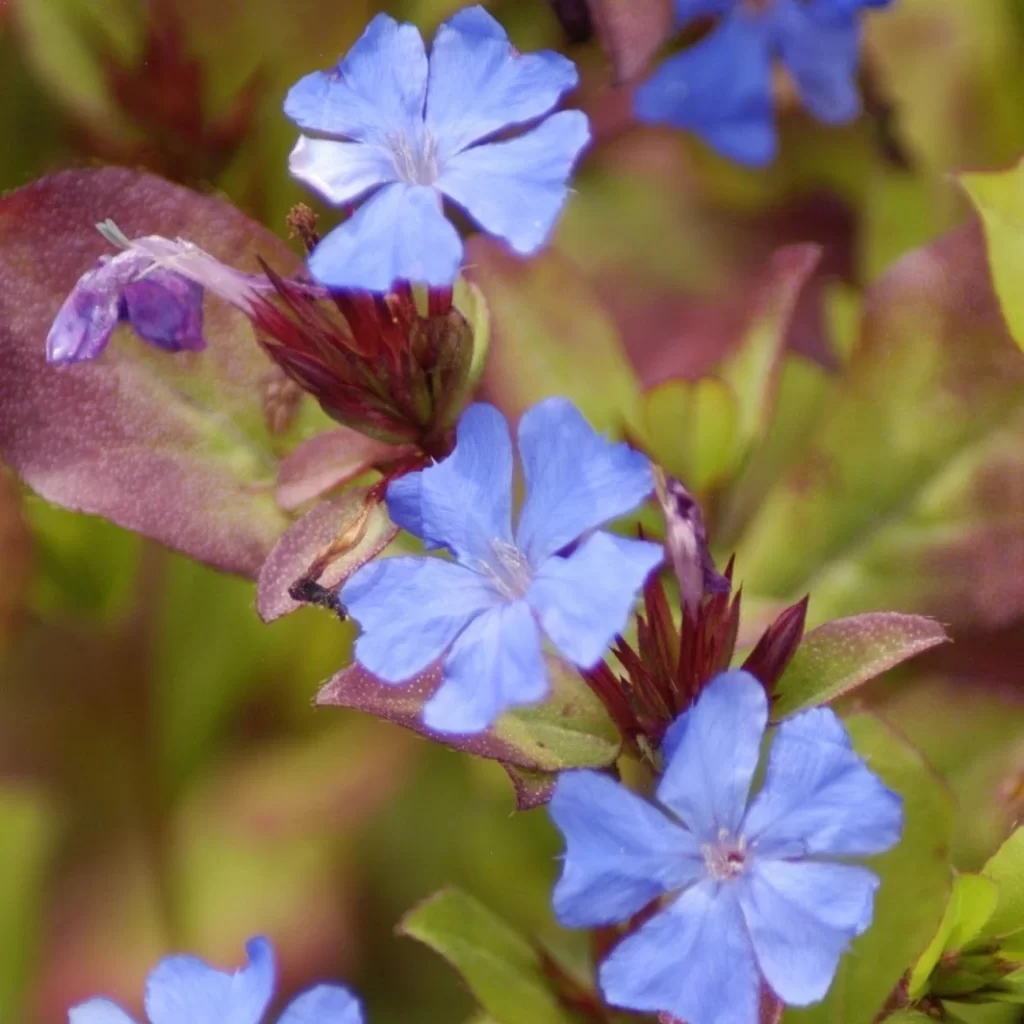
Plumbago (Plumbago auriculata), often called Cape Leadwort, is a semi-woody, evergreen shrub native to South Africa. It features delicate, phlox-like clusters of sky blue or white flowers that bloom from spring through fall. In frost-free climates, Plumbago can bloom year-round.
This low-maintenance plant is a favourite in tropical and subtropical gardens for its climbing or mounding growth habit. It’s commonly used as a groundcover, foundation plant, or cascading accent in containers.

| Feature | Details |
| Common Name | Plumbago, Cape Leadwort, Sky Flower |
| Botanical Name | Plumbago auriculata |
| Plant Type | Flowering shrub, semi-woody perennial |
| Family | Plumbaginaceae |
| Mature Size | 3 to 10 feet tall, 4 to 8 feet wide |
| Sun Exposure | Full sun to partial shade |
| Soil Type | Well-draining, sandy or loamy |
| Soil pH | Slightly acidic to neutral (6.1–7.5) |
| Hardiness Zones | USDA Zones 8–11 |
| Bloom Time | Spring through fall (year-round in warm zones) |
| Flower Color | Sky blue, white (variety-dependent) |
| Growth Habit | Mounding, sprawling, or climbing |
| Special Features | Drought-tolerant, attracts butterflies, low maintenance |
Types of Plumbago Plants
Although Plumbago auriculata is the most widely grown species, other varieties offer diverse options for gardeners:
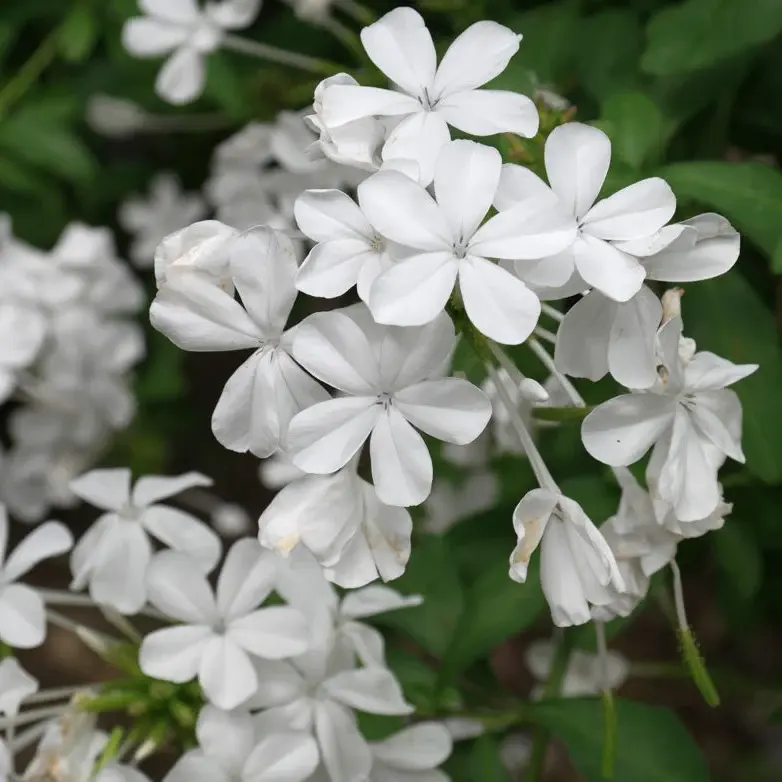
1. Plumbago auriculata ‘Alba’
- White-flowering cultivar of the classic Cape Plumbago.
- Ideal for bright contrast in mixed borders.
2. Plumbago indica (Indian Leadwort)
- Features red to magenta flowers.
- Grows well in partial shade and makes a great groundcover.
3. Dwarf Plumbago (Ceratostigma plumbaginoides)
- Not a true Plumbago but often grouped with them.
- Compact size and brilliant blue flowers in late summer.
- Excellent for rock gardens or edging.

Where to Plant Plumbago?
Plumbago is a favourite of gardeners in southern parts of Texas and Florida. Growing Plumbago plants begins with selecting the ideal spot. Plumbago thrives when given the right balance of sunlight, space, and soil.
Sunlight Requirements:
- Full sun (at least 6 hours daily) is ideal for maximum blooming.
- Tolerates partial shade, but flowering may be reduced.
Soil Conditions:
- Prefers well-draining, slightly acidic to neutral soil (pH 6.1–7.5).
- Will tolerate poor soils if drainage is adequate.
- Avoid waterlogged areas, which can lead to root rot.
Ideal Garden Uses:
- Borders and hedges
- Cascading over walls
- Trellises or arbors (with support)
- Containers and hanging baskets
- Wildlife and pollinator gardens
How to Grow Plumbago Plants: Step-by-Step Guide
1. When to Plant Plumbago
- Spring or fall is the best time to plant, depending on your climate.
- In colder regions, plant after the last frost.
- In warm zones, fall planting allows root establishment before heat arrives.
2. Preparing the Soil
- Loosen soil to a depth of 12–15 inches.
- Mix in organic matter like compost or peat moss to enhance fertility and drainage.
- For containers, use a high-quality potting mix with good aeration.
3. Planting Process
- Dig a hole twice as wide and as deep as the root ball.
- Place the plant in the hole so that the top of the root ball is level with the soil.
- Backfill, firm the soil, and water thoroughly.
- Space plants 3–5 feet apart to accommodate growth.
Caring for Plumbago Plants
Once planted, Plumbago is surprisingly self-sufficient—but a little attention goes a long way toward lush foliage and continuous blooms.
Watering Needs:
- Water regularly during the first growing season to establish deep roots.
- Once established, Plumbago is moderately drought-tolerant.
- Water when the top 1–2 inches of soil feels dry, especially during prolonged dry spells
Fertilising Tips:
- Use a balanced slow-release fertiliser (e.g., 10-10-10) in early spring.
- Reapply every 6–8 weeks during the growing season.
- Alternatively, monthly feeding with a liquid bloom booster encourages heavier flowering.
Pruning and Deadheading
- Prune in late winter or early spring to control size and shape. Do not prune in summer because flowers form on new growth.
- Lightly trim during the growing season to promote bushiness.
- Deadheading spent blooms is optional, but it can tidy the plant and stimulate reblooming.
Supporting Vining Varieties
- Provide trellises, fences, or arbors for climbing types.
- Gently tie stems with garden twine as they grow.
Propagating Plumbago
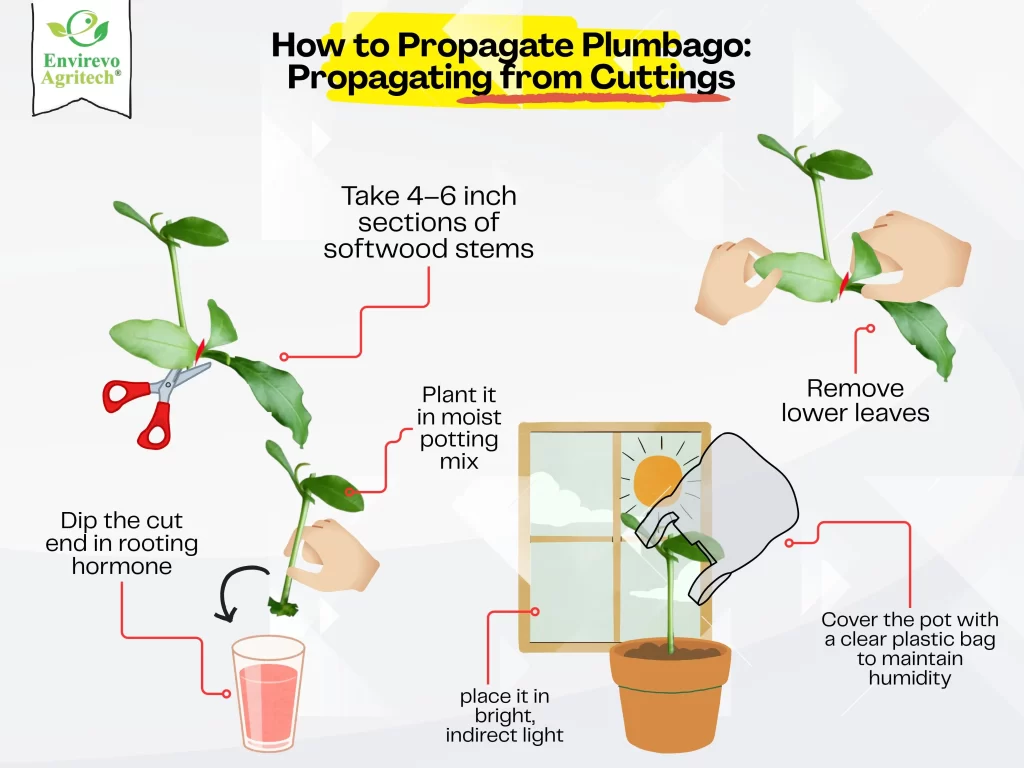
Propagating Plumbago is an easy and cost-effective way to multiply your plants and expand your garden. The most common and successful method is through stem cuttings, though it can also be propagated by division or layering.
For cuttings, take 4–6-inch sections of softwood stems in spring or early summer. Remove the lower leaves, dip the cut end in rooting hormone, and plant it in moist potting mix. Cover the pot with a clear plastic bag to maintain humidity and place it in bright, indirect light. Roots usually develop in 3–4 weeks.
If your Plumbago is already well-established, you can also divide large clumps or layer trailing stems by pinning them to the soil until they root. These propagation methods are especially helpful if you want to fill in bare garden spaces or share plants with friends—all without spending a dime.
Related:
- Is Your Prayer Plant Dying? Here’s the Ultimate Fix!
- Elephant Ear Plant Care: Expert Tips to Grow Giant, Lush Leaves!
- Weeping Pussy Willow Guide: Planting, Care & Why It’s the Tree Everyone Wants
Overwintering and Cold Protection
In USDA zones below 8, Plumbago must be protected from frost:
- Container plants can be brought indoors during winter.
- Keep them in a bright, cool room and reduce watering.
- In-ground plants should be heavily mulched (2–3 inches) around the base in fall.
- Frost-damaged branches can be pruned back in spring.
Common Pests and Diseases
Though largely pest-resistant, Plumbago can occasionally encounter issues:
| Problem | Cause | Signs | Treatment |
| Aphids | Sap-sucking insects | Curling leaves, sticky residue | Spray with neem oil or insecticidal soap |
| Spider Mites | Dry conditions | Fine webbing, yellow stippling | Hose off or use miticide |
| Whiteflies | Overcrowded foliage | Tiny white flying insects | Yellow sticky traps; horticultural oil |
| Root Rot | Poor drainage, overwatering | Wilting, browning roots | Improve drainage; discard affected plants |
Plumbago Landscaping Ideas and Companion Plants
Plumbago pairs well with other sun-loving, drought-tolerant plants.
Great Companions Include:
- Lantana
- Salvia
- Daylilies
- Bougainvillea
- Hibiscus
- Coneflowers
Plumbago Landscaping Ideas
- Hedge or Border Planting: Train Plumbago into a loose, flowering hedge along fences, driveways, or property lines. It creates a soft, informal boundary that attracts butterflies.
- Trellises and Arbors: With support, Plumbago can be trained to climb structures like arbors or trellises, making it perfect for vertical gardening and privacy screens.
- Groundcover on Slopes: Its spreading habit is ideal for covering slopes or embankments, helping to prevent erosion while adding colour and texture.
Container Displays: Plant Plumbago in large pots or hanging baskets on patios and balconies. Let the stems trail over the edges for a lush, cascading look. - Tropical Garden Designs: Combine Plumbago with bold-leaved plants like canna lilies, hibiscus, or elephant ears for a lush, exotic atmosphere.
Final Thoughts
From its lush green foliage to the clouds of sky-blue flowers that seem to bloom endlessly, Plumbago is a garden gem. Whether you’re growing it as a sprawling groundcover, cascading over a wall, or training it up a trellis, growing Plumbago plants offers long-lasting colour with minimal effort.
With the right sunlight, well-draining soil, and regular pruning, your Plumbago can thrive for years. It’s a perfect choice for gardeners looking to add a pop of colour, attract butterflies, and enjoy a fuss-free plant.