Table of Contents
When people first step into hydroponics, they expect faster growth, better yields, and clean control over everything. What surprises most growers is how quickly the pH of a nutrient solution can shift. And when it does, plants respond immediately. Nutrient lockout, stunted growth, pale leaves, weak roots. All the classic symptoms come back to one thing: learning how to control pH and keep it stable.
If you understand why pH drifts and what to do when it does, hydroponics becomes far more predictable. This guide breaks everything down in a way that lets you troubleshoot confidently, instead of reacting every time something goes wrong.
Why pH Control Matters More in Hydroponics Than Soil
Hydroponics gives plants unrestricted access to nutrients. It also removes the natural buffering that soil provides. That means even small changes in acidity can shift nutrient availability. Magnesium might drop out. Iron becomes inaccessible. Calcium uptake slows down. Plants feel this faster in water than they ever would in soil. Most crops thrive within a pH range of 5.5 to 6.5. This range keeps nutrients soluble and available. When pH rises or falls outside it, the system drifts into imbalance.
Understanding pH in Simple Terms
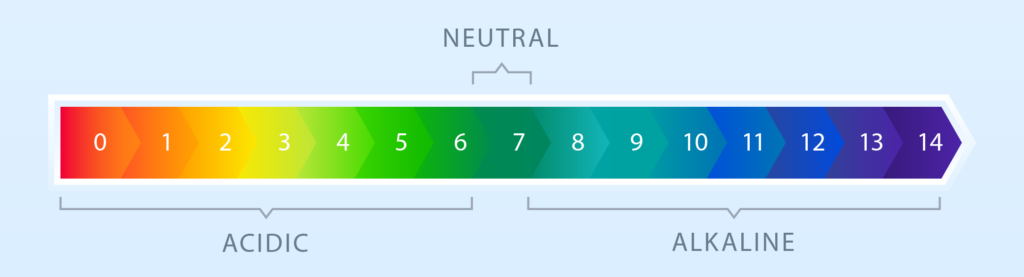
pH measures how acidic or alkaline a nutrient solution is.
Low pH = acidic.
High pH = alkaline.
Every nutrient has a point where plants absorb it best. That’s why holding a narrow range is more effective than chasing a perfect number.
Ideal pH Ranges for Common Hydroponic Systems
Different systems interact with water differently, but most fall into a similar window:
- DWC (Deep Water Culture): 5.5–6.5
- NFT (Nutrient Film Technique): 5.8–6.2
- Drip systems: 5.8–6.5
- Aeroponics: 5.5–6.2
Hydroponic pH level for perfectly grown plants
If you grow different crops, allow small fluctuations within the safe range instead of forcing a fixed value. That slight drift helps plants access the entire nutrient spectrum.
How to Measure pH Accurately
A stable hydroponic system starts with accurate readings. Faulty tools create more problems than the pH itself.
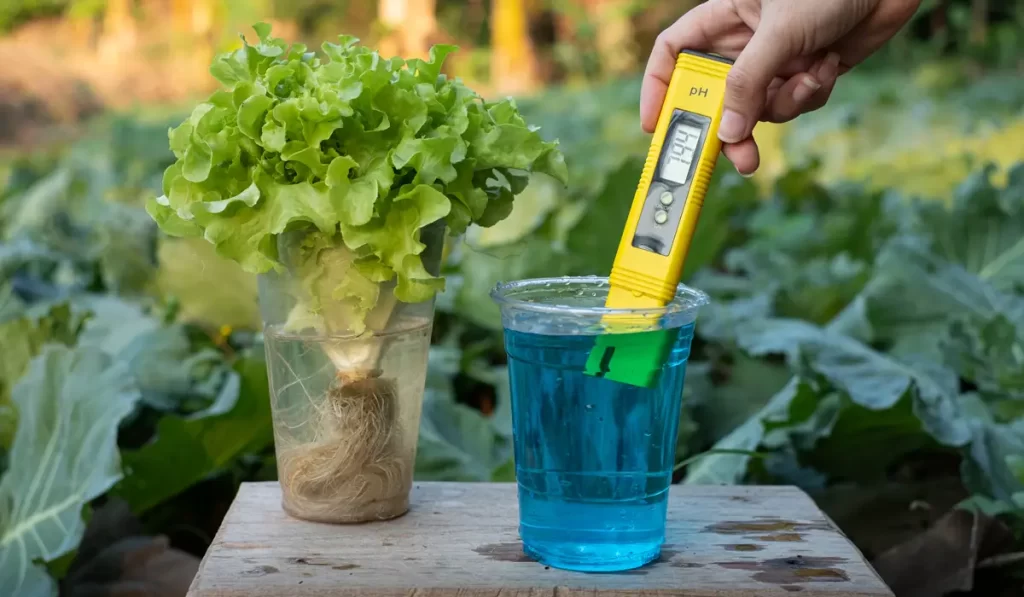
1. Digital pH Meters
Reliable and essential.
But only when calibrated regularly and stored in proper solution.
Most inaccurate readings come from dry probes, old calibration fluids, or dirty electrodes.
2. pH Test Strips
Fine for quick checks but not for precision. The difference between 5.8 and 6.2 matters, and strips don’t give you that clarity.
3. Continuous pH Monitors
A great option for commercial or semi-automated systems. You watch the drift in real time instead of discovering it after your plants start complaining.
How to Control pH in Hydroponic Nutrient Solutions
This section gives you the practical steps that keep your nutrient solution stable day after day.
Start With Good Water
Hard water forces your pH upward. Water with high carbonates resists pH adjustment.
If your tap water is working against you, move to RO water and build the nutrient profile from a clean baseline.
Mix Nutrients Properly
Add nutrients one by one into water—not the other way around—and never mix concentrates together.
Improper mixing leads to precipitation, which removes minerals from solution and shifts pH unexpectedly.
Using pH Up and pH Down
Most growers use:
- Phosphoric acid for lowering pH
- Nitric acid for vegetative-heavy crops
- Citric acid for gentle organic adjustments (short-lived)
- Potassium hydroxide to increase pH
Adjust in very small increments. Large corrections create oscillations.
Use a pH Range, Not a Single Number
A rigid 5.8 target isn’t ideal.
A dynamic range between 5.6 and 6.2 lets plants access:
- Better calcium uptake at the lower end
- Stronger magnesium and sulfur uptake at the higher end
- More consistent micronutrient availability throughout
This is one of the easiest ways to reduce pH stress.
Buffering Agents
Silica, humic acid, and certain chelated nutrients help stabilize pH over time.
Be cautious with silica—it must be added before nutrients or it can cause cloudiness.
Automation Options
If you grow commercially or maintain large reservoirs, automated pH controllers and dosing pumps reduce manual corrections dramatically.
Natural and Organic Ways to Adjust pH
Growers often look for alternatives beyond chemical adjusters. These work, but each has limitations.
- Lemon juice: Works, but breaks down fast and doesn’t hold stability.
- Vinegar: Similar—quick but temporary.
- Citric acid: More stable than vinegar but still short-term in recirculating systems.
- Potassium bicarbonate: Raises pH and adds potassium, useful during flowering crops.
- Biological inoculants: Beneficial microbes slowly acidify the root zone; great for bio-hydroponics.
Organic methods work best in small or hobby setups. For commercial systems, chemical adjusters remain more consistent.
Troubleshooting the Most Common pH Problems
pH Keeps Rising
Likely causes: high alkalinity water, plant nutrient uptake pattern, or microbial activity.
Solution: use RO water, clean reservoir, adjust nutrient ratios.
pH Keeps Dropping
Often due to root exudates, organic additives, or overfeeding.
Solution: switch to a more stable nutrient formula and avoid unnecessary organics.
pH Swings Right After a Nutrient Change
Nutrients need time to fully dissolve and stabilize. Give the solution a few hours before adjusting.
Plants Show Deficiencies Even When pH Looks Fine
This usually points to EC imbalance, root issues, or iron not remaining chelated.
How Often Should You Check pH?
- DWC: Daily
- NFT: Twice daily in the beginning, then daily once stable
- Kratky: Every few days
- Large recirculating systems: Once daily or automated
- Aeroponics: Twice a day, because roots respond quickly
Over time, you’ll see patterns and know when your system tends to drift.
Long-Term Strategies for Stable pH
- Use water with moderate alkalinity or start with RO.
- Avoid stacking too many organic supplements.
- Keep your reservoir covered, shaded, and cool.
- Calibrate your pH meter regularly.
- Keep nutrient strength matched to plant stage.
Consistency is what keeps pH balanced—not constant correction.
FAQs About Controlling pH in Hydroponics
Can plants recover from pH shock?
Yes, as long as the solution is corrected within a reasonable time and the roots aren’t damaged.
Do different crops need different pH levels?
Most fall within 5.5 to 6.5, but some prefer slight preferences. Leafy greens like it slightly lower; fruiting crops slightly higher.
Is RO water better than distilled?
RO is usually more cost-effective and provides a clean baseline for nutrient mixing.
Why does pH drop at night?
Plants change their ion uptake rhythm, and microbial activity shifts slightly in the dark.
Why does my pH keep going up in hydroponics?
Your pH keeps going up in hydroponics because your water has high alkalinity or your plants are absorbing more acidic nutrients, which leaves the solution more alkaline over time.
Controlling pH isn’t about chasing a number. It’s about understanding why your system moves the way it does and working with it instead of against it. Once you dial in your water, nutrient mixing, and monitoring routine, hydroponics becomes stable, predictable, and far easier to manage. A well-balanced pH is the backbone of healthy roots, strong growth, and high yields. And once you master it, every other part of hydroponics becomes more enjoyable.