Table of Contents
Foot rot and collar rot are two of the most misunderstood plant diseases. They often show up quietly, near the soil line, and by the time most growers notice something is wrong, the plant is already under serious stress. Leaves wilt, growth stalls, and suddenly a healthy plant collapses without warning. This article goes deep into Foot rot and Collar Rot from a grower’s perspective. Not textbook theory. Real causes, real symptoms, and treatment strategies that actually work in gardens, farms, nurseries, and container setups. If you care about plant health, soil biology, and long-term productivity, this is one disease you cannot afford to ignore.
What Is Foot Rot and Collar Rot in Plants?
Foot rot and collar rot are soil-borne diseases that attack plants at their most vulnerable point: the junction between roots and stem.
- Foot rot affects the lower stem and root crown, often slightly below the soil surface.
- Collar Rot specifically attacks the collar region, the narrow transition zone where the stem meets the roots at the soil line.
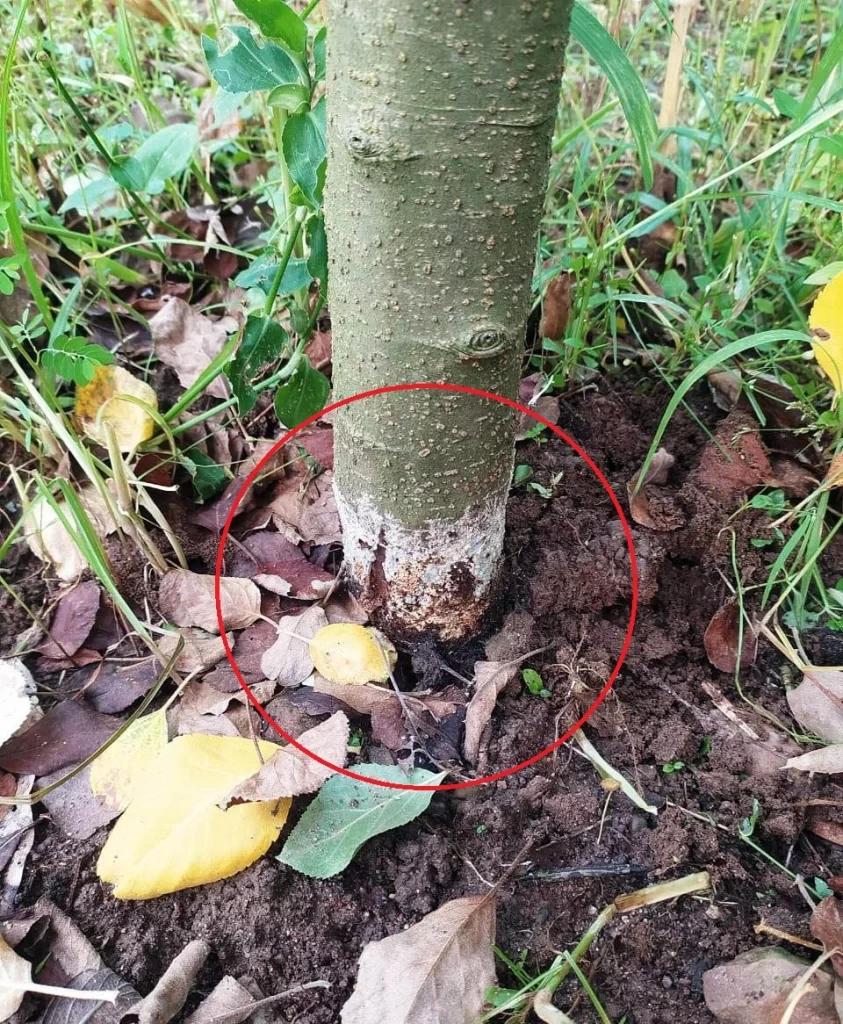
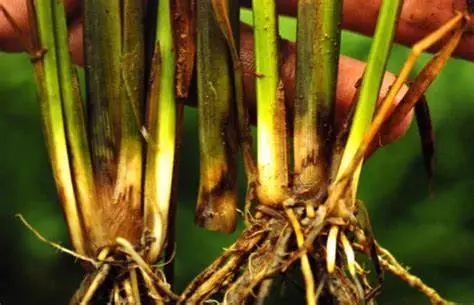
In practice, these diseases often overlap. A plant diagnosed with foot rot frequently shows collar rot symptoms as well, which is why many articles treat them as one combined problem. The critical point is this: Once the collar tissue is damaged, water and nutrient flow is disrupted. Recovery becomes difficult, and plant death can happen fast.
What caused it?
Causal Organisms Behind Foot Rot and Collar Rot
Common fungal and fungal-like pathogens
- Phytophthora spp.: Thrives in waterlogged soils. Extremely destructive in fruit trees and vegetables.
- Rhizoctonia solani: Attacks seedlings and mature plants. Prefers warm, moist soils.
- Pythium spp.: Common in nurseries and hydroponic or poorly drained systems.
- Sclerotium rolfsii: Aggressive pathogen producing white mycelium and mustard-like sclerotia.
These organisms are not airborne. They live in soil, crop residues, irrigation water, and contaminated tools. Once established, they can persist for years. The symptoms are caused by the fungus Athelia rolfsii, also known as Sclerotium rolfsii, thereby the common name of the disease. It overwinters in the soil or associated with plant debris. It causes disease on a wide range of agricultural and horticultural crops (lentil, sweet potato, pumpkin, corn, wheat and peanut, to name a few). In favorable conditions, it has an extremely rapid growth and can colonize plant tissues at or near the soil line in question of days.
Low soil pH (3.0 to 5.0), frequent irrigation or rain, dense planting and high temperatures (25 to 35 °C) favor the life cycle of the fungus and the infection process. By contrast, calcareous soils with high pH usually do not cause problems. Dissemination depends on the movement of infested soil and water, contaminated tools and equipment, as well as infected plant and animal material (seeds and manure).
Plants Commonly Affected by Foot Rot and Collar Rot
Vegetable crops
- Tomato
- Chili and capsicum
- Brinjal (eggplant)
- Cabbage and cauliflower
- Beans and peas
Fruit crops
- Citrus
- Apple
- Mango
- Pomegranate
- Papaya
Ornamentals and nursery plants
- Roses
- Hibiscus
- Bougainvillea
- Ficus
- Bedding plants and seedlings
Symptoms of Foot Rot and Collar Rot
The fungus primarily attacks the stems, although other plant parts may be affected under favorable conditions. It grows rapidly over the plant tissue and surrounding soil forming a white, fluffy fungal mat with characteristic roundish, tan to brown “seeds”. The stem tissues turn pale brown and soft, but not watery. In some cases, the stem may be completely girdled and leaves gradually start to wilt and become chlorotic. Eventually, the plant can lodge or die, and entire rows or large patches of dead plants can be observed within the field. Seedlings are particularly susceptible and die quickly once they become infected. Occasionally, fruits are also covered with the fungal mat and they rapidly decay.
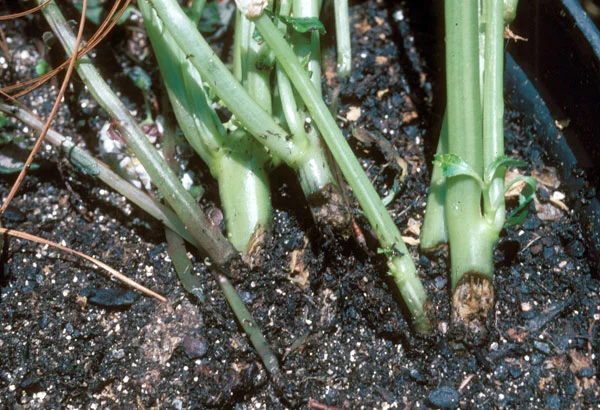
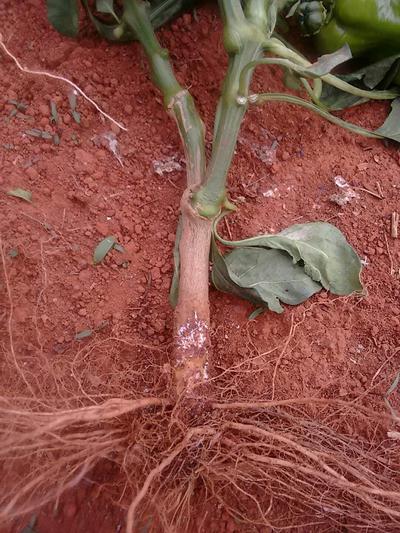
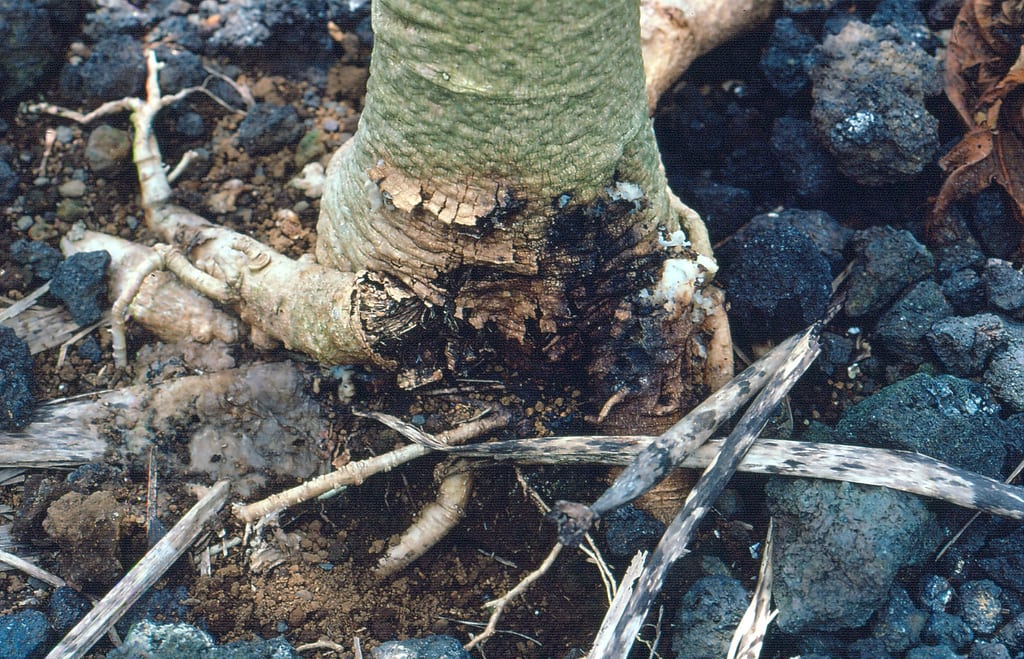
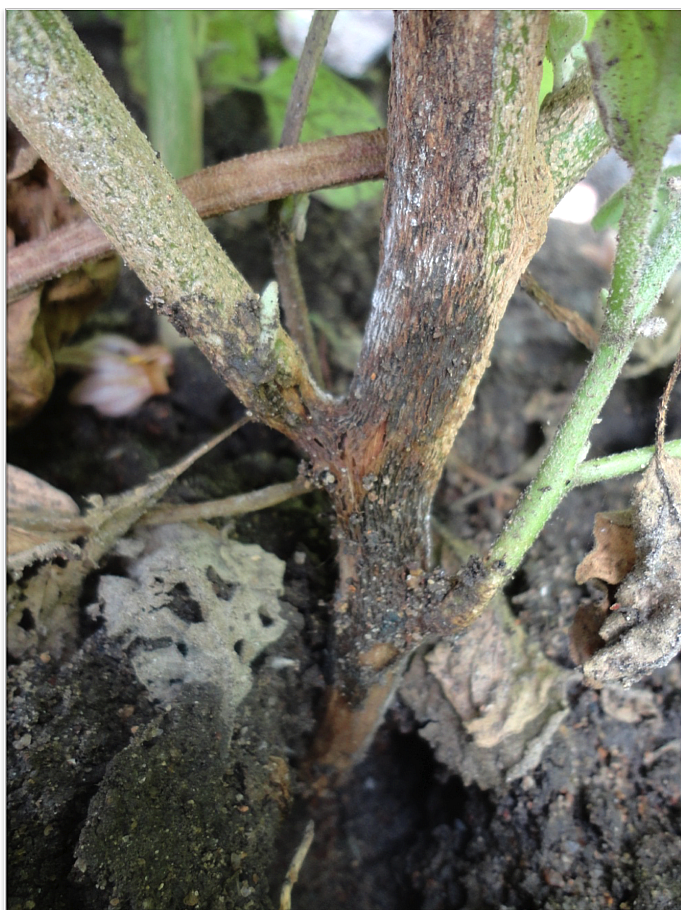
Early-stage symptoms
- Slight discoloration at the soil line
- Water-soaked or greasy-looking patches on the lower stem
- Reduced vigor and slow growth
- Mild wilting during the hottest part of the day
Advanced symptoms
- Dark brown or black lesions girdling the stem
- Cracking or softening of the collar tissue
- Sudden wilting even in moist soil
- Leaf yellowing followed by collapse
- Plant death within days in severe cases
One key diagnostic clue:
If a plant wilts while the soil is still moist, always inspect the collar region.
Treatment for Foot Rot and Collar Rot in Plants
Treatment must be multi-layered. There is no single product that fixes foot rot or collar rot without correcting the environment that caused it.
Immediate Cultural Control Measures
This step determines whether any treatment will work at all.
- Remove severely infected plants completely
- Do not compost infected plant material
- Improve soil drainage immediately
- Reduce irrigation frequency and volume
- Avoid soil piling or mulch touching the stem
If waterlogging continues, no fungicide or bio-agent will save the plant.
Organic Treatment Options
Antagonistic fungi (often in combination with other treatments) can provide some control against this pathogen. Note that results depend greatly on the type of crop and the environmental conditions. Some of the commonly used organisms are Trichoderma harzianum, Trichoderma viride, Bacillus subtilis, Streptomyces philanthisome, Gliocladium virens and some species of Penicillium.
Chemical Treatment for Foot Rot and Collar Rot
Always consider an integrated approach with preventive measures together with biological treatments if available. Use of multipurpose soil fumigants before planting provides a good control of the fungus. Products based on metam sodium can be used for the treatment of seedbeds or fields for valuable crops.
Related posts:
- Blossom End Rot: How To Treat Your Crops?
- Bacterial Soft Rot of Pepper Treatment
- Stem Rot Disease In Plants: Symptoms, Treatment, Prevention
- Fusarium Stem Rot Treatment – Symptoms, Preventive Measures
Preventing Foot Rot and Collar Rot Long-Term
- Make sure to use healthy seeds from certified source.
- Use resistant varieties, if available and plant those on land without previous history of the disease.
- Avoid planting too deep and Check that seeding rate is not too high and allow for good spacing.
- Planting late may also help to reduce the incidence.
- Provide the fields with good drainage to prevent excessive soil moisture.
- Use stake to keep the plants upright if necessary.
- Keep your tools and equipment disinfected and clean.
- Make sure not to transport soil between fields.
- Keep the fields free of weeds.
- Water early in the day
- Monitor your field for symptoms at least once a week.
- Pick up any diseased plant or plant part and bury it deep or burn it.
- Take care not to injure the plants during field work.
- Use black plastic mulch to cover soil and limit fungal growth.
- Adjust soil pH through liming.
- Provide a good fertilization program to strengthen plants.
- Bury debris 20-30 cm deep in the soil to impair the growth of the fungus and expose the soil to solar radiation.
- Plan a crop rotation for several years with non-host plants.
Frequently Asked Questions
Can plants recover from foot rot and collar rot?
Yes, but only if detected early and the collar tissue is not fully girdled.
Is foot rot soil-borne?
Yes. It survives in soil, plant debris, and irrigation water.
Does collar rot spread to nearby plants?
Indirectly. The pathogen spreads through soil movement, tools, and water.
Are organic treatments effective?
They are effective when combined with proper drainage and early detection.
How fast can collar rot kill a plant?
In warm, wet conditions, collapse can occur within days.