Table of Contents
Basil is the aromatic cornerstone of countless summer recipes and gardens—there’s nothing quite like fresh basil in sauces, salads, or a homemade pesto. But did you know that simply picking a few leaves here and there could actually harm your plant’s productivity? Learning how to harvest basil the right way not only maximizes your harvest but also keeps your plants healthy and flourishing for months. Whether you’re growing it in pots, your garden bed, or a hydroponic setup, this guide will show you exactly when and how to harvest basil for maximum flavor and continuous growth.
Why Proper Basil Harvesting Matters?
Harvesting isn’t just about collecting leaves—it’s about encouraging the plant to keep growing. When you trim basil correctly, the plant responds by branching out and producing even more leaves. Do it wrong, and you’ll end up with a tall, leggy, or woody plant that flowers too early and loses flavor.
Proper harvesting helps you:
- Stimulate new growth
- Extend your harvest season
- Prevent flowering and bitterness
- Keep leaves tender and aromatic
When Is the Best Time to Harvest Basil?
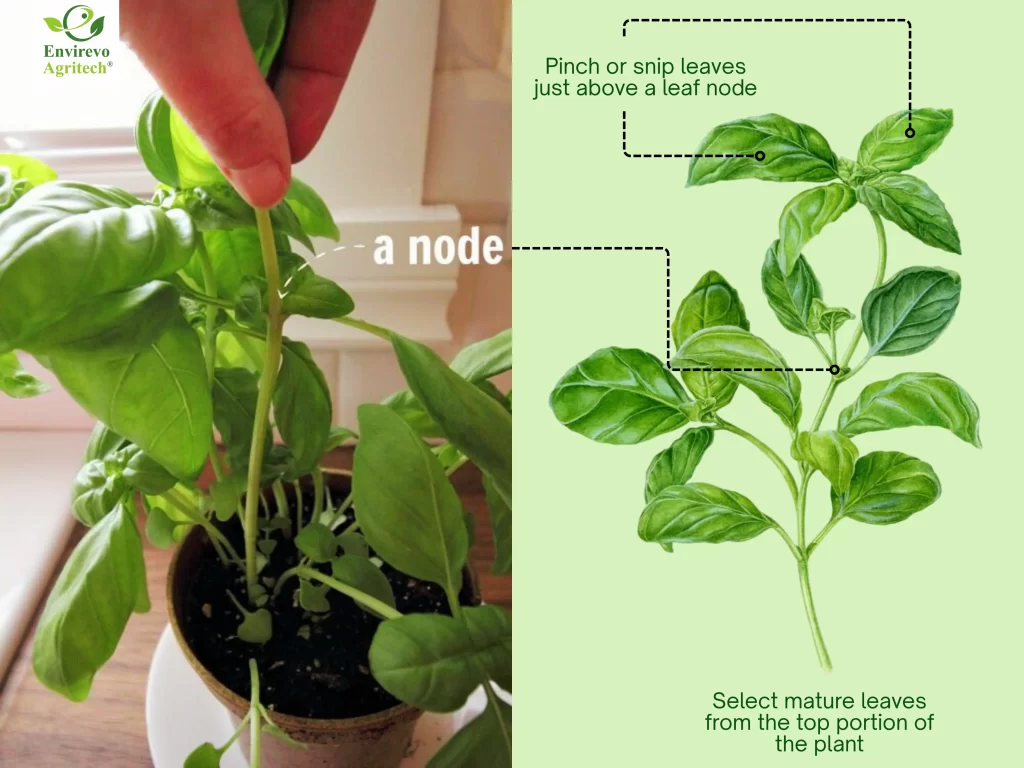
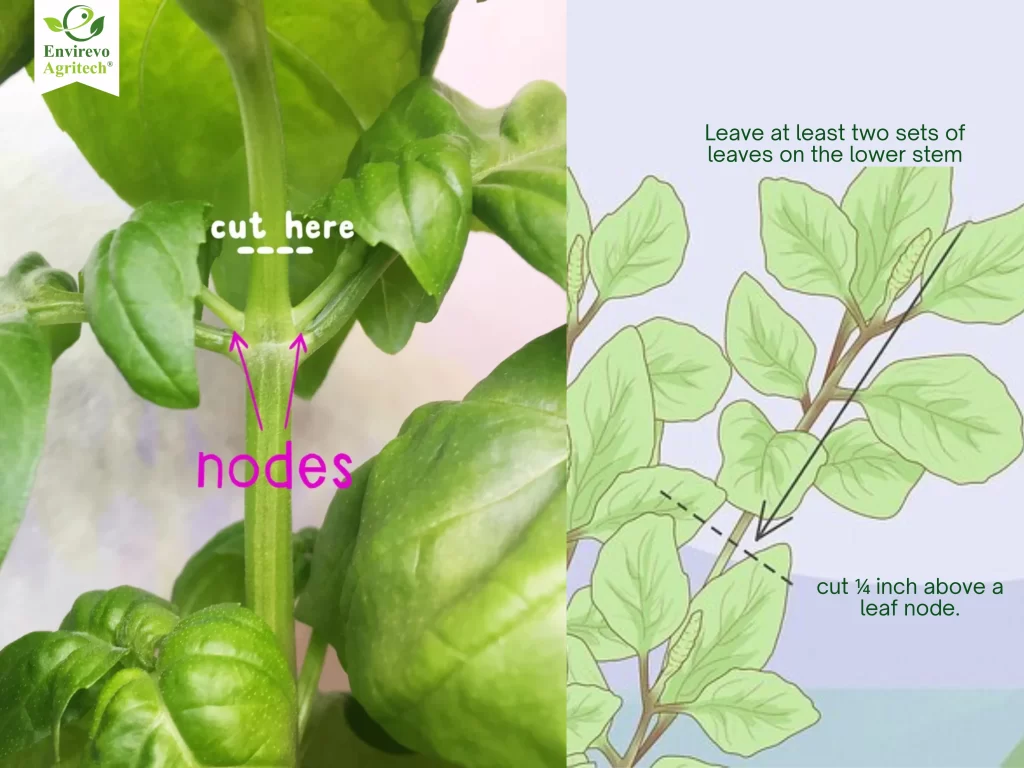
Before diving into how to harvest basil, you need to understand how to tell if your basil is ready to harvest. Basil produces pairs of leaves that grow opposite each other on a stem. Between each pair of leaves are small nodes—the points where new stems and leaves can sprout. Every time you cut just above a node, two new stems grow from that point, making your plant bushier and fuller. That’s the science behind “harvest to encourage growth.”
You can start harvesting when:
- Once your basil has reached about 6–8 inches tall and has 4–6 sets of true leaves, it’s ready for initial harvesting.
- Pick basil in the early morning when plant oils are most concentrated, leading to that signature punchy flavor.
- Always harvest before the plant starts forming flower buds, as flowering changes the plant’s chemistry and can make leaves bitter.
- The first harvest can start 3–4 weeks after transplanting or about 6 weeks from seed.
How to Harvest Basil Without Killing the Plant
The key to continuous basil production is knowing where and how to cut. If you cut too low or strip the plant bare, it won’t recover properly. But if you trim strategically, you’ll encourage lush new growth every time. Let’s go through each method step-by-step.
1. Harvesting Basil Leaves Individually
If you only need a few leaves for cooking, this is the simplest method.
Steps:
- Select mature leaves from the top portion of the plant.
- Pinch or snip leaves just above a leaf node.
- Avoid plucking too many leaves from a single branch—spread your harvest evenly. Removing the top leaves stimulates side growth. Your basil becomes bushier instead of tall and thin.
Don’t: Strip the lower leaves too early. They’re the plant’s main energy producers and help it stay strong.
2. Harvesting Basil Stems for Larger Batches
If you need a handful of basil for pesto or storage, use this method.
Steps:
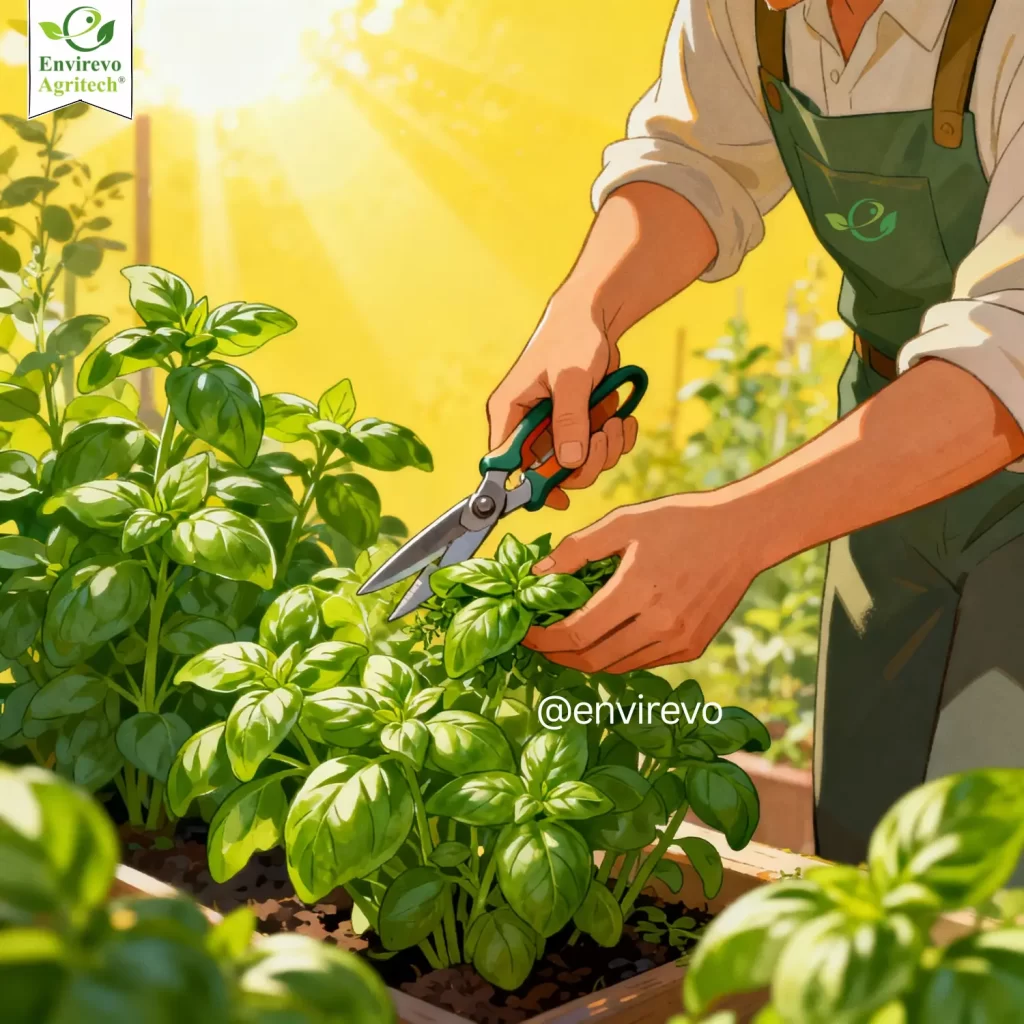
- Identify a healthy stem with several sets of leaves.
- Using clean scissors or pruning shears, cut ¼ inch above a leaf node.
- Leave at least two sets of leaves on the lower stem. This cut encourages the plant to send out two new shoots from the node, doubling its productivity.
Pro Tip: Always cut above a node, never below it. Cutting below a node leaves dead stubs that can attract disease.
3. How to Harvest Basil So It Keeps Growing
The golden rule: Never remove more than one-third of the plant at a time. Here’s why: Basil needs enough leaves to photosynthesize and regrow. Stripping it bare stresses the plant and slows down recovery.
Follow this schedule for healthy regrowth:
- Light harvests every 7–10 days.
- Heavy pruning once every 2–3 weeks during peak growth.
- Stop major harvesting when the weather starts cooling down (below 15°C or 59°F). With this rhythm, your basil plant will continue to produce throughout spring and into late summer.
How to Prevent Flowering (Bolting)?
If you see tiny flower buds forming, pinch them off immediately. Flowering redirects energy from leaf production to seed formation. Once that happens, the leaves lose their flavor and turn bitter.
Common Mistakes to Avoid When Harvesting Basil
Expert gardeners know that seemingly small errors can set back plant health or yield. Watch out for these common pitfalls:
- Plucking Single Leaves from the Bottom: Don’t thin out lower leaves—let the plant get bushy from the top down.
- Harvesting Too Much at Once: Removing over one-third of the plant at one time can stress or even kill the plant.
- Ignoring Flower Buds: Letting basil flower will toughen up leaves and reduce the concentration of the essential oils.
- Using Dirty Tools: Can transfer pathogens and fungi, weakening your basil.
- Harvesting at the Wrong Time of Day: Midday heat reduces essential oils. Harvest early in the morning for the best aroma.
- Harvesting from the Bottom: Picking lower leaves starves the plant of energy; always go for the upper, newer growth.
How to Store Fresh Basil After Harvest
Proper post-harvest handling helps preserve basil’s vibrant color and aroma. There are several methods depending on how long you want to keep it.
1. Short-Term Storage (1–5 Days)
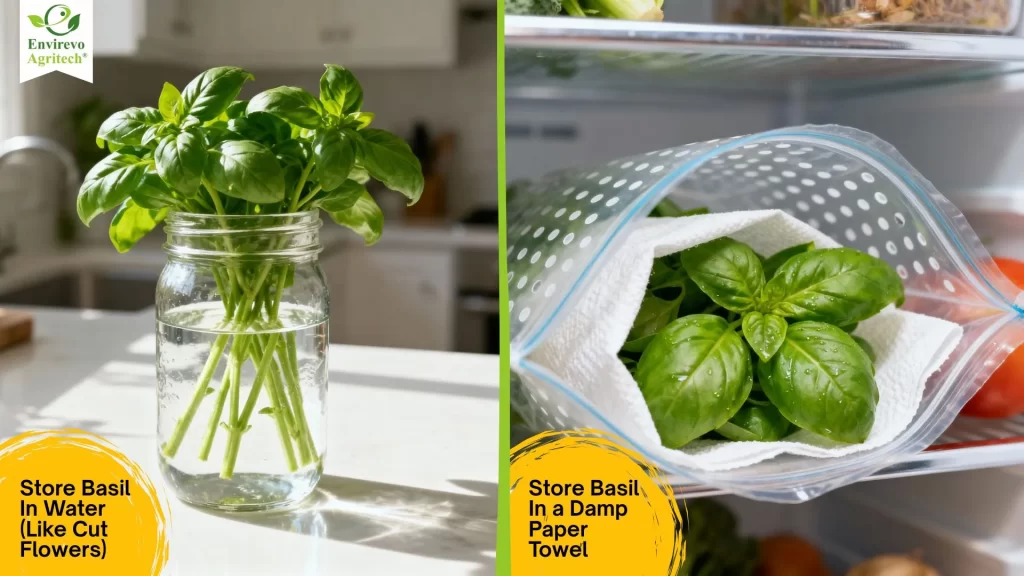
- In Water (Like Cut Flowers):
Trim the stem ends and place them in a jar with water. Keep it on your kitchen counter (not in the fridge). Basil dislikes the cold and can turn black if refrigerated. - In a Damp Paper Towel:
Wrap the leaves gently in a slightly damp paper towel and place them in a perforated plastic bag. Store in the refrigerator’s crisper drawer for up to 5 days.
2. Long-Term Storage
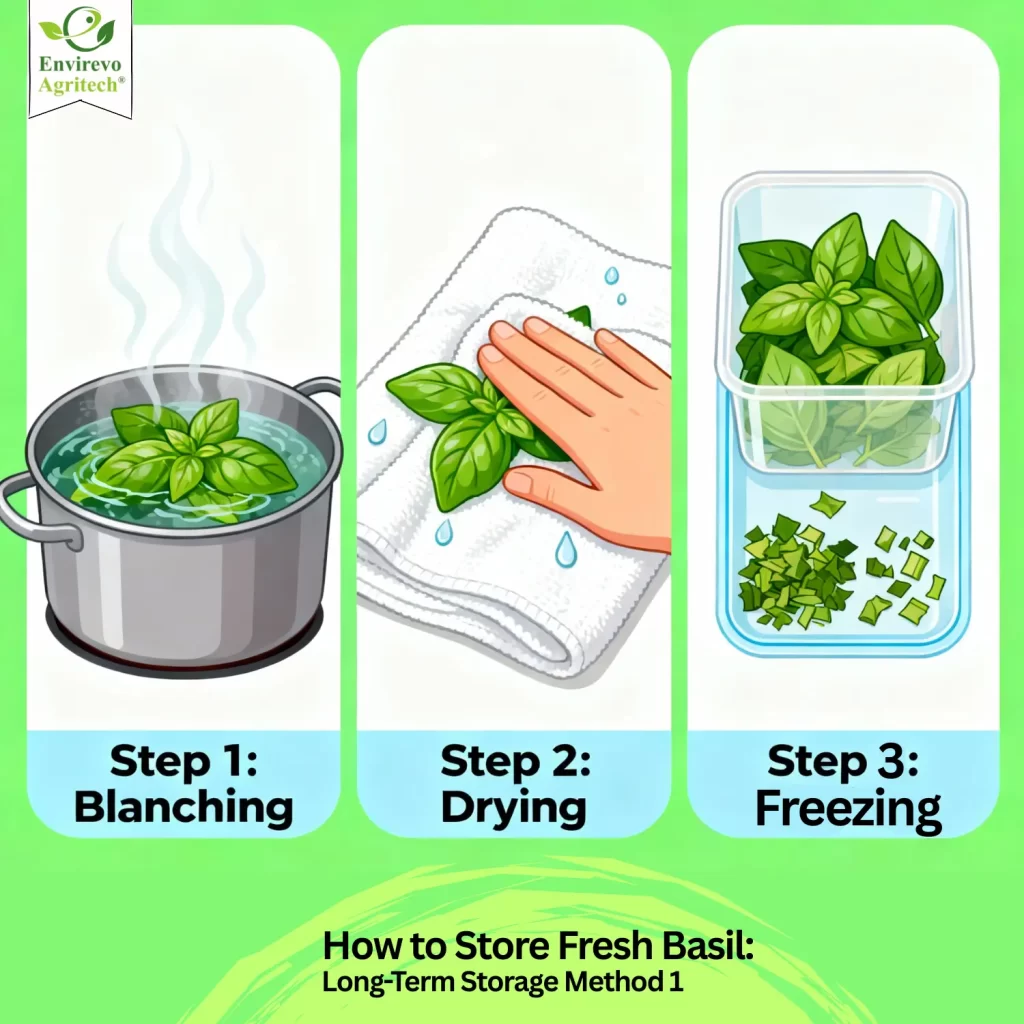
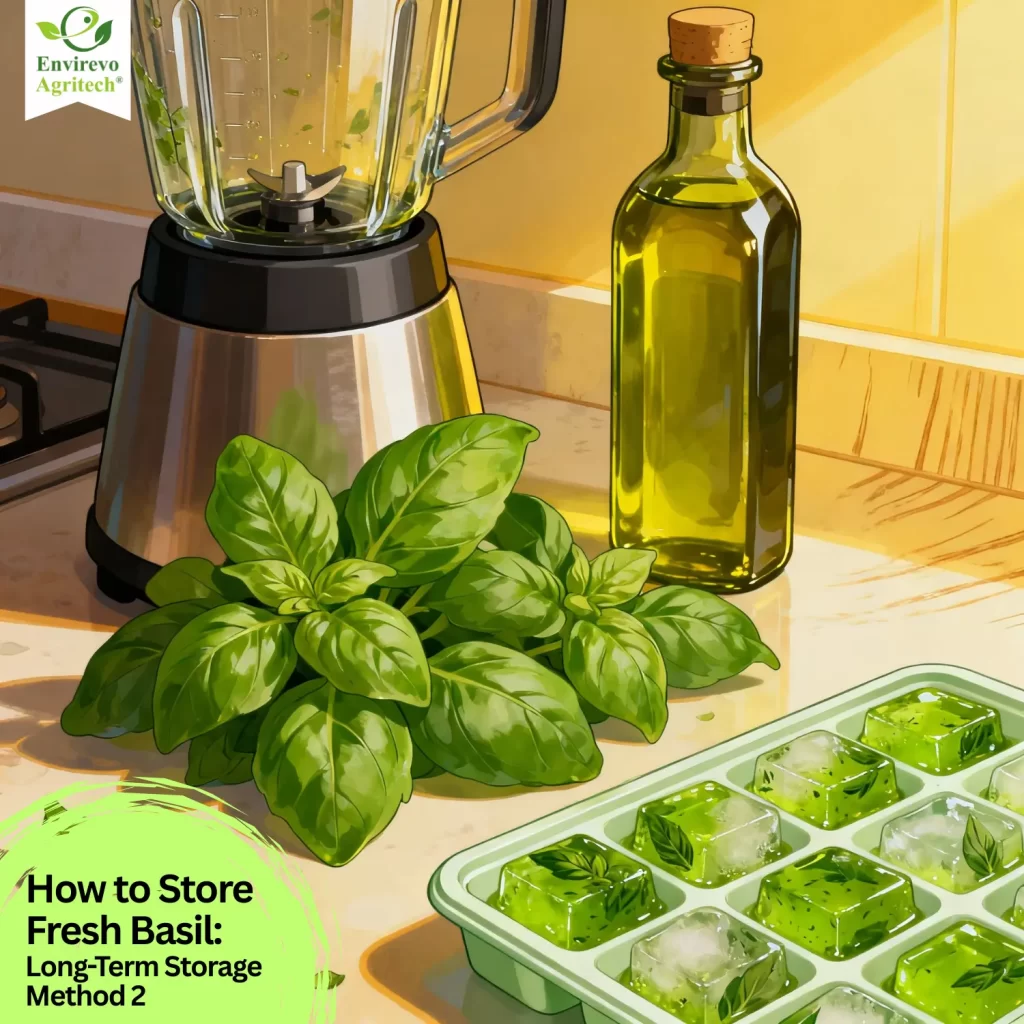
- Freezing:
- Blanch leaves for 2 seconds, pat dry, and freeze whole or chopped.
- Or puree with olive oil and freeze in ice cube trays for instant flavor cubes.
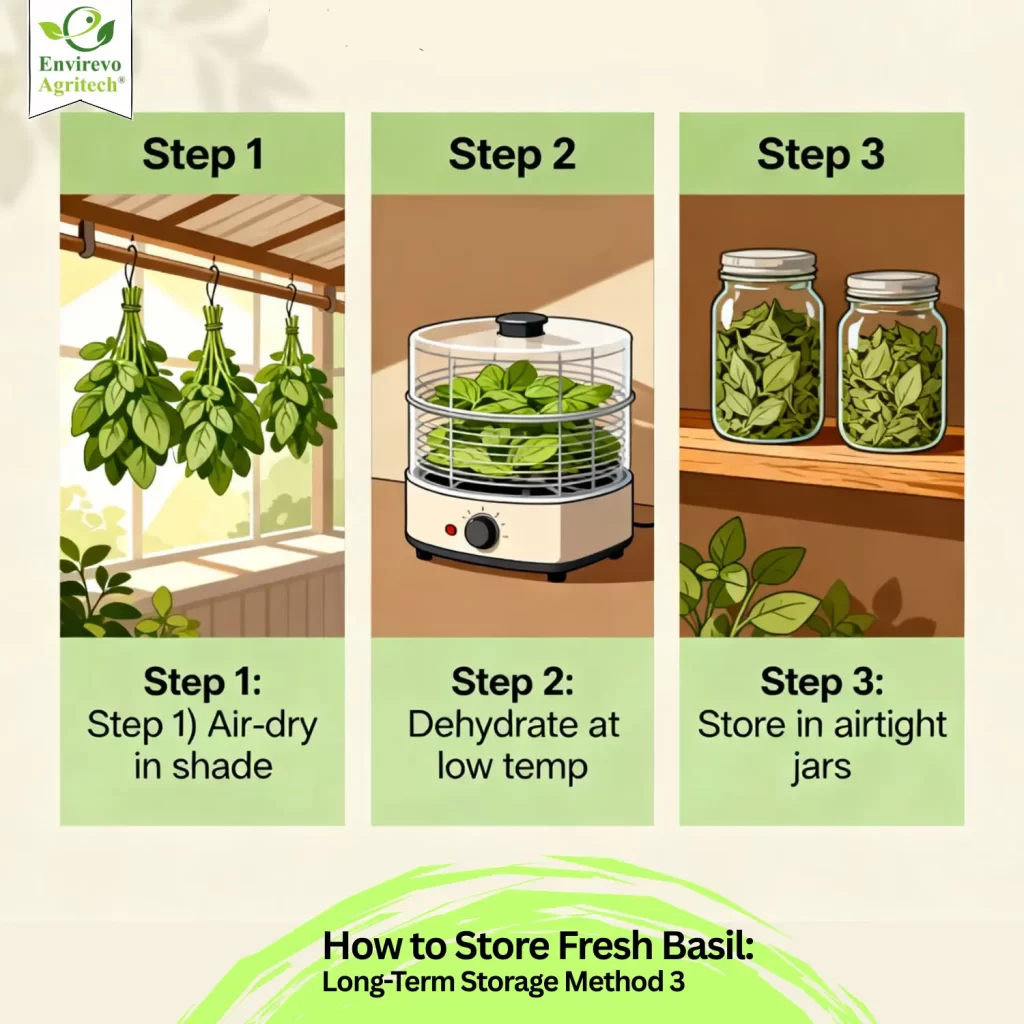
- Drying:
- Air-dry bunches upside down in a shaded, well-ventilated spot.
- Alternatively, use a dehydrator at low temperature (95°F or 35°C).
- Store dried leaves in airtight glass jars away from sunlight.
Pro Tip: Freezing retains more flavor than drying. Dried basil is convenient but less aromatic.
End-of-Season Basil Harvest
As the growing season ends (especially in cooler regions), it’s time for one final harvest.
Steps:
- Cut back the entire plant about 3 inches above the base.
- Remove any damaged or yellow leaves.
- Wash, dry, and process immediately (dry, freeze, or make pesto).
- If you’re growing basil indoors, you can keep it going year-round under grow lights, harvesting every few weeks.
FAQs About Harvesting Basil
Can I harvest basil before it’s 6 inches tall?
You can, but it’s better to wait until the plant is established. Early cutting can slow development.
How often can I harvest basil?
Lightly every week, or heavily every two to three weeks—depending on growth rate.
Can basil keep growing after cutting it to the ground?
Only if some leaves remain above the nodes. A complete cut to the base can kill it.
Can I eat basil flowers?
Yes, basil flowers are edible, though less flavorful. They make a nice garnish or infused vinegar.
What’s the best way to harvest basil for pesto?
Cut top stems above a node, leaving two lower leaf sets for regrowth.
That’s It!
Harvesting basil isn’t just about cutting leaves; it’s about understanding the rhythm of the plant. Once you learn how to harvest basil correctly, it becomes a cycle of growth and reward. Each careful snip encourages new shoots, more leaves, and a stronger, more aromatic plant. Think of your basil like a conversation—it responds to every touch and trim. The more thoughtfully you harvest, the more it gives back. Whether you’re picking a few leaves for tonight’s pasta or doing a full trim for a week’s worth of pesto, remember this: gentle, regular harvesting keeps basil alive, thriving, and endlessly generous.
So the next time you reach for your scissors, don’t just take—guide your plant to grow better. That’s the true art of harvesting basil the right way.