Table of Contents
The world is standing at a crossroads of agricultural innovation. As the global population edges toward 10 billion by 2050, the demand for food will outpace traditional farming capabilities. In this high-stakes landscape, biotechnology in farming emerges as a pivotal solution. From boosting crop yields to engineering climate-resilient plants, biotechnology is redefining how we grow food, manage resources, and ensure sustainability. This article takes you deep into the world of biotechnology in farming, uncovering its history, technologies, benefits, controversies, and the future it promises.
What Is Biotechnology in Farming?
Biotechnology in farming, also known as agricultural biotechnology, refers to the use of scientific tools and techniques to modify plants, animals, and microorganisms for agricultural purposes. It combines biology, genetics, molecular science, and technological innovation to solve real-world problems in agriculture.
At its core, this field involves the manipulation of living organisms or their components to enhance productivity, reduce input costs, resist pests and diseases, and adapt to environmental stressors. Unlike traditional breeding methods—which may take decades—modern biotechnology enables precise genetic changes at the molecular level, making it possible to introduce desirable traits with greater accuracy and speed.
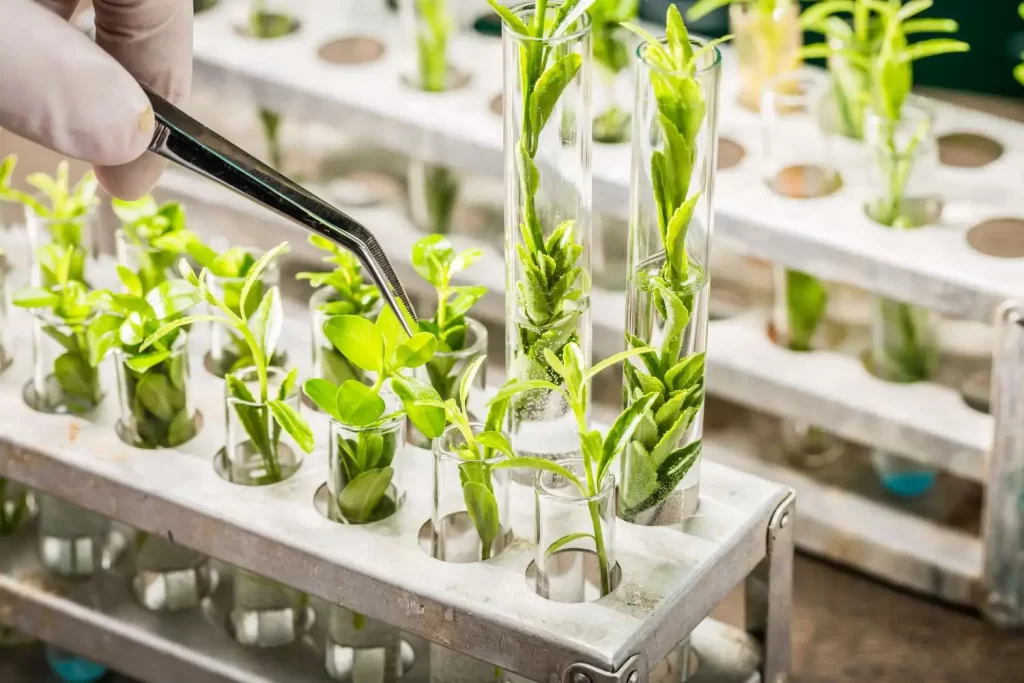
Key applications include:
- Genetic engineering of crops for pest resistance
- Tissue culture and micropropagation
- Marker-assisted breeding
- Genome editing technologies like CRISPR
- Development of biopesticides and biofertilizers
These innovations are already being used in farms worldwide, producing more resilient crops, improving animal health, and creating sustainable systems that require fewer chemical inputs.
Brief History of Agricultural Biotechnology
The roots of biotechnology in farming stretch back thousands of years. Ancient civilizations unknowingly practiced selective breeding to improve crop traits like yield and taste. However, the modern journey began in the 20th century with breakthroughs in molecular biology.
- 1920s-1950s: Scientists began understanding DNA and the fundamentals of heredity. Crossbreeding and mutation breeding were early techniques.
- 1973: The birth of genetic engineering with recombinant DNA technology, allowing genes from one organism to be inserted into another.
- 1982: The first genetically engineered product—insulin—was approved.
- 1994: The Flavr Savr tomato became the first commercially grown genetically modified (GM) crop approved for human consumption.
- 1996 onwards: GM crops like Bt cotton, herbicide-tolerant soybeans, and insect-resistant corn began widespread adoption in the U.S., India, and beyond.
Over the last two decades, the field has expanded to include CRISPR gene-editing, synthetic biology, and advanced molecular diagnostics.
Key Technologies in Agricultural Biotechnology
1. Genetic Engineering (GE)
Genetic engineering involves the direct manipulation of an organism’s DNA to express desired traits. This process includes inserting foreign genes (transgenes) into a plant or animal genome to confer specific benefits like insect resistance or herbicide tolerance.
Example: Bt cotton contains genes from the bacterium Bacillus thuringiensis that produce proteins toxic to certain insects but safe for humans and other animals.
2. CRISPR and Gene Editing
CRISPR (Clustered Regularly Interspaced Short Palindromic Repeats) represents a more precise, efficient, and less controversial method of altering genes. Instead of inserting foreign DNA, CRISPR edits existing genes within an organism.
Example: Scientists are developing CRISPR-edited rice varieties that can thrive in flood-prone areas and resist bacterial diseases.
3. Tissue Culture and Micropropagation
This technique allows for the rapid multiplication of plants under sterile, controlled conditions. It ensures disease-free, uniform plants that are genetically identical to the parent.
Applications: Bananas, orchids, and potatoes are commonly propagated using tissue culture.
4. Marker-Assisted Selection (MAS)
MAS accelerates traditional breeding by using genetic markers to identify desirable traits in plants or animals. This enables breeders to select parent organisms with precision, saving years of trial-and-error.
Use Case: Developing drought-tolerant maize by identifying markers linked to water-use efficiency.
5. Synthetic Biology and Biopesticides
Synthetic biology allows the design of novel biological systems, such as microbes that produce natural pesticides. Biopesticides are environmentally friendly alternatives to chemical pesticides.
Example: Genetically engineered bacteria that target specific pests without harming beneficial insects.
Major Benefits of Biotechnology in Farming
- Enhanced Crop Yields: Biotech crops are engineered to grow faster, resist pests, and tolerate adverse conditions, resulting in significantly higher yields. This directly translates to increased profitability for farmers.
- Pest and Disease Resistance: With inbuilt resistance genes, crops can defend themselves against harmful insects and pathogens, reducing the need for chemical treatments. Real-World Case: Bt cotton drastically reduced the bollworm infestations in India, lowering pesticide use and increasing productivity.
- Environmental Sustainability:
- Reduced pesticide and herbicide use: Less chemical runoff into soil and waterways.
- Water efficiency: Drought-tolerant crops require less irrigation.
- Soil health: Conservation tillage made possible by herbicide-tolerant crops minimizes soil disturbance.
- Improved Nutritional Content: Biotechnology has enabled the development of nutrient-enriched foods like Golden Rice, which contains provitamin A to combat malnutrition.
- Climate Resilience: Gene-edited crops can survive extreme weather events such as droughts, floods, and high salinity—key for regions facing climate change.
- Animal Health and Productivity: Biotech innovations extend to livestock, with vaccines and feed improvements that reduce disease and improve growth rates.
Advanced Insights on Biotechnology in Farming
Advanced Insights on Biotechnology in Agriculture PPT
Expanding Horizons: Beyond Crops
1. Livestock Biotechnology
- Disease-resistant breeds through gene editing
- Genetically enhanced milk production
- Improved feed conversion rates for lower methane emissions
2. Microbial Biotechnology
- Engineered microbes for nitrogen fixation, reducing dependence on chemical fertilizers
- Bioremediation: Plants and microbes that clean up polluted soils
3. Food Processing and Packaging
- Enzymes from genetically modified microbes used in cheese production (e.g., chymosin)
- Biodegradable packaging from engineered plant fibers

Concerns and Controversies
GMO Safety and Labeling
Despite decades of research confirming the safety of genetically modified organisms (GMOs), controversy remains. Regulatory agencies such as the FDA, WHO, and EFSA have stated that approved GMOs are as safe as their non-GMO counterparts. However, consumer demand for transparency has fueled debates around labeling. Many countries have mandatory GMO labeling laws, while others, like the U.S., have adopted voluntary or QR-code-based systems. Critics argue that inconsistent or unclear labeling may confuse consumers and feed into fears rather than inform choices.
Biodiversity Risks
The widespread adoption of genetically engineered crops may contribute to genetic homogenization, reducing biodiversity. This can make food systems more vulnerable to pests, diseases, or climate-related disruptions. There’s also concern about gene flow—where modified traits pass to wild relatives or non-GMO crops—potentially disrupting local ecosystems or organic farming systems. Conservationists emphasize the need for buffer zones, crop rotation, and ongoing environmental monitoring to mitigate these risks.
Corporate Monopoly in Seeds
The biotech seed industry is dominated by a few multinational corporations, such as Bayer (formerly Monsanto), Corteva, and Syngenta. This concentration of power raises concerns over market monopolies, high seed prices, and intellectual property restrictions. Smallholder farmers may become dependent on patented seeds that cannot be legally saved or reused. Critics argue that this undermines seed sovereignty, while proponents believe it ensures innovation and high-quality seed development.
Ethical Concerns Over Gene Editing
Gene editing tools like CRISPR, while powerful and precise, raise ethical questions—especially when used on animals or with the potential for human applications. Concerns include unintended consequences, long-term ecological impacts, and the moral boundaries of altering life at the genetic level. Some also question whether biotech innovations prioritize corporate profits over public good, particularly when used for traits like cosmetic appeal or shelf-life extension rather than nutritional value or sustainability.
Consumer Perception and Misinformation
Public understanding of biotechnology often lags behind scientific progress. Misinformation—especially via social media—can distort the perceived risks and benefits of GMOs and biotech farming. Fears of “Frankenfoods,” health risks, or ecological disaster often overshadow well-documented successes. Bridging the knowledge gap through science communication, education, and transparency is essential to fostering informed consumer trust and constructive policy dialogue.
Synergy with Digital Agriculture and Smart Farming
Biotechnology doesn’t operate in a vacuum. Its true power is unlocked when integrated with digital agriculture tools such as:
- Precision Farming: Data-driven insights enhance biotech seed performance.
- AI and Machine Learning: Help optimize planting schedules and trait selection.
- IoT and Smart Sensors: Monitor biotech crop health in real-time.
Together, these tools create an intelligent farming ecosystem where inputs are optimized, yields are maximized, and sustainability is prioritized.
Future Outlook: Where Is Ag-Biotech Headed?
- Next-Gen Gene Editing: CRISPR 2.0 and base editing will allow even more precise genome changes, accelerating breeding cycles.
- Market Growth: The agricultural biotechnology market is projected to reach USD 64.7 billion by 2031, growing at a CAGR of 9.5% from 2022 to 2031. Key drivers include innovations in genetically modified crops, biofuels, and climate-resilient varieties.
- Microbiome Engineering: Tailoring soil and plant microbiomes to enhance nutrient uptake and stress tolerance.
- Synthetic Biology in Farming: Designing custom organisms to produce biofertilizers, natural herbicides, or even edible vaccines.
- Vertical and Controlled Environment Agriculture: Biotech traits for fast-growing, high-density crops will revolutionize urban and vertical farms.
- Consumer-Driven Traits: Flavor-enhanced fruits, allergen-free peanuts, and slow-ripening tomatoes—biotech is being shaped by what end-users want.
How Farmers and Consumers Benefit
For Farmers:
- Reduced input costs (pesticides, herbicides)
- Higher income from better yields
- Less labor due to mechanization-friendly traits
- Crop stability under changing climate
For Consumers:
- More affordable and diverse food options
- Better nutrition and food safety
- Transparency through labeling and traceability
Biotechnology empowers all stakeholders—scientists, producers, consumers—to co-create a resilient food future.
Biotechnology in farming is not just a trend—it’s a necessity in the modern agricultural toolkit. From genetic breakthroughs to microbial marvels, biotech solutions are equipping farmers with the resilience to face mounting global challenges. However, this transformation must be approached with care, accountability, and public engagement.
As we move forward, the fusion of biotechnology with precision tools and ethical governance will pave the way for a food-secure, sustainable, and scientifically advanced agricultural future.