Table of Contents
If you’re a coffee lover and a gardener, there’s a simple, eco-friendly trick that connects your morning ritual with your green thumb: using coffee grounds for plants. For years, gardeners have been singing the praises of this organic waste product, claiming it boosts plant growth, enriches soil, and even repels pests. But how much of it is true, and how do you use coffee grounds effectively without harming your garden?
In this in-depth guide, we’ll explore the science behind coffee grounds, break down their real benefits and risks, and give you practical, proven ways to use them in your garden. Whether you’re growing vegetables, flowers, or houseplants, this article will help you understand everything you need to know about coffee grounds and their role in a thriving garden.
Are Coffee Grounds Good for Plants? Here’s What the Science Says
Let’s begin by breaking down what used coffee grounds actually are and why they’ve gained such popularity among gardeners. Coffee grounds are the used remnants of brewed coffee, and while they may appear like waste, they contain an impressive variety of plant-friendly nutrients.
Nutritional Profile
Used coffee grounds are particularly rich in nitrogen, one of the primary nutrients plants need for vegetative growth. According to horticultural experts and composting studies, used grounds contain approximately:
- 2% nitrogen
- 0.3% phosphorus
- 0.3% potassium
- Trace elements like magnesium, calcium, copper, and iron
These elements support healthy leaf development, root strength, and overall plant vitality. However, it’s important to note that coffee grounds alone are not a balanced fertilizer. While they offer a boost of nitrogen and trace minerals, they should complement—not replace—a complete plant nutrition plan.
Do Coffee Grounds Affect Soil pH?
There’s a common myth that coffee grounds are too acidic for garden soil. The truth is more nuanced. Fresh, unbrewed grounds are indeed acidic, with a pH of around 5.0. However, once brewed, most of that acidity is leached into the coffee. The resulting used grounds are generally close to neutral, with a pH around 6.5 to 6.8—which is safe for most garden plants.
Still, moderation is key. Over-application can throw off the balance of your soil, especially in alkaline-loving plants.
Key Takeaway: Coffee grounds are a fantastic soil amendment and compost ingredient, but they should be used correctly to avoid potential problems like compaction or nitrogen imbalance.
Benefits of Using Coffee Grounds for Plants
Coffee grounds do more than just add nutrients—they also contribute to your garden’s sustainability, pest control, and compost quality. Here’s a breakdown of the most significant benefits.
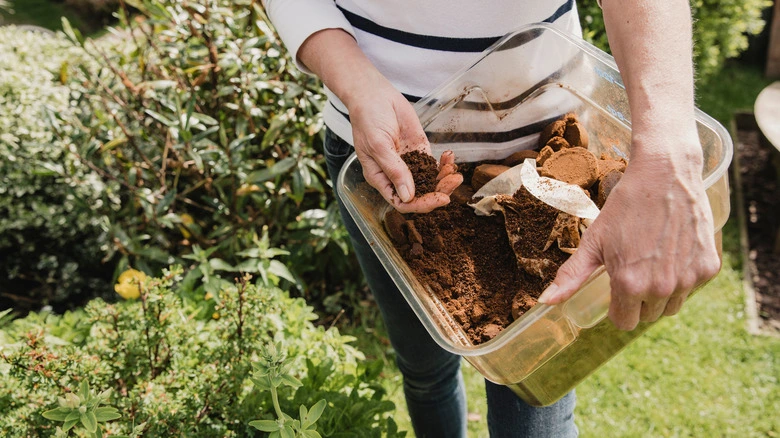
- Slow-Release Nutrients: Unlike chemical fertilizers that release nutrients quickly (and can lead to runoff), coffee grounds break down slowly. This provides a gradual release of nitrogen and micronutrients over time, making it ideal for long-term plant health.
- Improved Soil Structure: When mixed into the soil, coffee grounds act like organic matter, improving aeration, drainage, and moisture retention. This is especially beneficial for heavy clay soils or sandy beds that lack structure.
- Microbial Activity: Coffee grounds are rich in carbon and nitrogen, which fuel microbial life. A healthy microbial population is essential for breaking down organic matter, releasing nutrients, and suppressing soil-borne diseases.
- Pest Deterrence: Some gardeners report that coffee grounds can help deter common garden pests like slugs, snails, ants, and even cats that dig in garden beds. While research is limited, the theory is that the texture and caffeine content may irritate pests or mask the scent of your plants.
- Boosts Compost Performance: Coffee grounds are considered a “green” material in composting terms, meaning they’re high in nitrogen. When balanced with enough “brown” materials like dried leaves or shredded cardboard, coffee grounds can help your compost pile heat up faster, breaking down more efficiently and killing pathogens or weed seeds.
- Natural Pest Deterrent: Some gardeners report that coffee grounds deter soft-bodied pests like slugs, snails, and even cats. While not scientifically proven, the gritty texture and caffeine content may act as a mild repellent.
- Supports Soil Life: Used coffee grounds serve as food for beneficial microbes and fungi, which decompose organic matter and convert nutrients into forms that plants can absorb. This microbial support system is essential for building a healthy, living soil.
What Plants Like Coffee Grounds? (And Which Ones Don’t)
Plants That Love Coffee Grounds
Not every plant will benefit from coffee grounds, but many acid-loving and nitrogen-hungry varieties thrive with their addition. Below is a list of plants that respond particularly well:
Acid-Loving Ornamentals
- Hydrangeas
- Azaleas
- Rhododendrons
- Camellias
- Gardenias
- Lily of the Valley
Vegetables and Fruits
- Blueberries
- Carrots & Radishes
- Tomatoes: In composted form only
- Cucumbers & Peppers
- Strawberries
Indoor Plants (Use Sparingly)
- Snake Plant
- Pothos
- African Violets
- Philodendron
Herbs & Others
- Basil
- Roses
- Beans
What Plants Don’t Like Coffee Grounds?
Coffee grounds aren’t for every plant, and using them incorrectly can do more harm than good. Avoid using them with the following:
Alkaline-Loving Plants
- Lavender
- Rosemary
- Geraniums
- Spiderwort
Cacti & Succulents
These plants prefer dry, well-draining soil and don’t need the extra nitrogen. Coffee grounds may retain too much moisture, leading to root rot.
Seedlings & Young Plants
Fresh coffee grounds can inhibit seed germination due to their high nitrogen content and potential caffeine toxicity. Always compost before using around sensitive plants.
How to Use Coffee Grounds in the Garden (Safely & Effectively)
Using coffee grounds effectively depends on the method and plant type. Here are several proven applications:
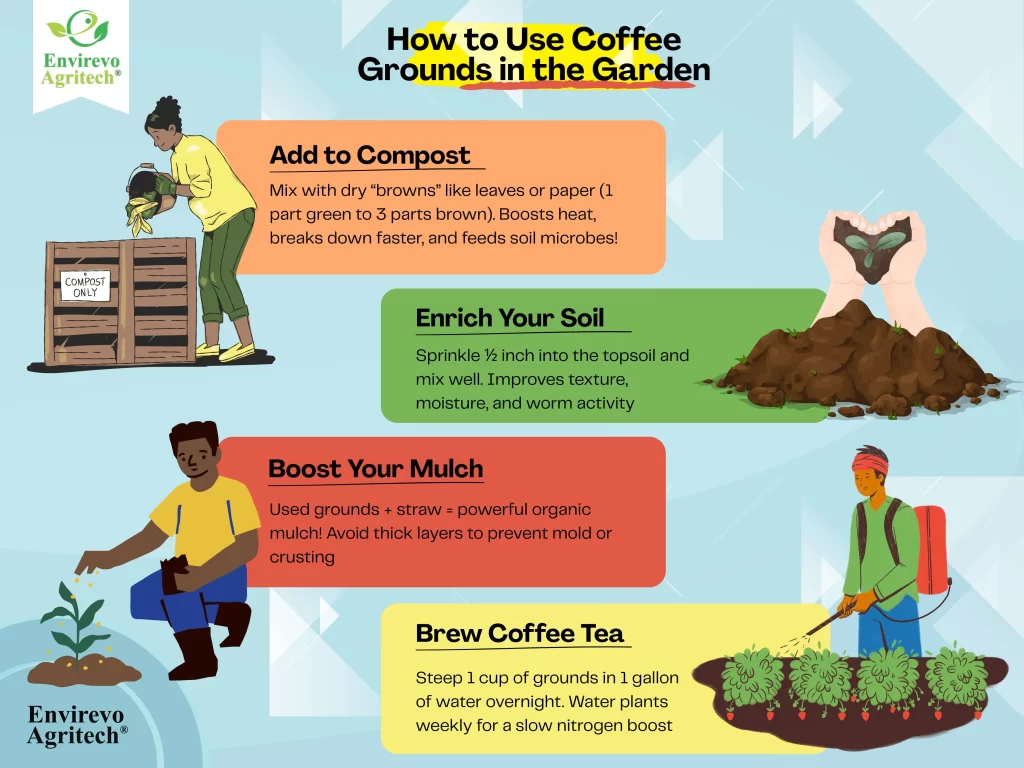
1. Add to Compost
Used coffee grounds are a perfect “green” (nitrogen source) for your compost pile. Mix them with dry “brown” materials like leaves, paper, wood chips, or straw in a 1:3 ratio (1 part coffee grounds and 3 parts browns) to maintain balance. Turn the pile regularly to prevent clumping and odors.
2. Soil Amendment
Work a small amount (about 1/2 inch) of dried grounds into the top layer of your soil. This adds organic matter, encourages worms, and slowly releases nutrients over time. Avoid applying thick layers, which can compact and repel water.
- Best for vegetable beds, flower gardens, and fruiting bushes.
- Avoid applying more than once a month.
3. Mulch Booster
While pure coffee grounds make poor mulch (they crust over and block airflow), they can be mixed with wood chips, straw, or shredded leaves to form a nutrient-rich mulch blend. Spread thinly and fluff occasionally to prevent matting. Sprinkle a thin layer (½ inch or less) of dry, used coffee grounds around plants. Avoid using near the base of stems to prevent mold or fungus.
4. Liquid Fertilizer (Coffee Tea)
Steep 1 cup of used grounds in 1 gallon of water overnight to make a nutrient-rich “coffee tea.” Water your plants with this brew to give them a quick nitrogen hit without risking over-fertilisation.
- Water around the base of plants once a week.
- Not suitable for foliar sprays.
Common Mistakes When Using Coffee Grounds
While coffee grounds can work wonders, misuse can harm your plants. Avoid these common pitfalls:
- Using Too Much at Once: Coffee grounds are fine in texture and can compact when wet, creating a dense barrier that resists water. Always mix into soil or compost and avoid thick surface layers. Limit use to no more than 20% of the total soil volume.
- Applying Fresh Grounds Directly: Unbrewed or fresh coffee grounds are more acidic and contain higher caffeine levels. These can inhibit plant growth and microbial life. Stick to used grounds that have been brewed.
- Failing to Mix with Other Materials: Coffee grounds should never be used alone. They work best blended with compost, mulch, or soil amendments.
- Overusing on Indoor Plants: Houseplants are sensitive to over-fertilisation and mold. Use coffee grounds sparingly and always mix them into the soil or water down as a liquid fertilizer.
- Letting Grounds Clump or Mold: Wet grounds can clump together, preventing air and water flow. Always dry grounds before storage or application.
How Often Should You Use Coffee Grounds for Plants?
Timing and frequency depend on the plant type and application method:
- In Compost: Add daily kitchen scraps, including grounds, balancing with browns.
- Mulching/Soil Application: Use monthly in small quantities during the growing season.
- Liquid Tea: Apply weekly during active growth.
- Avoid During Dormancy: Plants won’t benefit, and it may lead to nutrient imbalances.
As a general rule, less is more. Think of coffee grounds as a slow-release supplement, not a daily feeding source.
FAQs About Coffee Grounds for Plants
Can I put coffee grounds directly on the soil?
Yes, but in thin layers and preferably mixed with compost or soil to avoid compaction.
Are coffee grounds acidic or neutral?
Used coffee grounds are close to neutral (6.5–6.8 pH), making them safe for most garden applications.
Are fresh or used coffee grounds better?
Used coffee grounds are safer for plants. Fresh grounds are too acidic and contain more caffeine.
Can I use coffee filters too?
Yes! Most unbleached paper filters are compostable and safe to include in your compost pile.
What is the best way to store coffee grounds for garden use?
Let the used grounds dry completely, then store them in an airtight container or paper bag in a cool, dry place to prevent mold.
Can coffee grounds replace regular fertilizer?
No, coffee grounds provide nitrogen and some trace minerals but aren’t a complete fertilizer. They should supplement—not replace—balanced fertilizers.
How often should I add coffee grounds to my garden?
Once a month for direct soil application or mulching. For compost, you can add them regularly as long as they’re balanced with “brown” materials.
Coffee grounds are far more than just kitchen waste—they’re a sustainable, soil-boosting tool every gardener should consider. From enriching your compost pile to gently fertilising acid-loving plants, used coffee grounds offer a wide range of benefits when used correctly. The secret lies in moderation, preparation, and understanding your plants’ specific needs.
So next time you brew your morning cup, don’t throw away the grounds. Give them a second life in your garden. Your plants—and the planet—will thank you for it.
Have you tried using coffee grounds in your garden? Share your experience in the comments below!