Table of Contents
Thai basil (Ocimum basilicum var. thyrsiflora) is more than just a fragrant herb—it’s a culinary gem and a backyard favorite for gardeners. Known for its spicy, licorice-like flavor and vibrant green leaves with purple stems and blossoms, Thai basil is a must-have in both Asian kitchens and herb gardens. Whether you’re growing herbs indoors, planting a raised garden bed, or just curious about how to cook with Thai basil, this guide has everything you need.
About Thai Basil
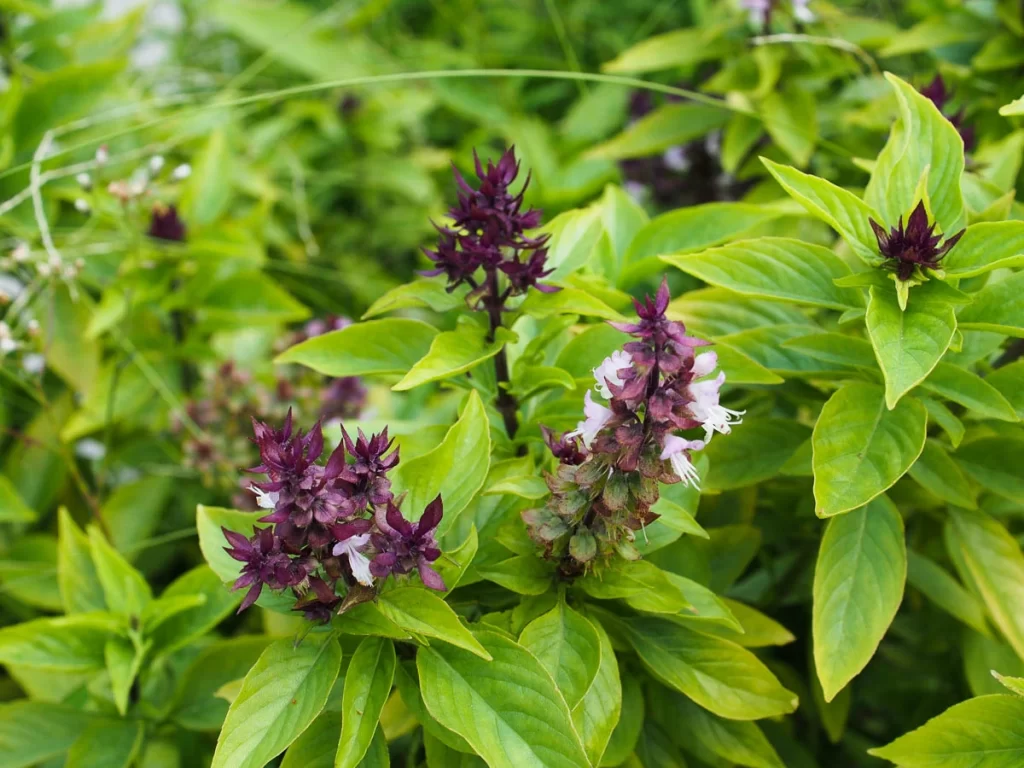
Thai basil is a popular herb in Southeast Asian cuisine, especially in Thai and Vietnamese dishes. While it shares some similarities with sweet basil (commonly used in Italian recipes), Thai basil stands apart in both flavor and structure. Its narrow leaves, purple stems, and spicy-anise aroma make it easily identifiable.
Unlike sweet basil, which has a more subtle, sweet flavor, Thai basil is stronger and can hold its flavor even after cooking. This makes it perfect for stir-fries, soups, and curries that require intense, aromatic herbs that don’t wilt under heat. Originating in Southeast Asia, Thai basil is a key ingredient in dishes like Pad Krapow, Pho, and Thai green curry.
- Botanical Name: Ocimum basilicum var. Thyrsiflora
- Appearance: Thai basil plants are bushy and compact, typically reaching 12 to 18 inches in height. The leaves are narrower and darker green than sweet basil, often tinged with purple. The stems and flower spikes are distinctly purple, which adds a unique ornamental touch.
- Fragrance and Flavor: The aroma is distinctly spicy and sweet with strong hints of anise or licorice. This flavor profile sets Thai basil apart and is one of the reasons it’s favored in bold-flavored dishes
- Thai basil plants grow to a height of between 12 to 18 inches, with 1 to 2 inches long leaves on purple stems with purple flowers.
Ideal Growing Conditions for Thai Basil
Thai basil is a warm-weather herb that thrives in full sun and well-draining soil. It can be grown in containers, raised beds, or directly in the garden.
- Climate & Temperature: Thai basil prefers temperatures between 70°F and 90°F (21°C–32°C). It is sensitive to cold and will not survive frost. In colder zones, it should be grown as an annual or indoors.
- Sunlight: Ensure the plant receives at least 6 hours of direct sunlight per day. For indoor growers, placing it on a sunny windowsill or under a grow light is essential.
- Soil Requirements: Thai basil grows best in well-drained, slightly acidic soil with a pH range of 6.0–7.0. Enrich the soil with compost or organic matter to improve texture and fertility.
How to Grow Thai Basil From Seeds or Cuttings
Growing from Seeds:
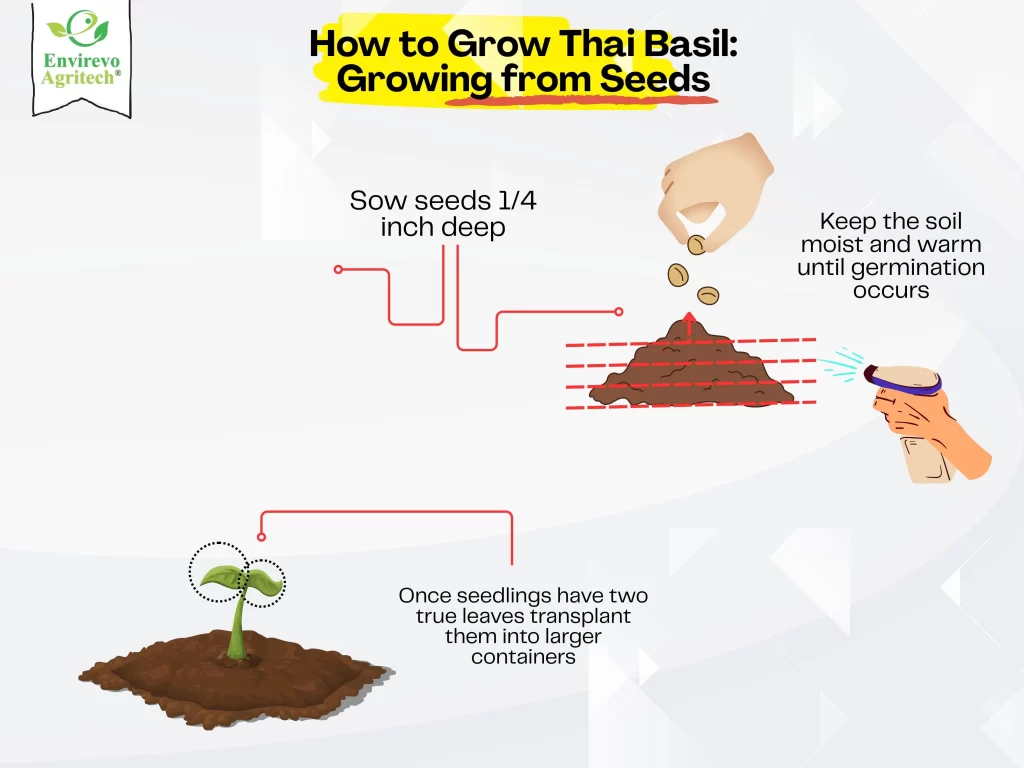
- Start seeds indoors 4–6 weeks before the last frost.
- Sow seeds 1/4 inch deep in seed trays or pots.
- Keep the soil moist and warm (70–75°F) until germination occurs (7–14 days).
- Once seedlings have two true leaves, thin them or transplant them into larger containers or the garden.
Propagating from Cuttings:
- Snip a healthy stem below a node (4–6 inches long).
- Remove lower leaves and place the stem in water.
- Keep in a warm, bright area but out of direct sunlight.
- Roots will form in 7–10 days; transplant to soil once they’re 2 inches long.

Indoor vs. Outdoor Growing:
- Indoors: Use pots with drainage holes and place near sunny windows.
- Outdoors: Plant after the danger of frost has passed. Space plants 12–15 inches apart.
Thai Basil Care Tips: Watering, Feeding, and Maintenance
Proper care ensures a steady harvest of fresh Thai basil throughout the growing season.
Watering:
- Keep the soil evenly moist but not soggy.
- Water at the base of the plant to avoid fungal problems.
- In hot weather, basil may need watering every day.
Fertilizing:
- Use a balanced organic fertilizer (e.g., 10-10-10) every 3–4 weeks.
- Avoid over-fertilizing, as it can lead to lush foliage with weaker flavor.
Pruning and Pinching:
- Regularly pinch off flower buds to prolong leaf production.
- Prune weekly to encourage bushier growth and prevent legginess.
Pest and Disease Control:
- Common pests: Aphids, whiteflies, spider mites
- Diseases: Powdery mildew, root rot
- Natural solutions: Neem oil, insecticidal soap, good air circulation
Common Problems and Troubleshooting
Even hardy herbs like Thai basil can face challenges. Here’s how to fix common problems:
Yellow Leaves:
- Cause: Overwatering or poor drainage
- Fix: Let soil dry out, improve drainage with sand or compost
Wilting:
- Cause: Underwatering or root rot
- Fix: Water consistently, ensure proper container drainage
Leggy Growth:
- Cause: Insufficient sunlight
- Fix: Move to a sunnier spot or add a grow light
Related: Is Your Prayer Plant Dying? Here’s the Ultimate Fix!
Related: Elephant Ear Plant Care: Expert Tips to Grow Giant, Lush Leaves!
Related: Weeping Pussy Willow Guide: Planting, Care & Why It’s the Tree Everyone Wants
Harvesting Thai Basil the Right Way
The best time to harvest Thai basil is in the morning when the essential oils are most concentrated.
How to Harvest:
- Use clean scissors or fingers to cut stems just above a leaf node.
- Harvest from the top of the plant to encourage branching.
- Don’t remove more than one-third of the plant at a time.
Harvest Frequency:
- With proper care, you can harvest every 1–2 weeks.
- Continuous harvesting promotes a steady supply of fresh leaves.
Storing and Preserving Thai Basil Leaves
Freshly harvested Thai basil can be stored in several ways depending on your needs.
Short-Term Storage:
- Place stems in a glass of water on the counter, like a bouquet.
- Store in a plastic bag with a paper towel in the refrigerator.
Freezing:
- Wash and dry leaves.
- Flash freeze on a tray, then store in airtight bags.
- You can also puree with olive oil and freeze in ice cube trays.
Infused Oils or Vinegars:
- Combine clean Thai basil leaves with olive oil or vinegar in a sterilized jar.
- Store in the fridge and use in salads, dressings, or marinades.
Culinary Uses for Thai Basil in Everyday Cooking
Thai basil’s unique flavor makes it a culinary powerhouse.
Asian Dishes:
- Pad Krapow (Thai Basil Chicken): A spicy stir-fry with chicken, chilies, and Thai basil.
- Pho: Vietnamese soup enhanced with fresh Thai basil.
- Green Curry: Adds a bold herbal note to coconut milk-based curries.
Western Fusion:
- Toss into salads for a licorice twist.
- Mix with pasta and sun-dried tomatoes for a Thai-Italian fusion.
- Use as a garnish in Thai basil mojitos or herbal teas.
Substitution Tips:
- You can substitute sweet basil in recipes, but expect a more assertive flavor.
- Avoid substituting Thai basil when authentic flavor is critical (e.g., Pad Krapow).
Final Thoughts
Thai basil is a versatile, aromatic herb that belongs in every garden and kitchen. Its strong, spicy flavor holds up well in cooking, and it’s as ornamental as it is edible. Easy to grow with minimal maintenance, Thai basil offers multiple harvests, attracts pollinators, and deters pests.
Whether you’re a culinary enthusiast or a hobby gardener, Thai basil rewards your efforts with bold flavors and beautiful foliage. Start with a few seeds or cuttings, give it sun and care, and you’ll be harvesting fragrant leaves in no time.
FAQ
Can you grow Thai basil indoors?
Yes! Use pots with drainage and place near a sunny window. Supplemental grow lights help during winter.
How long does Thai basil live?
It’s typically grown as an annual, but in tropical climates, it may last longer. Regular pruning extends its lifespan.
Is Thai basil perennial or annual?
It’s technically a short-lived perennial in warm climates but is commonly grown as an annual elsewhere.
What makes Thai basil spicy?
The strong flavor comes from essential oils like estragole and eugenol, which give it a licorice and clove-like taste.