

Table of Contents
Picture this: you’ve spent months tending to your garden or fields, imagining the bounty of fresh vegetables you’ll soon harvest. The zucchini are looking promising, the peppers are vibrant, and your cucumbers are straight out of a gardener’s dream. But then, one day, you spot something troubling. A few of your flowers have turned into a mushy mess, and some fruits are looking less like food and more like a science experiment gone wrong. Congratulations, you’ve just met Choanephora rot!
Choanephora rot, often nicknamed wet rot or blossom end rot (no, it’s not a rock band), is the unwelcome party crasher in your garden soirée. It’s the kind of guest that shows up uninvited, spreads out over your prized plants, and leaves a trail of destruction in its wake. This fungal disease is caused by the sneaky pathogen Choanephora cucurbitarum, a microscopic mischief-maker with a penchant for warm, humid environments. If left unchecked, it can wreak havoc on a variety of crops.
But fear not, intrepid grower! This guide is your secret weapon, your very own toolkit to combat the notorious Choanephora rot. We’ll delve deep into the world of this pesky pathogen, from its life cycle and favorite hangouts to the telltale signs it leaves on your plants. More importantly, we’ll arm you with a comprehensive arsenal of strategies to prevent and control its spread, ensuring that your garden party remains a celebration of healthy, bountiful crops.
So grab your gardening gloves and let’s dive into the nitty-gritty of Choanephora rot. Together, we’ll turn the tide against this fungal foe and keep your garden thriving and productive. After all, every hero needs a good story, and yours starts with understanding and defeating Choanephora rot.
Understanding Choanephora Rot
What is Choanephora Rot?
Choanephora rot is caused by the fungal pathogen Choanephora cucurbitarum. This pathogen predominantly affects plants within the Cucurbitaceae family, such as squash, zucchini, cucumbers, and melons, but it can also infect other crops like peppers and beans. The disease is characterized by water-soaked lesions on flowers, fruits, and stems, which eventually develop into soft, mushy rot with fuzzy, white fungal growth.
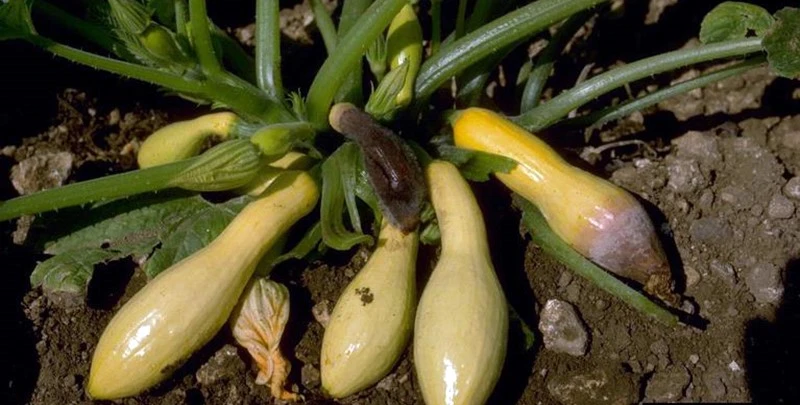
- Scientific name: Choanephora cucurbitarum
- Also found in: Cabbage, Cucumber, Sorghum, Soybean, Cotton, Pigeon Pea & Red Gram, Potato, Cassava, Cauliflower, Maize, Pea, Pumpkin, Melon, Bitter Gourd, Black & Green Gram, Sweet Potato, Okra, Brinjal, Bean, Guava.
What caused it?
The symptoms are caused by Choanephora cucurbitarum, an opportunistic fungus that mainly attacks tissues that have been damaged by insects or mechanical means during fieldwork. Its spores are generally spread via wind, splashing water, and through clothes when in contact with tools and cultivation equipment. Outbreaks of the disease usually occur during prolonged rainy periods, high humidity and high temperatures. Not surprisingly, it causes the greatest damage to pepper and okra grown during the rainy season in tropical climates. Crop poorly adapted to these conditions will be particularly susceptible. In order to tell the difference with Phythophtora blight, observe tissues for the presence of grayish hairs (rather in the morning).
Life Cycle of Choanephora Rot
Understanding the life cycle of Choanephora cucurbitarum is essential for devising effective management strategies. The fungus produces spores that are dispersed by wind and water. Infection typically occurs when spores land on wet plant surfaces, with optimal conditions being warm temperatures and high humidity. The pathogen thrives in environments with frequent rainfall or overhead irrigation, making such conditions conducive to rapid disease spread.
Symptoms
- Appearance of water-soaked areas on leaves.
- Plant die-back.
- Occurrence of fungal growth.
- Affected young fruits, stems and flower buds.
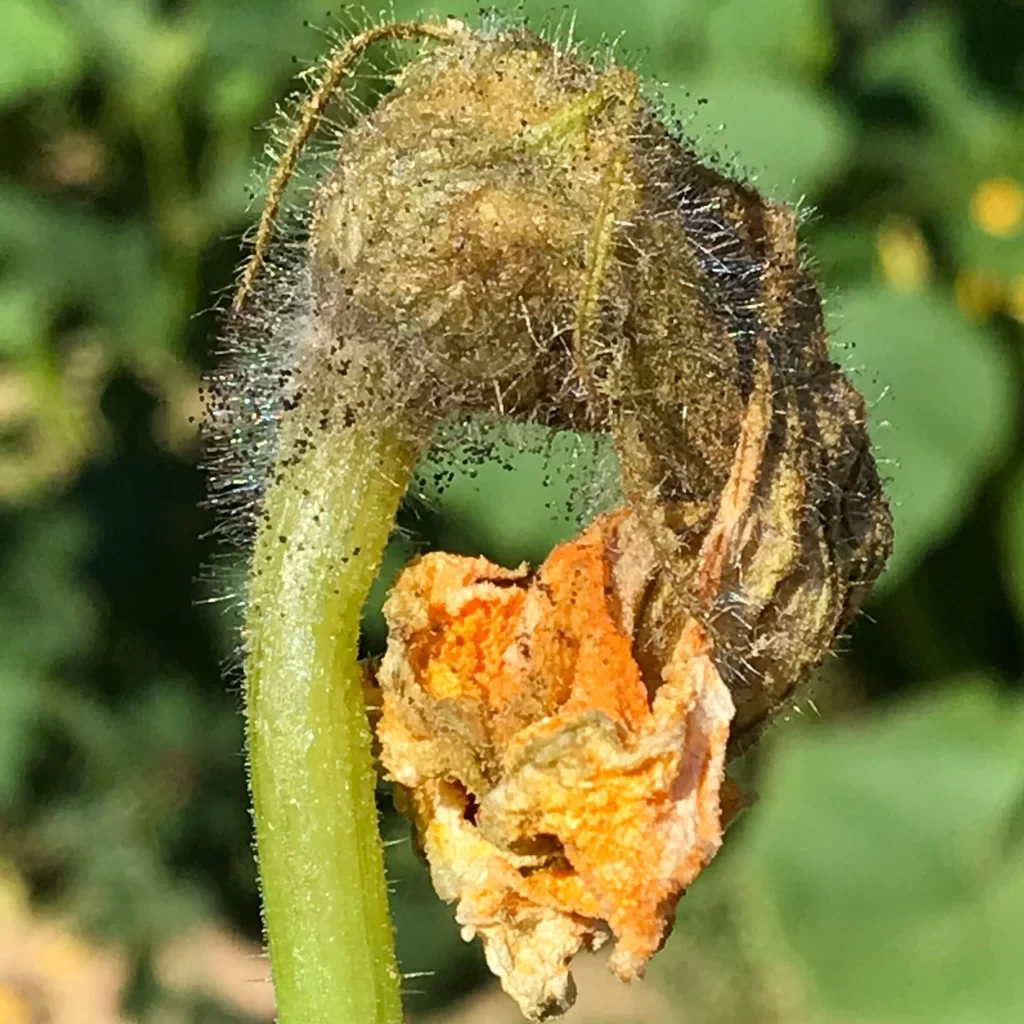
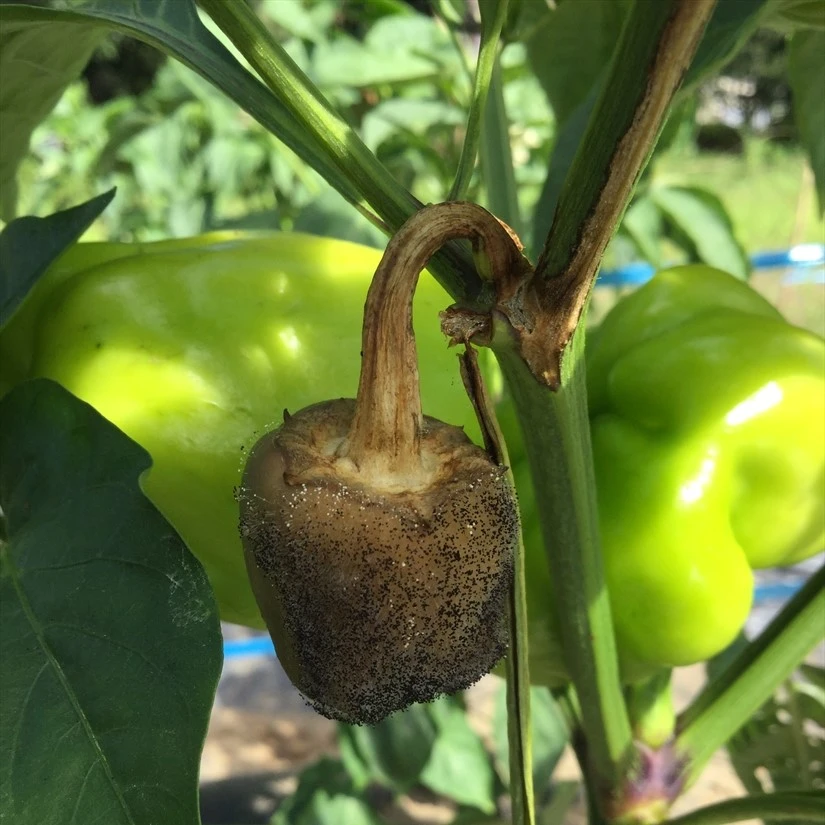
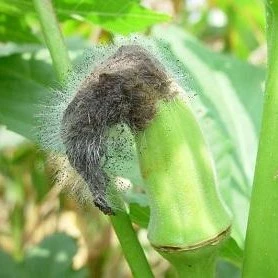
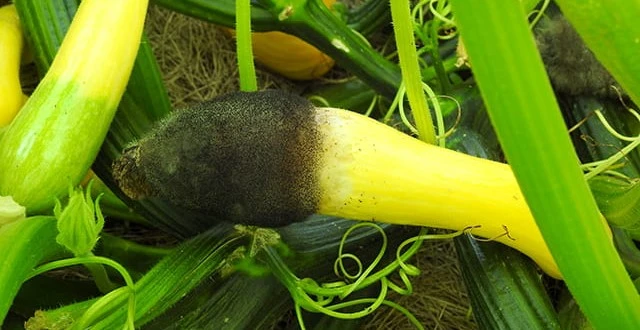
Initial symptoms are characterized by a darkening and wilting of flowers, flower buds or growing points (blossom blight). The disease then spreads downward, producing water-soaked lesions on leaves, giving them a silvery tinge. Older lesions turn necrotic and appear dried out, resulting in blighted leaf tips and margins. On stems, signs of rot are visible in the form of brown to black patches and die-back. Eventually, the whole plant may wilt. Black soft rot can also develop on young fruits, usually at the blossom end. A close inspection will reveal silvery, hair-like growth on all infected tissues. In seedlings, symptoms may be confused with Phytophthora blight.
Preventive Measures: Best 9 Tips
- Monitor fields for any signs of the disease.
- Remove alternative hosts and weeds in and around the field.
- Reduce soil compaction and improve drainage, if possible.
- Ensure no depression is left on the plant base during transplanting.
- Ensuring adequate spacing between plants improves air circulation, reducing humidity levels around the foliage. Pruning excess foliage also helps in lowering the microclimate humidity, making it less favorable for fungal growth.
- Proper irrigation practices are crucial in managing Choanephora rot. Avoid overhead watering, which increases leaf wetness and favors fungal infection. Instead, opt for drip irrigation systems that deliver water directly to the soil, minimizing moisture on the plant surfaces.
- Avoid the excessive use of nutrients that will create a dense canopy.
- Rotating crops is a fundamental practice in managing soil-borne pathogens. Avoid planting susceptible crops in the same location for consecutive years to disrupt the pathogen’s life cycle and reduce its prevalence in the soil.
- Sanitation is key to preventing the spread of Choanephora rot. Remove and destroy infected plant debris to eliminate sources of inoculum. Regularly clean tools and equipment to prevent cross-contamination between healthy and infected plants.
How to prevent seedling damping-off: Symptoms, Preventative measures, Chemical control
Chemical Control
Always consider an integrated approach with preventive measures together with biological treatments, if available. Prevention is the key as there are no fungicides labeled for this disease. Control using fungicides might help to restrict the development of symptoms but is often impractical because plants are continuously flowering and thus susceptible to the pathogen.
Product recommendations are based on the
following active ingredients: Kresoxim-Methyl 44.3% SC;

Fungicides for Choanephora Rot
When cultural practices are insufficient, fungicides can provide an additional layer of protection. Selecting the appropriate fungicides and applying them correctly is crucial for effective disease control.
Recommended Fungicides: Effective fungicides for Choanephora rot include these active ingredients Picoxystrobin 6.78%,Tricyclazole 20.33% SC. These fungicides can help control the spread of the disease when applied according to the manufacturer’s recommendations.
Picoxystrobin 6.78%,Tricyclazole 20.33% SC
- Application method: Spray
- Weather conditions: Do not apply the product if it is windy or raining. Avoid application during the hottest hours of the day.
- Toxicity: Moderately Toxic
- Important Safety Precautions: keep it locked away and out of reach of children, wear eye protection, wear long rubber boots, wash the hands and face with clean water after usage.
Organic Control
Recommendations
We recommend following organic control methods in the early stages of a disease or when the crop is close to harvesting. In more advanced stages of a disease, please follow chemical control measures. Mixing or applying different products at the same time is not recommended.
There is no biological treatment available for this disease. In Benin, the bacterium Bacillus subtilis has been tested positively in some crops for its antagonist effect against Choanephora cucurbitarum. However, no test on peppers has been carried out.
Integrated Disease Management (IDM)
Combining Methods for Effective Control
An integrated approach combining cultural, chemical, and biological methods offers the most comprehensive protection against Choanephora rot.
Integration of Methods: Integrating crop rotation, proper irrigation, sanitation practices, fungicide applications, and biological controls creates a robust defence against the disease. This multi-faceted strategy reduces the pathogen’s ability to adapt and survive.
Monitoring and Early Detection
Regular monitoring and early detection are critical components of an IDM strategy. Frequent inspections allow for the early identification of symptoms, enabling prompt action to contain and manage the disease before it spreads extensively.
That’s It.
In summary, the battle against Choanephora rot requires a multi-faceted strategy. By adopting a holistic approach that incorporates preventive measures, resistant varieties, appropriate chemical treatments, and biological controls, growers can effectively manage this disease. The proactive implementation of these strategies not only protects current crops but also promotes long-term agricultural sustainability.
It is imperative for growers to stay informed and adaptable, continuously updating their knowledge and practices in response to new research and evolving environmental conditions. Engaging with agricultural extension services, participating in community discussions, and sharing experiences with fellow growers can provide invaluable support and insights.
Ultimately, the successful management of Choanephora rot hinges on the collective efforts of the agricultural community. By working together, sharing knowledge, and implementing comprehensive disease management strategies, growers can overcome the challenges posed by this pathogen and ensure the health and productivity of their crops.
FAQ
What is choanephora rot in okra?
Choanephora rot in okra is a fungal disease caused by the pathogen Choanephora cucurbitarum. This disease primarily affects the flowers, pods, and sometimes the stems of okra plants. It starts as water-soaked lesions that quickly develop into a soft, mushy rot covered with white, fuzzy fungal growth.
Can Trichoderma survive in water?
Yes, Trichoderma species can survive in water. Trichoderma is a genus of beneficial fungi known for its ability to colonize plant roots and its use as a biological control agent against various plant pathogens. Trichoderma can persist in moist environments, including water, where it can outcompete harmful fungi for resources.
How to get rid of choanephora rot?
To effectively get rid of Choanephora rot, a multi-faceted approach should be employed, including cultural, chemical, and biological methods
What is the disease Choanephora?
Choanephora is a fungal disease caused by the pathogen Choanephora cucurbitarum. It affects a wide range of crops, particularly those in the Cucurbitaceae family, including squash, zucchini, cucumbers, and melons, as well as other crops like peppers, beans, and okra. The disease is characterized by water-soaked lesions on flowers, fruits, and stems, which rapidly develop into soft, mushy rot covered with white, fuzzy fungal growth.
What is choanephora fruit rot of squash?
Choanephora fruit rot of squash is a specific manifestation of Choanephora rot, caused by the fungal pathogen Choanephora cucurbitarum. It primarily affects the flowers and fruits of squash plants. The disease starts with water-soaked lesions on the flowers and young fruits, which quickly progress to a soft, mushy rot covered with white, fuzzy fungal growth.









This Post Has 32 Comments
Hello there, I found your blog by the use of Google at the same time as looking for a comparable topic, your website came up, it looks good. I have bookmarked it in my google bookmarks.
F*ckin’ amazing things here. I am very glad to see your article. Thanks a lot and i am looking forward to contact you. Will you please drop me a e-mail?
I simply desired to thank you very much yet again. I am not sure the things that I would have made to happen in the absence of the entire points shared by you over such a industry. It previously was a traumatic condition for me personally, but viewing this expert way you treated the issue took me to cry with joy. Extremely thankful for this information and hope that you realize what a powerful job your are getting into training people by way of a site. Most likely you’ve never got to know all of us.
Excellent blog here! Also your web site loads up very fast! What web host are you using? Can I get your affiliate link to your host? I wish my web site loaded up as quickly as yours lol
Spot on with this write-up, I truly suppose this website wants way more consideration. I’ll probably be again to read much more, thanks for that info.
Heya i am for the primary time here. I came across this board and I to find It really helpful & it helped me out much. I hope to give one thing again and aid others such as you aided me.
Wow that was unusual. I just wrote an extremely long comment but after I clicked submit my comment didn’t appear. Grrrr… well I’m not writing all that over again. Anyway, just wanted to say wonderful blog!
Good day! I simply want to give an enormous thumbs up for the nice data you could have right here on this post. I can be coming again to your blog for extra soon.
Hello There. I found your blog using msn. This is a very well written article. I’ll be sure to bookmark it and return to read more of your useful info. Thanks for the post. I will certainly comeback.
Hmm is anyone else encountering problems with the images on this blog loading? I’m trying to find out if its a problem on my end or if it’s the blog. Any feedback would be greatly appreciated.
Wonderful beat ! I wish to apprentice while you amend your website, how can i subscribe for a blog website? The account aided me a acceptable deal. I had been a little bit acquainted of this your broadcast offered bright clear concept
Keep working ,terrific job!
You could certainly see your enthusiasm in the work you write. The world hopes for more passionate writers like you who are not afraid to say how they believe. Always go after your heart.
I’m very happy to read this. This is the kind of manual that needs to be given and not the accidental misinformation that is at the other blogs. Appreciate your sharing this best doc.
There may be noticeably a bundle to learn about this. I assume you made certain good factors in options also.
It’s appropriate time to make a few plans for the long run and it’s time to be happy. I have read this put up and if I may I desire to counsel you few interesting things or suggestions. Perhaps you can write next articles relating to this article. I wish to learn even more issues about it!
magnificent points altogether, you simply received a new reader. What would you recommend in regards to your post that you just made some days in the past? Any certain?
I am so happy to read this. This is the type of manual that needs to be given and not the random misinformation that is at the other blogs. Appreciate your sharing this greatest doc.
Thanks for your valuable reply.
you are really a just right webmaster. The web site loading speed is amazing. It seems that you are doing any distinctive trick. Furthermore, The contents are masterpiece. you’ve performed a excellent process in this subject!
WONDERFUL Post.thanks for share..extra wait .. …
Terrific work! That is the type of information that are meant to be shared across the web. Shame on Google for not positioning this submit upper! Come on over and visit my website . Thanks =)
Magnificent web site. Plenty of helpful information here. I’m sending it to a few friends ans also sharing in delicious. And obviously, thank you to your sweat!
Excellent site you have here but I was wondering if you knew of any message boards that cover the same topics discussed here? I’d really love to be a part of community where I can get suggestions from other experienced individuals that share the same interest. If you have any recommendations, please let me know. Thanks!
I think other website proprietors should take this site as an model, very clean and great user friendly style and design, let alone the content. You’re an expert in this topic!
Hey there just wanted to give you a quick heads up and let you know a few of the images aren’t loading properly. I’m not sure why but I think its a linking issue. I’ve tried it in two different browsers and both show the same results.
I simply desired to thank you very much yet again. I do not know the things that I would’ve followed without the type of aspects discussed by you about that subject. This has been a challenging difficulty in my opinion, but understanding a specialized tactic you handled that made me to cry for joy. Extremely grateful for this assistance and thus hope you really know what an amazing job that you’re getting into instructing some other people with the aid of your websites. More than likely you have never got to know all of us.
What i do not understood is in truth how you are now not actually a lot more well-preferred than you might be now. You’re very intelligent. You realize therefore significantly relating to this matter, made me for my part consider it from numerous varied angles. Its like women and men aren’t involved until it’s something to accomplish with Girl gaga! Your own stuffs great. At all times care for it up!
Today, I went to the beachfront with my children. I found a sea shell and gave it to my 4 year old daughter and said “You can hear the ocean if you put this to your ear.” She placed the shell to her ear and screamed. There was a hermit crab inside and it pinched her ear. She never wants to go back! LoL I know this is totally off topic but I had to tell someone!
Once I originally commented I clicked the -Notify me when new comments are added- checkbox and now every time a comment is added I get four emails with the same comment. Is there any method you’ll be able to remove me from that service? Thanks!
Just wish to say your article is as astounding. The clearness in your post is simply spectacular and i can assume you are an expert on this subject. Fine with your permission allow me to grab your feed to keep updated with forthcoming post. Thanks a million and please keep up the rewarding work.
Thank you for the sensible critique. Me and my neighbor were just preparing to do some research about this. We got a grab a book from our area library but I think I learned more clear from this post. I’m very glad to see such great info being shared freely out there.